Choosing the right stroller and infant car seat can feel confusing for new parents because safety, comfort, travel needs, and daily convenience all matter. Some families want a stroller and infant car seat combo for easy car-to-stroller movement, while others need separate products that fit their baby, vehicle, and lifestyle better.
A good stroller and infant car seat setup is not only about brand name or price. Parents should check car seat safety, stroller compatibility, harness fit, installation method, stroller frame stability, folded size, travel convenience, and whether the setup is practical for newborn use.
This guide is written to help parents understand how stroller and infant car seat systems work, what safety details to check, and how to choose a setup that feels useful for real family life.
If you are still comparing stroller types, you may also read our best travel stroller guide for compact trips, our stroller wagon guide for family outings, and our jogging stroller guide for active outdoor movement.
Quick Summary: Stroller and Infant Car Seat Buying Guide
| Parent Need | Best Option to Consider | Why It Helps |
|---|---|---|
| Newborn daily travel | Infant car seat and stroller combo | Allows easier movement from car to stroller without moving the baby too much. |
| Small car trunk | Compact stroller frame | Helps parents store the stroller more easily after car trips. |
| Frequent short errands | Travel system stroller | Useful for quick stops, doctor visits, grocery trips, and daily movement. |
| Long walks | Full-size stroller with infant car seat adapter | Usually gives better storage, comfort, and smoother handling. |
| Air travel | Lightweight stroller with compatible infant seat | Makes airport movement easier when parents carry luggage and baby items. |
| Budget-friendly setup | Simple stroller travel system | Can be practical if safety, fit, and compatibility are correct. |
Who This Guide Is For
This guide is helpful for:
- New parents choosing their first stroller and car seat setup
- Families comparing travel systems before buying
- Parents who want to understand infant car seat safety basics
- Parents who need a stroller that works with an infant car seat
- Families with small cars or limited storage space
- Parents who want safer daily travel from home to car to stroller
- Families trying to avoid buying the wrong stroller or incompatible car seat
What Is a Stroller and Infant Car Seat System?
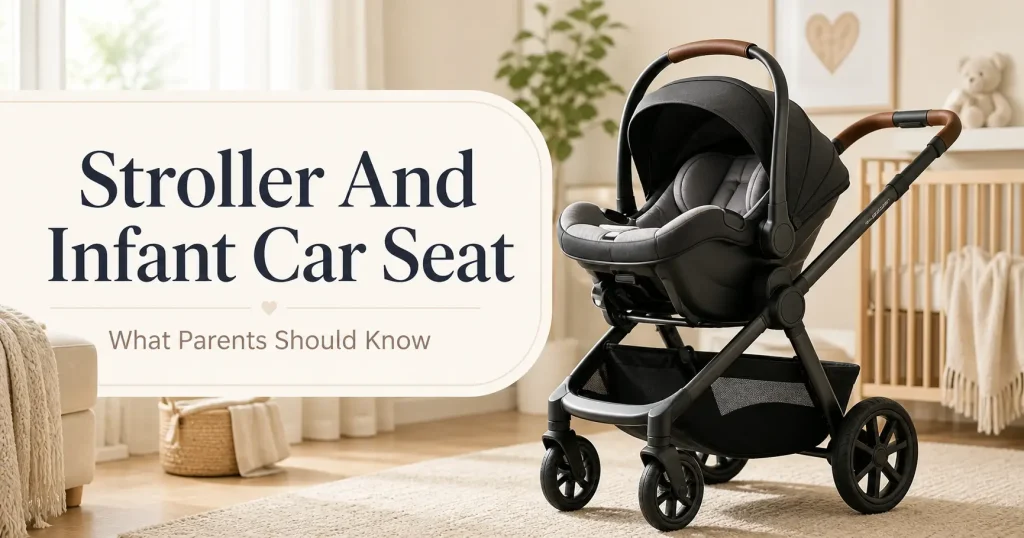
A stroller and infant car seat system usually means a stroller that can hold an infant car seat. Many parents call this a travel system. The infant car seat can attach to a stroller frame or full-size stroller, allowing parents to move the baby from the car to the stroller more easily.
This can be helpful during short errands, doctor visits, shopping trips, and travel days. Instead of unbuckling the baby from the car seat every time, parents can attach the infant seat to a compatible stroller.
However, compatibility and safety are very important. Not every infant car seat fits every stroller. Some strollers need adapters. Some car seats only work with specific brands. Parents should always check official compatibility from the stroller and car seat manufacturer before buying.
Recommended Stroller and Infant Car Seat Options
If you want a simple setup, a stroller and infant car seat travel system can be a practical choice for newborn daily travel, doctor visits, short errands, and car-to-stroller movement. Before buying, always check car seat safety, stroller compatibility, child weight limits, and whether the stroller fits your car trunk and daily routine.
Check Recommended Stroller and Infant Car Seat Options
How We Built This Guide
We created this guide around practical parent needs. Instead of focusing only on brands, we looked at safety, stroller compatibility, car seat fit, installation concerns, newborn comfort, stroller weight, folded size, storage, travel convenience, and real family use.
We also considered common parent questions, such as whether an infant car seat should be used for long stroller naps, whether a travel system is better than a separate stroller, and what parents should check before using a stroller with a car seat attached.
The goal is to help parents make a safer and more practical buying decision before choosing a stroller and infant car seat setup.
Why Parents Choose a Stroller and Infant Car Seat Combo
Many parents choose a stroller and infant car seat combo because it makes early baby travel easier. Newborns sleep often, and parents may want to move from car to stroller without disturbing the baby during short trips.
A travel system can also reduce the number of separate products parents need to compare. If the stroller and car seat are sold together, compatibility is usually easier to understand.
But convenience should not be the only reason to buy. Parents should still check car seat safety, correct installation, stroller stability, newborn support, weight limits, and whether the stroller is practical for everyday use.
Important Safety Note for Parents
An infant car seat is mainly designed for vehicle travel. It can be convenient when attached to a compatible stroller for short periods, but parents should avoid using the car seat as a regular sleeping place outside the car.
If your baby falls asleep during a trip, follow safe sleep guidance when you get home. Move the baby to a safe, flat sleep surface when possible. Always follow your pediatrician’s advice and the manufacturer’s safety instructions.
Parents should also make sure the infant car seat clicks securely into the stroller or adapter before moving. If the seat does not lock properly, do not use that setup.
Important Features to Check Before Buying
| Feature | Why It Matters | What Parents Should Check |
|---|---|---|
| Car seat compatibility | The infant seat must fit the stroller correctly. | Check the official compatibility list before buying. |
| Secure attachment | The car seat should lock safely onto the stroller. | Listen for a secure click and gently test before moving. |
| Infant car seat base | Correct vehicle installation is essential. | Read the manual and consider a certified car seat check. |
| Harness fit | A loose harness can reduce protection. | Make sure straps are flat, snug, and properly positioned. |
| Rear-facing limits | Infants use rear-facing car seats. | Follow the car seat’s height and weight limits. |
| Stroller stability | A car seat changes the stroller’s weight balance. | Avoid hanging heavy bags on the handlebar. |
| Folded size | Important for car trunks and home storage. | Compare folded stroller size with your vehicle space. |
| Stroller weight | Affects lifting and daily handling. | Choose a lighter frame if you lift it often. |
| Storage basket | Parents carry diapers, bottles, wipes, and bags. | Check basket size and easy access. |
Stroller and Infant Car Seat Types
1. Complete Travel System
A complete travel system includes a stroller and compatible infant car seat sold together. This can be easier for new parents because compatibility is already planned by the brand.
This option may be useful if you want a simple setup and do not want to search for separate adapters. It can work well for daily errands, doctor visits, and short travel days.
The downside is that some travel systems may be bulky. Parents should check stroller weight, folded size, and whether the stroller is easy to push before buying.
2. Stroller Frame for Infant Car Seat
A stroller frame is a lightweight frame that holds an infant car seat. It does not usually have a full toddler seat. Parents often choose this option for the early months because it is lighter and easier to store.
This can be helpful for short errands and quick car trips. However, it may not be useful after the baby outgrows the infant car seat.
3. Full-Size Stroller With Car Seat Adapter
Some full-size strollers can hold infant car seats with adapters. This gives parents more long-term stroller use because the stroller can still be used when the child becomes older.
This option can be good for families who want one stroller for newborn use and toddler use. The downside is that full-size strollers may be heavier and take more space.
4. Lightweight Stroller With Infant Seat Compatibility
Some lightweight strollers can work with selected infant car seats. This may be useful for travel-focused families or parents with small cars.
Before choosing this setup, check compatibility carefully. Lightweight strollers may not support every infant car seat.
Best For Parents Who Want an Easy Travel System
A complete travel system may be helpful if you want the infant car seat and stroller to work together from the start. This type of setup can save time for new parents because the car seat usually connects directly to the stroller without complicated matching.
Still, parents should check the product manual, car seat installation rules, stroller weight, folded size, and baby height and weight limits before choosing any model.
View Travel System Stroller Options
Stroller and Infant Car Seat Comparison
| Setup Type | Best For | Main Strength | Possible Limitation |
|---|---|---|---|
| Complete travel system | New parents who want a simple setup | Car seat and stroller are usually designed to work together | May be bulky or heavy |
| Stroller frame | Early infant months | Lightweight and easy for quick errands | Shorter use period |
| Full-size stroller with adapter | Long-term stroller use | Can work from newborn stage to toddler stage | May require extra adapter purchase |
| Lightweight stroller with car seat compatibility | Travel and small car storage | Easier to carry and store | Compatibility may be limited |
Car Seat Safety Tips for New Parents
1. Use the Correct Seat for Your Child
Parents should choose an infant car seat that matches the baby’s age, height, and weight. Do not choose only by color, design, or brand popularity.
Always read the car seat manual and follow the official height and weight limits. If your baby has outgrown the infant car seat, it may be time to move to another appropriate rear-facing seat.
2. Keep Infants Rear-Facing
Infants ride rear-facing in the vehicle. Parents should follow the car seat manufacturer’s rear-facing height and weight limits. Do not turn a child forward-facing too early.
If you are unsure about your child’s car seat stage, ask a pediatrician or certified child passenger safety technician.
3. Install the Car Seat Correctly
A good car seat is only safe when installed and used correctly. Parents should read both the car seat manual and vehicle manual before installation.
If installation feels confusing, look for a certified car seat inspection station or technician. A trained technician can help check whether the seat is installed properly and teach parents how to use it correctly.
You can also review NHTSA car seat safety resources for official car seat guidance and inspection information.
4. Check the Harness Fit
The harness should lie flat and snug on the child. Twisted or loose straps can reduce protection. The chest clip should be placed according to the car seat manual.
Bulky clothing can make the harness seem tight when it is not actually snug against the child’s body. During cold weather, parents should follow safe car seat clothing guidance and avoid thick coats under the harness.
5. Check the Recline Angle
Infant car seats usually need the correct recline angle. Many seats include angle indicators to help parents install the seat properly.
A poor recline angle can be uncomfortable and may be unsafe for young babies. Always follow the car seat manual.
Stroller Safety Tips When Using an Infant Car Seat
1. Confirm the Car Seat Clicks Into Place
Before moving the stroller, make sure the infant car seat is fully attached. Do not guess. You should follow the stroller and car seat manual and check that the seat is locked in place.
2. Do Not Use the Car Seat as a Long Nap Place
An infant car seat is useful for car travel and short stroller transfers, but it should not replace a safe sleep space. If your baby is sleeping for a long time, move the baby to a safe flat sleep surface when possible.
3. Use the Stroller Brake
Always lock the stroller brake when stopping, especially when placing the car seat onto the stroller or removing it.
4. Avoid Heavy Bags on the Handlebar
Heavy bags on the stroller handlebar can make the stroller tip backward. Use the storage basket and follow the stroller’s weight limit.
5. Check Locks Before Use
Before placing the car seat or baby in the stroller, make sure the stroller is fully open and locked. Never use a stroller that does not lock properly.
6. Keep Fingers Clear When Folding
Keep children away from the stroller when folding or unfolding it. Small fingers can get caught in moving parts.
Buying Tips: How to Choose the Right Setup
1. Start With the Car Seat
The infant car seat is the most important part for vehicle safety. Choose a seat that fits your baby, your vehicle, and your daily travel needs.
After choosing a car seat, check which strollers are officially compatible with it.
2. Check Your Vehicle Space
Some infant car seats and stroller travel systems can be large. Before buying, think about your car size, trunk space, and how often you will lift the stroller.
3. Think About Daily Use
If you live in a city, you may need a lighter stroller with easy folding. If you take long walks, storage and wheel quality may matter more. If you travel often, a compact travel-friendly setup may be better.
4. Check Adapter Requirements
Some strollers need adapters to hold infant car seats. Adapters may be sold separately. Before buying, check whether the adapter is included or must be purchased separately.
5. Avoid Used Car Seats Unless You Know the Full History
Used infant car seats can be risky if you do not know the full history. A car seat may have been in a crash, may be expired, or may have missing parts.
If buying used, parents should be very careful and check expiration date, recall status, manual availability, labels, and complete parts. When unsure, buying new is usually safer.
6. Check Recall Information
Parents should register the car seat with the manufacturer and check recall information. Registration helps manufacturers contact you if there is a safety recall.
Common Mistakes Parents Should Avoid
Mistake 1: Buying a Stroller Before Checking Car Seat Compatibility
Many parents choose a stroller first and later realize their infant car seat does not fit. Always check compatibility before buying.
Mistake 2: Using the Infant Car Seat for Long Sleep Outside the Car
Car seats are not meant to replace a crib, bassinet, or safe flat sleep surface. Use the car seat for travel and short transfers, not long unsupervised sleep.
Mistake 3: Hanging Heavy Bags on the Handlebar
This can make the stroller unstable and increase the risk of tipping. Use the basket and follow the stroller’s storage limit.
Mistake 4: Not Reading the Manuals
Every stroller and car seat is different. Parents should read both manuals before using them together.
Mistake 5: Ignoring Weight and Height Limits
Infant car seats and strollers both have limits. Do not use a seat or stroller beyond the manufacturer’s recommendation.
Mistake 6: Assuming Expensive Means Safer
A higher price can bring better materials or convenience, but safe use depends on correct fit, proper installation, and following instructions.
Stroller and Infant Car Seat Checklist
Before buying, ask these questions:
- Does the infant car seat fit my baby’s age, height, and weight?
- Does the car seat fit my vehicle properly?
- Is the stroller officially compatible with the car seat?
- Do I need a separate adapter?
- Is the stroller easy to fold and lift?
- Does the folded stroller fit my car trunk?
- Is the stroller stable with the car seat attached?
- Is the storage basket enough for daily baby items?
- Are the brakes easy to use?
- Can I install the car seat correctly every time?
- Have I checked the expiration date and recall status?
- Do I understand how to tighten the harness correctly?
Stroller and Infant Car Seat vs Bassinet Stroller
A stroller with an infant car seat is convenient for car trips and short transfers. It is useful when parents need to move from car to stroller quickly.
A bassinet stroller can be more comfortable for flat newborn positioning during walks, depending on the product. It may be better for parents who take longer walks with a newborn.
If you are comparing newborn stroller options, you can also read our newborn stroller guide before choosing a setup.
Stroller and Infant Car Seat vs Travel Stroller
A stroller and infant car seat setup is useful for newborn car travel. A travel stroller is usually more useful when the child is older and parents need compact folding and lightweight carrying.
If your main need is airports, hotels, and road trips, our travel stroller guide may help you compare compact options.
Stroller and Infant Car Seat vs Full-Size Stroller
A full-size stroller may offer more storage, better wheels, more comfort, and longer use. Some full-size strollers also accept infant car seats with adapters.
If you want one stroller for long-term use, compare infant seat compatibility with toddler seat comfort before buying. Our best baby stroller guide may also help with general stroller choices.
Frequently Asked Questions
What is a stroller and infant car seat combo?
It is a setup where an infant car seat can attach to a stroller. Many parents call this a travel system. It helps parents move a baby from car to stroller more easily.
Is a stroller and infant car seat combo worth it?
It can be worth it for parents who drive often, run short errands, or want easier newborn travel. However, parents should check safety, compatibility, weight, folded size, and long-term stroller use before buying.
Can newborns use an infant car seat in a stroller?
Yes, if the infant car seat is compatible with the stroller and attached correctly. Parents should follow both manufacturer manuals and avoid using the car seat as a long-term sleep space outside the car.
Can any infant car seat fit any stroller?
No. Not every infant car seat fits every stroller. Some brands require specific adapters. Always check official compatibility before buying.
How long can a baby stay in an infant car seat?
Parents should follow the car seat manual and pediatric guidance. Infant car seats are mainly for vehicle travel and short transfers, not extended sleep outside the car.
Should I buy a travel system or separate stroller and car seat?
A travel system is simple and convenient. Separate products may give more flexibility if you want a specific car seat and a different stroller. The best choice depends on your vehicle, lifestyle, budget, and storage space.
Can I use a second-hand infant car seat?
Be careful with used car seats. You need to know the full history, expiration date, recall status, and whether all parts and labels are present. If unsure, buying new is usually safer.
Do I need a car seat base?
Many infant car seats use a base in the vehicle, but setup depends on the model. Read the car seat manual and vehicle manual for proper installation instructions.
What should I check before every trip?
Check car seat installation, harness fit, chest clip position, stroller brake, car seat attachment, stroller locks, and whether your baby is positioned correctly.
What is the safest stroller and car seat?
The safest choice is one that fits your baby, fits your vehicle, attaches correctly to the stroller, meets current safety standards, and is used properly every time.
Parent-Friendly Buying Tip
If you are buying your first stroller and infant car seat, do not choose only by price, color, or design. A good setup should be safe, compatible, easy to install, easy to fold, and practical for your daily travel routine.
Before ordering, check the car seat height and weight limits, stroller compatibility, adapter requirements, folded stroller size, and return policy. This can help you avoid buying a setup that does not fit your baby, car, or lifestyle.
Check Latest Stroller and Infant Car Seat Deals
Final Verdict
A stroller and infant car seat setup can make newborn travel easier, especially for parents who drive often and need quick movement from car to stroller. But convenience should never come before safety.
Parents should choose an infant car seat that fits the baby and vehicle, then choose a compatible stroller that fits daily life. The best setup should be safe, stable, easy to use, easy to fold, and practical for your real routine.
If you want a simple option, a complete travel system may be helpful. If you want long-term stroller use, a full-size stroller with infant car seat compatibility may be better. If you travel often or have limited storage, a lightweight compatible stroller may be more practical.
Before buying, always check official compatibility, child height and weight limits, car seat installation instructions, stroller stability, recall status, and return policy. A good stroller and infant car seat setup should help parents move with more confidence while keeping the baby safe and comfortable.