A stroller may look safe from the outside, but the real safety depends on how well your baby is secured inside it. One of the most important stroller safety features is the 5-point harness.
A 5-point harness helps hold your child at the shoulders, waist, and between the legs. This can reduce sliding, leaning, standing, or slipping out of the stroller during walks.
This 5-point harness stroller safety guide explains what a 5-point harness is, why it matters, how to buckle it correctly, what mistakes parents should avoid, and what to check before buying a stroller.
Quick Answer
A 5-point harness stroller is usually safer than a basic 3-point harness stroller because it secures the child at five contact points: two shoulders, two hips or waist points, and one crotch strap between the legs.
| Safety Point | What It Means |
|---|---|
| Shoulder straps | Help keep the upper body secure |
| Waist straps | Help hold the child around the hips |
| Crotch strap | Helps stop the child from sliding down |
| Center buckle | Connects all straps securely |
| Adjustability | Allows a better fit as baby grows |
What Is a 5-Point Harness on a Stroller?
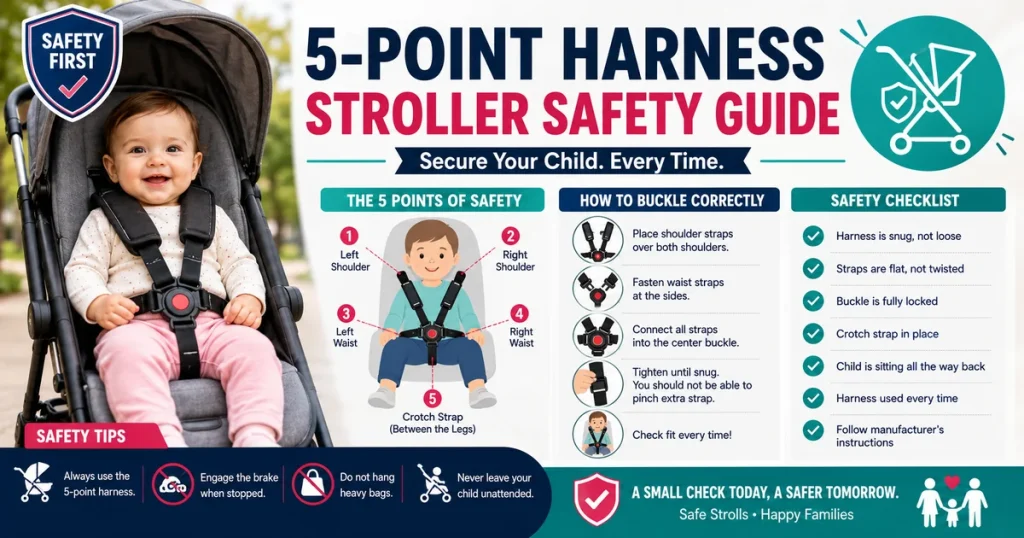
A 5-point harness is a stroller safety belt system that secures your baby at five main points. It usually includes two shoulder straps, two waist straps, and one strap between the legs.
These straps connect around the baby’s body and help keep the baby in a safer seated position during stroller use.
The 5 Points Are:
- Left shoulder strap
- Right shoulder strap
- Left waist or hip strap
- Right waist or hip strap
- Crotch strap between the legs
This design is useful because babies and toddlers move a lot. They may lean forward, slide down, twist, reach for objects, or try to stand. A 5-point harness gives better body control than a simple waist belt.
Why a 5-Point Harness Matters
Parents often think stroller safety is only about the frame, wheels, and brakes. These are important, but the harness is just as important because it directly secures your child.
A 5-point harness helps:
- Keep baby seated in the correct position
- Reduce the chance of sliding out
- Support the upper body better
- Stop toddlers from standing in the stroller
- Improve safety on uneven paths
- Keep baby secure during sudden stops
- Make stroller rides more controlled
Official source: Parents can read stroller safety advice from the HealthyChildren.org stroller safety page by the American Academy of Pediatrics.
5-Point Harness vs 3-Point Harness
Some strollers have a 3-point harness, while many modern strollers have a 5-point harness. The main difference is upper body support.
A 3-point harness usually secures the waist and between the legs. A 5-point harness adds shoulder straps, which helps secure the upper body more effectively.
| Feature | 3-Point Harness | 5-Point Harness |
|---|---|---|
| Shoulder support | No | Yes |
| Waist support | Yes | Yes |
| Crotch strap | Yes | Yes |
| Best for | Older children in some stroller models | Babies and toddlers who need better security |
| Safety control | Basic | Better full-body restraint |
For babies and young toddlers, a 5-point harness is usually the better choice because it gives more complete support.
How to Buckle a 5-Point Harness Correctly
A 5-point harness only works well when it is used correctly. If the straps are loose, twisted, or placed incorrectly, the harness may not protect your child properly.
Step-by-Step Buckling Guide
- Place your baby fully back against the stroller seat.
- Bring both shoulder straps over the shoulders.
- Place the waist straps around the baby’s hips.
- Make sure the crotch strap comes up between the legs.
- Connect all straps into the center buckle.
- Pull the adjustment straps until the harness is snug.
- Check that the straps are flat and not twisted.
- Make sure your baby is comfortable but secure.
Do this every time, even for short walks. Many accidents happen during quick trips because parents think “it will only take one minute.”
How Tight Should the Stroller Harness Be?
The harness should be snug but not painfully tight. Your baby should not be able to slide forward or stand up, but the straps should not dig into the skin.
A good harness fit means:
- Straps are flat against the body
- Straps are not twisted
- Baby cannot easily slip arms out
- Baby cannot slide down under the waist straps
- Baby can breathe and move comfortably
- Baby’s body stays centered in the stroller seat
If the harness leaves deep marks or your baby looks uncomfortable, it may be too tight. If baby can lean far forward, twist out, or slide down, it may be too loose.
Harness Strap Position for Newborns
Newborns need extra care because they cannot control their head and body well. A newborn should only use a stroller that is approved for newborn use, such as a bassinet stroller, fully reclining stroller, or compatible infant car seat travel system.
If your stroller has a harness for newborn use, check:
- The stroller is approved for newborns.
- The seat reclines properly.
- The harness fits a small baby securely.
- Baby does not slump forward.
- Baby’s head and neck are supported.
- No unapproved pillows or inserts are used.
Helpful guide: If you are choosing a stroller for a newborn, read our What Type of Stroller Is Safe for Newborns? guide.
Harness Strap Position for Older Babies
Older babies move more. They may lean forward to see things, try to twist around, or push against the footrest. This is why the harness should still be used every time.
For older babies, check:
- Shoulder straps are at a suitable height.
- Waist straps sit around the hips, not high on the stomach.
- The buckle is fully locked.
- The baby cannot pull arms out of the straps.
- The seat recline matches baby’s control and comfort.
Helpful guide: If you are not sure whether your baby is ready for stroller sitting, read our When Can a Baby Sit in a Stroller? guide.
Harness Strap Position for Toddlers
Toddlers are active and curious. They may try to stand, lean, reach, or climb out of the stroller. A 5-point harness is very important during this stage.
For toddlers, check:
- The harness is adjusted for the toddler’s height.
- The buckle is not too easy for the child to open.
- The child cannot stand while buckled.
- The stroller weight limit is not exceeded.
- The child stays seated during the ride.
Never rely only on verbal instructions like “sit down.” Use the harness every time.
Stroller Harness Safety Checklist Before Every Walk
Before leaving home, take a few seconds to check the harness. This small habit can improve stroller safety every day.
| Check | What to Look For |
|---|---|
| Buckle | Fully clicked and locked |
| Shoulder straps | Flat, secure, and not twisted |
| Waist straps | Snug around the hips |
| Crotch strap | Correctly placed between the legs |
| Fit | Snug but comfortable |
| Child position | Child is centered and not slumping |
| Strap condition | No tearing, fraying, or damage |
Other Stroller Safety Features to Check
A 5-point harness is important, but it is not the only safety feature. A safer stroller should also have a stable frame, reliable brakes, and clear manufacturer instructions.
Check these stroller safety features:
- Strong brake system
- Stable frame
- Safe folding lock
- Wide base for better stability
- Clear weight limit
- Proper recline for baby’s age
- Good wheel condition
- Secure canopy
Official source: The U.S. Consumer Product Safety Commission stroller and carriage guidance explains official stroller and carriage safety standard information.
Common 5-Point Harness Mistakes
Many parents have a stroller with a 5-point harness but still do not use it correctly. These mistakes are easy to fix once you know them.
- Using only the waist straps and skipping shoulder straps
- Leaving the harness too loose
- Using twisted straps
- Letting baby put arms outside the shoulder straps
- Not checking the buckle click
- Using the harness only for long walks
- Using unapproved strap pads that affect fit
- Not adjusting the harness as baby grows
- Using a damaged or frayed harness
- Letting toddlers stand in the stroller
The biggest mistake is thinking the harness is optional. It should be part of every stroller ride.
Should You Use Extra Harness Pads?
Some strollers come with soft strap pads. These can be fine if they are included by the manufacturer. But parents should be careful with aftermarket pads or thick accessories.
Extra pads may make the harness feel soft, but they can also change how the straps fit. If the stroller manual does not approve them, avoid using them.
Safe approach:
- Use pads that came with the stroller.
- Do not add thick pads under the straps.
- Do not use bulky accessories around the buckle.
- Check that the harness still fits snugly.
- Follow the manufacturer’s instructions.
Can a 5-Point Harness Help With Slumping?
A 5-point harness can help keep your child more centered in the stroller seat, but it cannot replace proper stroller recline or newborn support.
If a young baby slumps in the stroller, the seat may be too upright. In that case, parents should use a more reclined position, bassinet, or infant car seat setup approved for the baby’s stage.
Do not use the harness to force a baby into an upright position before they are ready.
Helpful guide: For newborn stroller support, read our Best Infant Stroller guide.
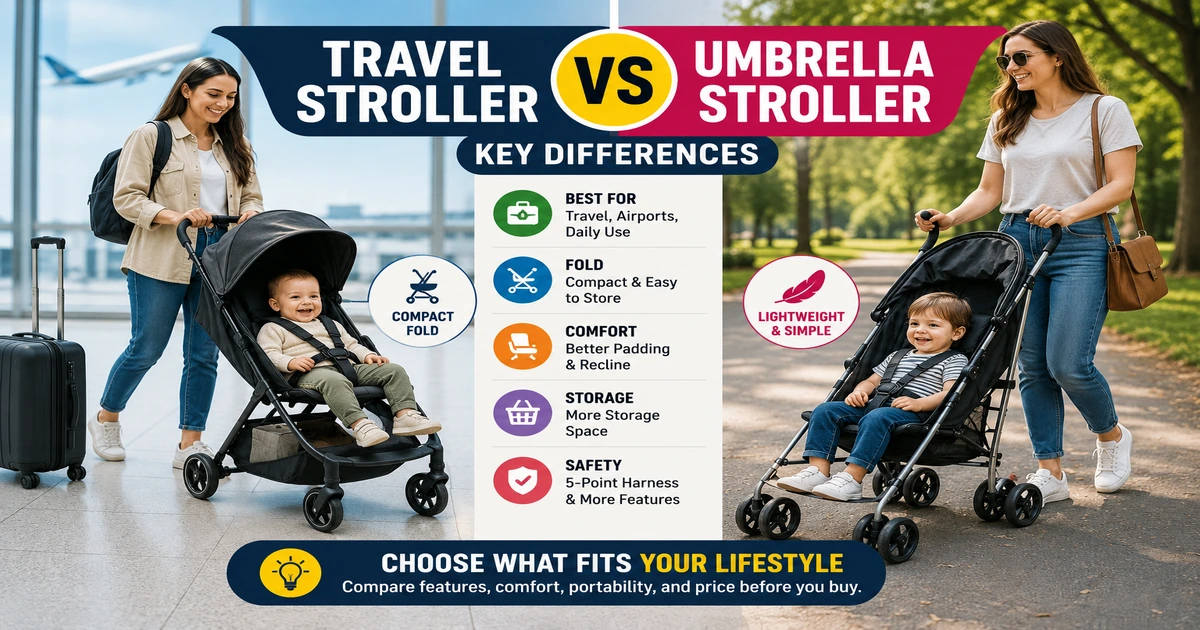
5-Point Harness Safety for Travel Strollers
Travel strollers are lightweight and compact, which makes them useful for airports, vacations, and city trips. But because they are lighter, harness use becomes even more important.
When using a travel stroller, check:
- The 5-point harness is fully buckled.
- The stroller is locked open.
- The brake works properly.
- The child is within the weight limit.
- No heavy bag is hanging from the handlebar.
- The stroller is stable on uneven surfaces.
Lightweight does not mean careless. Always secure your child before moving.
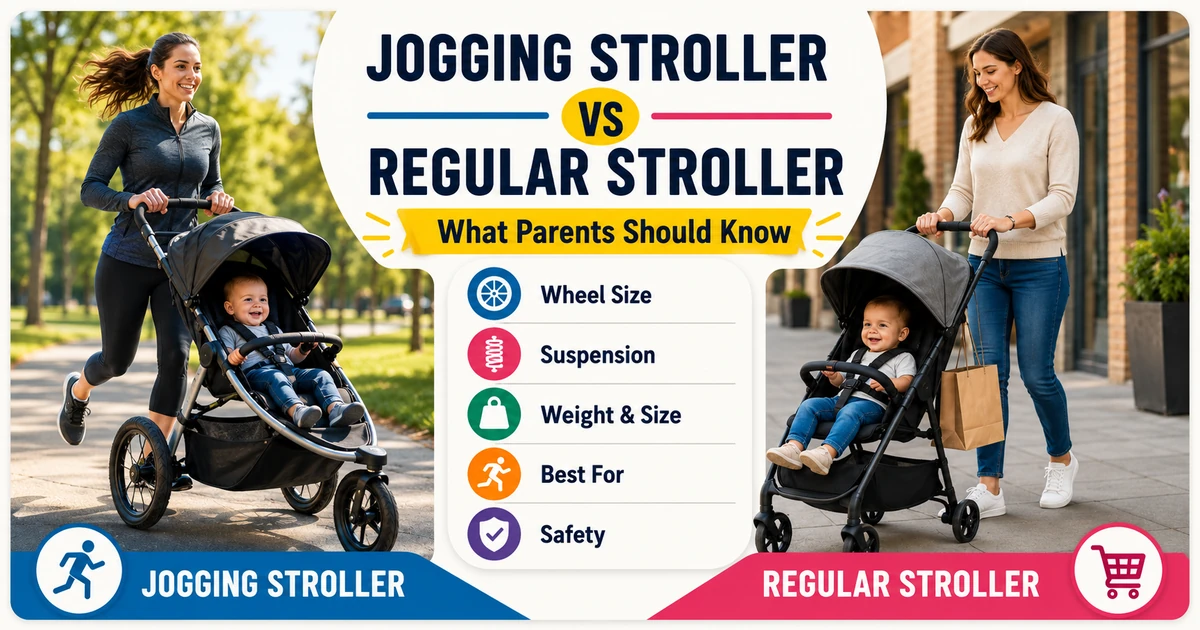
5-Point Harness Safety for Jogging Strollers
Jogging strollers move faster than regular strollers and may be used on outdoor paths. This makes harness fit very important.
Before using a jogging stroller, check:
- The child meets the stroller’s age recommendation.
- The 5-point harness is snug.
- The front wheel is locked if required.
- The wrist strap is used if included.
- The brake works properly.
- The route is smooth and safe.
Do not jog with a newborn in a regular stroller seat. Always follow the jogging stroller manual and ask your pediatrician if unsure.
5-Point Harness Safety for Double Strollers
Double strollers need extra attention because two children can move at the same time. Each child should have their own harness and each harness should be checked separately.
For double strollers:
- Buckle each child separately.
- Do not let one child ride unbuckled.
- Check both seat weight limits.
- Make sure both harnesses fit properly.
- Use the brake when loading or unloading children.
- Do not overload the storage basket.
A double stroller can feel stable, but it still needs correct harness use every time.
Cleaning and Maintaining the Harness
A dirty or sticky harness can become difficult to adjust. Food, milk, dust, sunscreen, and outdoor dirt can collect around the straps and buckle.
To maintain the harness:
- Wipe straps with a damp cloth when needed.
- Follow the stroller manual for cleaning instructions.
- Do not use harsh chemicals on straps.
- Check the buckle for crumbs or dirt.
- Let straps dry fully before storing.
- Inspect for fraying or damage regularly.
If the buckle does not click properly, stop using the stroller until the issue is fixed.
Used Stroller Harness Safety
If you buy or receive a used stroller, check the harness carefully before using it with your baby.
Used stroller checklist:
- Are all harness straps included?
- Does the buckle click securely?
- Are the straps torn or frayed?
- Can the harness be adjusted?
- Is the stroller manual available?
- Has the stroller been recalled?
- Are any parts missing?
If the harness is damaged or incomplete, do not use the stroller until you can get correct replacement parts from the manufacturer.
Buying Checklist for a 5-Point Harness Stroller
Before buying a stroller, check the harness carefully. Do not focus only on color, fold style, or price.
| Buying Point | Why It Matters |
|---|---|
| 5-point harness | Gives better shoulder, waist, and crotch support |
| Easy adjustment | Helps fit the harness as baby grows |
| Strong buckle | Keeps straps locked during stroller use |
| Comfortable straps | Reduces irritation during longer rides |
| Multiple shoulder heights | Helps match different baby sizes |
| Clear manual | Shows how to use the harness correctly |
Amazon Buying Tips
When shopping for a stroller on Amazon, product titles may say “5-point harness,” but parents should still check the images, product description, and recent reviews.
Before buying, check:
- Does the stroller clearly include a 5-point harness?
- Is the harness adjustable?
- Does the buckle look easy but secure?
- Are there parent complaints about loose straps?
- Is the stroller suitable for your baby’s age?
- Does the stroller recline enough for your child?
- What is the weight limit?
- Does the stroller meet your daily use needs?
Check 5-Point Harness Stroller Options on Amazon
Final Verdict
A 5-point harness is one of the most important stroller safety features parents should look for. It helps secure the shoulders, waist, and between the legs, giving better support than a basic waist-only setup.
However, the harness must be used correctly. Buckle it every time, keep it snug, avoid twisted straps, adjust it as your child grows, and never leave your child unattended in the stroller.
The best stroller is not only stylish or lightweight. The best stroller is one that fits your child safely, has a secure harness, strong brakes, stable frame, and clear instructions.
Best rule: If your child is in the stroller, the harness should be buckled.
Frequently Asked Questions
What is a 5-point harness on a stroller?
A 5-point harness is a stroller safety belt system with two shoulder straps, two waist straps, and one crotch strap between the legs.
Is a 5-point harness better than a 3-point harness?
Yes, a 5-point harness usually gives better upper body support because it includes shoulder straps along with waist and crotch straps.
Should I use the stroller harness every time?
Yes, parents should use the stroller harness every time the child rides in the stroller, even for short walks.
How tight should a stroller harness be?
The harness should be snug but comfortable. The child should not slide down, stand up, or easily pull arms out of the straps.
Can a newborn use a 5-point harness stroller?
A newborn can use a stroller with a 5-point harness only if the stroller is approved for newborn use and provides proper recline and body support.
Can I add extra strap pads to the harness?
Only use strap pads that came with the stroller or are approved by the manufacturer. Avoid thick aftermarket pads that change harness fit.
What should I do if the harness buckle is broken?
Stop using the stroller until the buckle is repaired or replaced with manufacturer-approved parts.
Do toddlers still need a 5-point harness?
Yes, toddlers should still be secured with the stroller harness because they may stand, lean, or try to climb out.