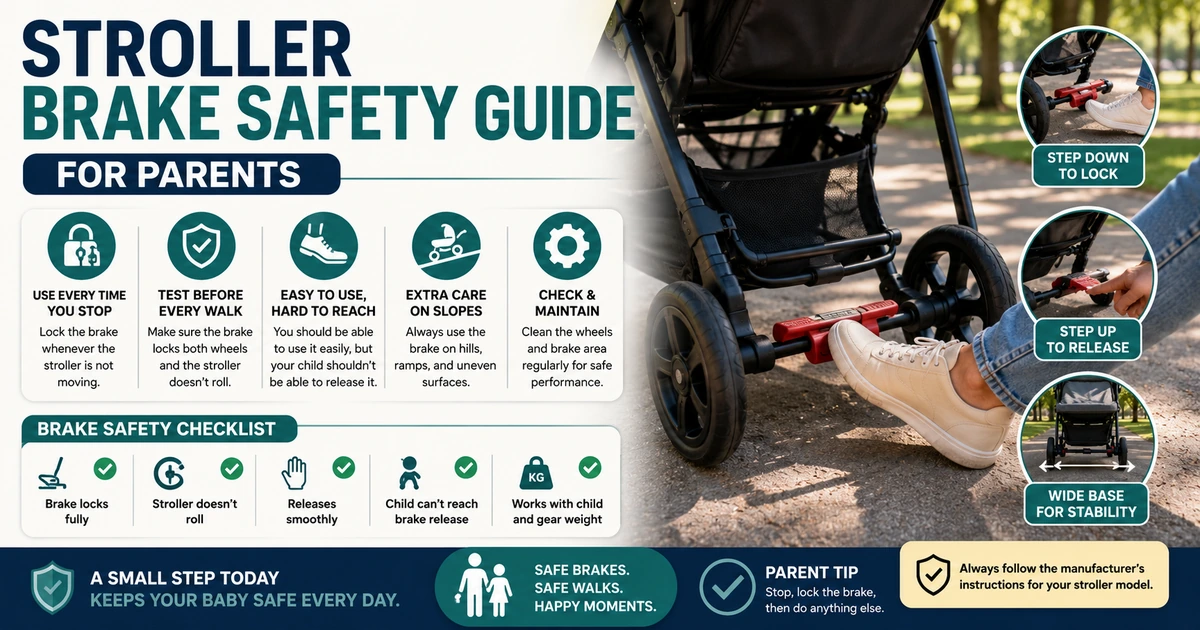
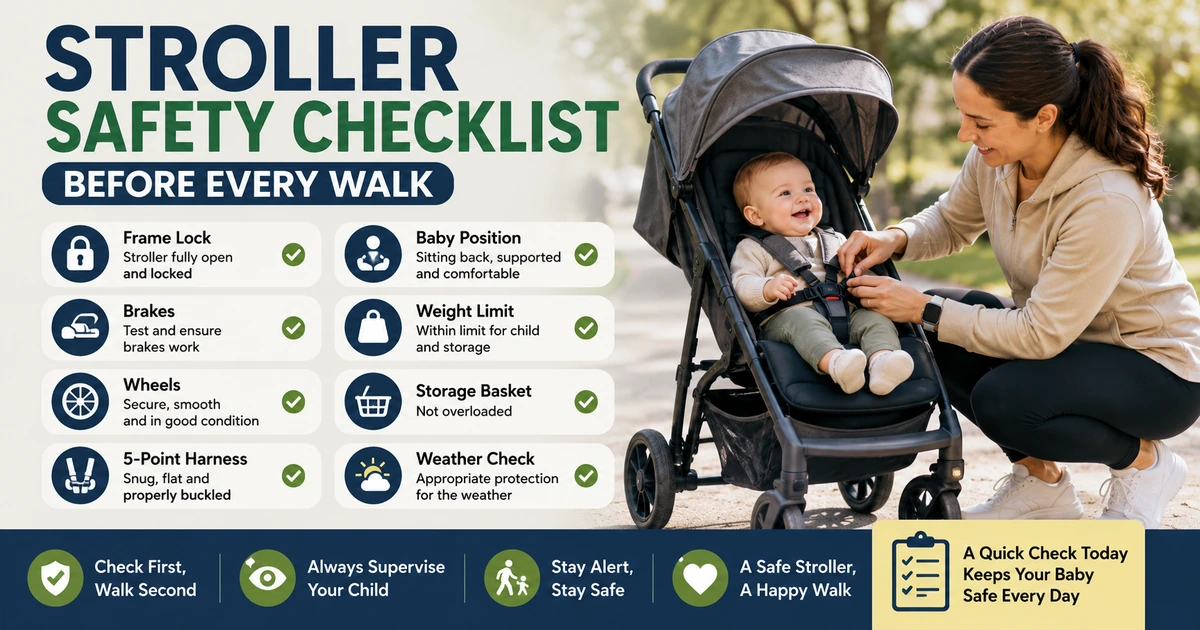
Stroller wheels may look like a simple part, but they affect almost everything about stroller safety. Good wheels help the stroller move smoothly, turn properly, stop safely, and stay stable during daily walks.
This stroller wheel safety guide explains what parents should check before every walk, how different wheel types work, which wheels are better for different surfaces, what warning signs to watch for, and how to choose a stroller with safer wheels.
A stroller with weak, loose, cracked, or dirty wheels can become difficult to push and control. That is why wheel safety should be part of every parent’s stroller checklist.
Quick Answer
Parents should check stroller wheels before every walk. Make sure wheels are firmly attached, spin smoothly, do not wobble, are not cracked, and are suitable for your daily walking surface. Also check brakes, weight limit, and frame stability because wheel safety works together with the full stroller design.
| Wheel Safety Check | What Parents Should Confirm |
|---|---|
| Wheel attachment | Wheels are firmly attached and not loose |
| Wheel movement | Wheels spin smoothly without sticking |
| Wheel condition | No cracks, damage, flat spots, or missing parts |
| Wheel wobble | Stroller does not shake or pull to one side |
| Brake connection | Brakes lock wheels properly when stopped |
| Surface match | Wheel type matches sidewalk, mall, park, or travel use |
Why Stroller Wheel Safety Matters
Wheels affect how safely you can push, turn, stop, and control the stroller. If the wheels are weak or damaged, the stroller may become unstable, hard to steer, or unsafe on uneven surfaces.
Wheel safety matters most when you are:
- Walking on rough sidewalks
- Crossing roads
- Using ramps
- Walking in parks
- Shopping in crowded places
- Loading the stroller into a car trunk
- Using a stroller with a heavier toddler
- Walking during travel or airport trips
Helpful guide: For a full pre-walk safety check, read our Stroller Safety Checklist Before Every Walk.
1. Check Wheel Attachment Before Every Walk
Before placing your baby in the stroller, check that all wheels are attached correctly. A loose wheel can affect balance and control.
Check these points:
- All wheels are locked into the stroller frame.
- No wheel feels loose when you gently shake it.
- Wheel pins, clips, or locks are secure.
- No wheel is missing a cover or part.
- The stroller does not lean to one side.
- The wheel area does not make unusual noise.
If a wheel does not attach properly, do not use the stroller until the issue is fixed.
2. Check for Wheel Wobbling
A wobbling wheel is a warning sign. It can make the stroller harder to control, especially when turning, crossing roads, or walking on uneven paths.
Signs of wheel wobble include:
- The stroller shakes while moving.
- One wheel moves side to side.
- The stroller pulls to one side.
- The front wheel vibrates quickly.
- The stroller feels unstable on turns.
- The wheel makes clicking or rattling sounds.
A small wobble may become a bigger safety problem if ignored. Check the manual or contact the manufacturer if the wobble continues.
3. Check Wheel Cracks and Damage
Stroller wheels can wear down over time. Daily walking, rough surfaces, heat, rain, and car trunk storage can all affect wheel condition.
Look for:
- Cracked rubber
- Flat spots
- Loose tire material
- Broken plastic parts
- Bent wheel frame
- Missing wheel caps
- Uneven wheel wear
If a wheel looks damaged, replace it with a manufacturer-approved part. Do not use random parts that do not match the stroller model.
4. Check the Brake and Wheel Lock Together
Wheel safety and brake safety work together. Even if the wheels look fine, the stroller is not safe if the brake does not lock properly.
Before every walk:
- Press the brake fully.
- Gently push the stroller forward and backward.
- Check whether locked wheels stay still.
- Release the brake and check smooth movement.
- Listen for sticking or grinding sounds.
Helpful guide: For detailed brake checks, read our Stroller Brake Safety Guide for Parents.
5. Understand Different Stroller Wheel Types
Different stroller wheels are made for different uses. A stroller that works well in a mall may not work well on rough sidewalks or park paths.
| Wheel Type | Best For | Possible Issue |
|---|---|---|
| Small plastic wheels | Smooth floors, malls, short errands | May struggle on rough sidewalks |
| Foam-filled wheels | Daily walks and city use | Can wear down over time |
| Rubber wheels | Better grip and smoother movement | May add weight |
| Air-filled tires | Jogging strollers and rougher paths | May need air pressure checks |
| All-terrain wheels | Parks, uneven paths, outdoor use | Often bulkier for small cars |
The best wheel type depends on where you walk most often.
6. Small Wheels vs Large Wheels
Small stroller wheels are usually lighter and more compact. Large wheels usually handle rough surfaces better. Neither option is perfect for every parent.
| Wheel Size | Pros | Cons |
|---|---|---|
| Small wheels | Lightweight, compact, easier for travel | Can struggle on bumps and rough paths |
| Medium wheels | Good balance for daily use | May not be ideal for jogging |
| Large wheels | Smoother on rough surfaces | Can make stroller bulky and heavier |
If you mostly use malls, airports, and smooth sidewalks, small or medium wheels may be enough. If you walk on rough sidewalks, parks, or uneven paths, stronger wheels are better.
7. Front Wheel Safety
The front wheel controls steering. If the front wheel is weak, stuck, or wobbling, the stroller may become difficult to control.
Check front wheel safety:
- Front wheels turn smoothly.
- Swivel function works properly.
- Wheel lock works if included.
- No dirt is stuck around the wheel.
- Wheel does not shake at normal walking speed.
- Front wheel does not suddenly stop or jam.
For jogging strollers, follow the manual about locking the front wheel before running.
8. Rear Wheel Safety
Rear wheels support much of the stroller’s weight and are often connected to the brake system. If rear wheels are damaged, brake performance may also suffer.
Check rear wheels for:
- Firm attachment
- Smooth rolling
- No cracks or bending
- Brake lock connection
- No wobbling
- No stuck stones or dirt
Rear wheel problems can affect stability when stopping, turning, or lifting the stroller.
9. Wheel Safety on Different Surfaces
Not all stroller wheels perform the same on every surface. Parents should match wheel type with their daily walking route.
| Surface | Wheel Safety Tip |
|---|---|
| Mall floors | Small wheels can work well if brakes are reliable |
| City sidewalks | Medium wheels with good steering are helpful |
| Broken sidewalks | Stronger wheels and suspension are better |
| Park paths | Larger wheels may handle bumps better |
| Gravel or grass | All-terrain wheels are usually better |
| Airports | Compact wheels and smooth steering are useful |
Do not force a stroller onto a surface it is not designed for. Slow down on uneven ground.
10. Wheel Safety and Stroller Weight Limit
As your child gets heavier, wheel performance becomes more important. A stroller that moved smoothly with a small baby may feel harder to push with a heavier toddler.
Watch for these signs:
- Wheels feel stressed.
- Stroller becomes harder to push.
- Wheels wobble more often.
- Brake does not hold as strongly.
- Stroller pulls to one side.
- Frame feels less stable.
Helpful guide: To understand child weight and stroller capacity, read our Stroller Weight Limit Guide for Parents.
11. Wheel Safety for Travel Strollers
Travel strollers are popular because they are compact and easy to carry. But many travel strollers have smaller wheels, so parents should check wheel strength and steering carefully.
For travel strollers, check:
- Wheels roll smoothly on airport floors.
- Wheels do not jam after folding.
- Wheels are not damaged during car trunk storage.
- Brake still works after travel.
- Front wheels swivel properly.
- Wheel size matches your daily use.
Helpful guide: If trunk space and compact fold matter to you, read our How to Choose a Stroller for Small Car Trunks guide.
12. Wheel Safety for Jogging Strollers
Jogging strollers usually have larger wheels and stronger frames. But parents should still follow the manual carefully because jogging creates more movement than normal walking.
Before using a jogging stroller:
- Check tire condition.
- Check air pressure if wheels are air-filled.
- Lock the front wheel if the manual requires it.
- Use the wrist strap if provided.
- Check brake function.
- Make sure your child meets the age and development guidance.
Helpful guide: For more details, read our Jogging Stroller vs Regular Stroller guide.
13. Wheel Safety for Double Strollers
Double strollers carry more weight than single strollers. Because of that, wheel strength, brake performance, and balance become even more important.
For double strollers, check:
- All wheels are firmly attached.
- Stroller does not pull to one side.
- Brake locks properly with both seats loaded safely.
- Wheel size matches stroller weight.
- Frame does not shake.
- Both children are within weight limits.
- Storage basket is not overloaded.
When one child gets out of a double stroller, balance can change. Always lock the brake first.
14. Wheel Safety for Newborns
Newborns need a smooth and stable ride because they do not have strong head and neck control. Rough wheels or sudden bumps can make them uncomfortable.
For newborn stroller wheel safety:
- Choose wheels that roll smoothly.
- Avoid rough paths if the stroller has small wheels.
- Use proper recline or bassinet mode.
- Slow down over bumps.
- Check baby’s head and body position often.
- Use the harness correctly.
A smooth ride is not only about comfort. It also helps keep baby’s position safer during outings.
15. Wheel Safety for Toddlers
Toddlers are heavier and move more than newborns. They may lean, kick, twist, or try to climb out. This can put more pressure on stroller wheels.
For toddler stroller wheel safety:
- Check the stroller weight limit.
- Check wheel wobble more often.
- Use the harness every time.
- Do not let toddler place feet near wheels.
- Slow down when turning.
- Check brakes before stopping.
If the stroller feels difficult to push with your toddler, the wheels or stroller capacity may not be suitable anymore.
16. How to Clean Stroller Wheels
Dirty wheels can affect stroller movement. Mud, stones, hair, string, and dust can get stuck around the wheel area.
Simple cleaning steps:
- Remove loose dirt with a dry cloth or brush.
- Check around the wheel axle.
- Remove hair, string, or small stones carefully.
- Wipe the wheel surface.
- Dry the wheel area after rain.
- Test wheel movement before the next walk.
Always follow the stroller manual before using cleaning products or lubricants.
17. How Often Should Parents Check Stroller Wheels?
Parents should do a quick wheel check before every walk and a deeper check regularly, especially if the stroller is used daily.
| Check Frequency | What to Do |
|---|---|
| Before every walk | Check loose wheels, wobble, brake, and smooth movement |
| Weekly | Clean wheels and check for damage |
| Monthly | Inspect wheel parts, frame connection, and wear |
| After travel | Check wheels after flights, car trunks, buses, or storage |
| After rough use | Check wheels after parks, gravel, rain, or muddy paths |
18. Warning Signs Your Stroller Wheels Are Unsafe
Stop using the stroller and inspect it if you notice wheel problems. Do not ignore early warning signs.
- Wheel is loose or detached.
- Wheel wobbles badly.
- Stroller pulls strongly to one side.
- Wheel is cracked or broken.
- Brake does not lock the wheel.
- Wheel gets stuck often.
- Wheel makes grinding noise.
- Stroller shakes while walking.
- Front wheel vibrates at normal speed.
- Wheel does not spin after cleaning.
If these problems continue, check the manual or contact the stroller manufacturer.
19. Used Stroller Wheel Safety
If you buy or receive a used stroller, check the wheels carefully. Used stroller wheels may have hidden wear, missing parts, or recall issues.
Used stroller wheel checklist:
- Check brand and model number.
- Check recall history.
- Inspect all wheels for damage.
- Test wheel attachment.
- Test brakes with the wheels.
- Check for wobbling.
- Check replacement part availability.
- Do not use if wheels are broken or missing parts.
Official source: Parents can review stroller and carriage safety information from the U.S. Consumer Product Safety Commission stroller guidance page.
20. Official Stroller Safety Basics
Wheel safety should not be separated from overall stroller safety. A stroller should have strong wheels, reliable brakes, a stable base, proper harness, and safe folding lock.
Important safety basics include:
- Use the harness every time.
- Use the brake whenever stopped.
- Keep heavy bags off the handlebar.
- Choose a stroller with a stable base.
- Keep baby supervised.
- Follow the manufacturer manual.
Official source: Parents can read stroller safety tips from HealthyChildren.org by the American Academy of Pediatrics.
Stroller Wheel Safety Checklist
| Wheel Check | Done? |
|---|---|
| All wheels are attached securely | Yes / No |
| No wheel is cracked or damaged | Yes / No |
| Wheels spin smoothly | Yes / No |
| No wheel wobbles badly | Yes / No |
| Front wheels steer properly | Yes / No |
| Rear wheels connect with brake properly | Yes / No |
| No dirt, stones, or string are stuck | Yes / No |
| Wheel type matches walking surface | Yes / No |
Common Stroller Wheel Mistakes Parents Should Avoid
Many wheel safety problems come from small habits that parents forget during busy days.
- Using the stroller with a loose wheel
- Ignoring wheel wobble
- Using small wheels on rough paths
- Not cleaning wheels after mud or rain
- Not checking wheels after travel
- Using damaged wheels with a heavier toddler
- Ignoring brake and wheel lock problems
- Using random replacement wheels
- Buying a used stroller without wheel inspection
- Forcing a stroller over surfaces it is not made for
Amazon Buying Tips
When buying a stroller on Amazon, look beyond color and price. Check wheel quality, brake system, and parent reviews about steering and daily use.
Before buying, check:
- Wheel size
- Wheel material
- Front wheel swivel and lock
- Rear wheel brake system
- Suspension if available
- Terrain suitability
- Weight limit
- Folded size
- Replacement wheel availability
- Recent parent reviews
Check Strollers With Strong Wheels on Amazon
Final Verdict: Stroller Wheel Safety Guide
Stroller wheels are not only about smooth pushing. They affect steering, braking, stability, comfort, and safety. Parents should check wheels before every walk, especially if the stroller is used daily, carried in a car trunk, or used on rough surfaces.
The best stroller wheels depend on your lifestyle. Small wheels can work for malls and travel. Larger or stronger wheels are better for rough sidewalks, parks, and outdoor use. But no matter what stroller you use, wheels should be secure, smooth, clean, and damage-free.
Best rule: If the wheels feel loose, damaged, or unstable, stop and check before walking.
Frequently Asked Questions
How often should I check stroller wheels?
Do a quick wheel check before every walk and a deeper cleaning or inspection regularly, especially if you use the stroller daily.
What are the safest stroller wheels?
The safest wheels are the ones that match your walking surface, attach securely, roll smoothly, work with reliable brakes, and stay stable under the stroller’s weight limit.
Are big stroller wheels better?
Big wheels are usually better for rough paths and outdoor use, but they can make the stroller heavier and bulkier. Small wheels may be better for travel and smooth floors.
Can I use a stroller with a wobbly wheel?
It is better not to use a stroller with a wobbly wheel until you inspect it and fix the issue. Wobbling can affect steering and stability.
Why does my stroller pull to one side?
It may be caused by a loose wheel, damaged wheel, uneven tire wear, stuck dirt, frame issue, or brake problem.
Should I clean stroller wheels?
Yes. Dirt, stones, mud, hair, or string can affect wheel movement. Clean wheels regularly and after rough or muddy use.
Are air-filled stroller tires safe?
Air-filled tires can be good for smoother outdoor rides, but parents should check tire pressure and condition as recommended by the manufacturer.
What should I check before buying a stroller for rough sidewalks?
Check wheel size, wheel material, suspension, brake system, frame stability, weight limit, and parent reviews about rough surface performance.