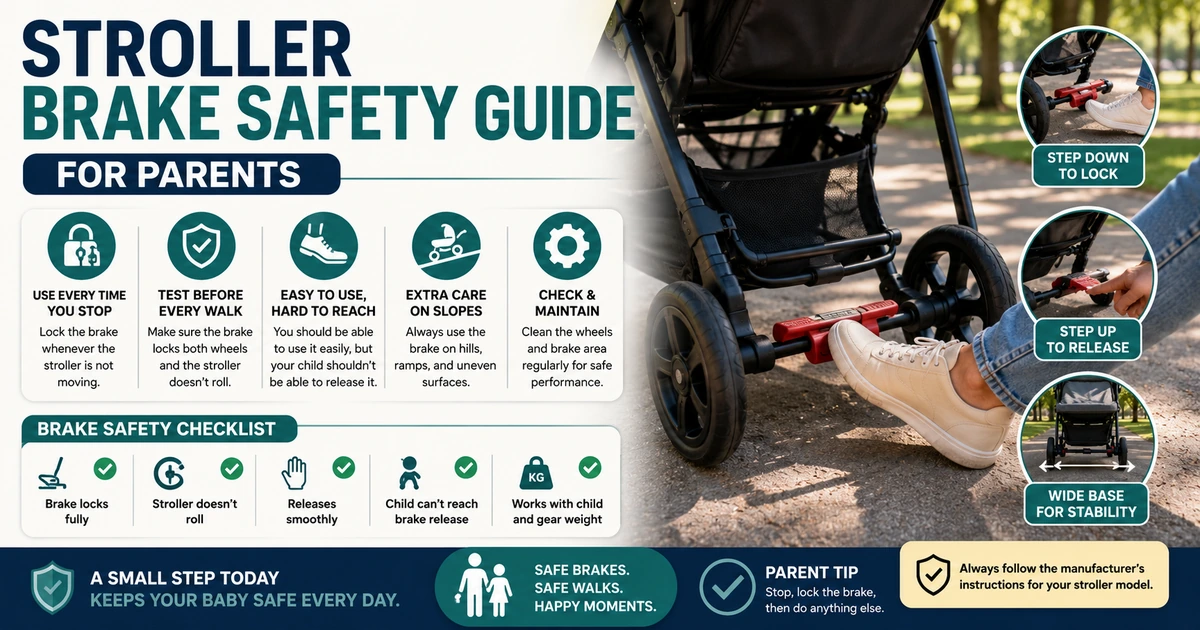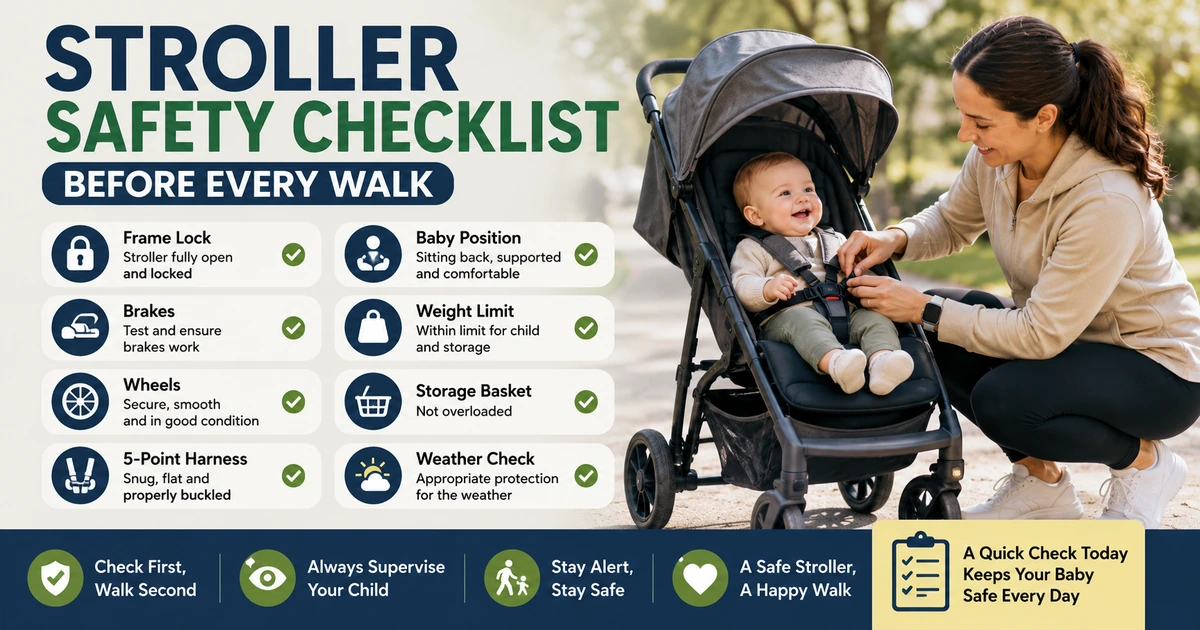
A stroller brake may look like a small feature, but it is one of the most important safety parts of any stroller. Parents often focus on stroller design, fold, storage, price, and brand, but the brake system deserves serious attention too.
This stroller brake safety guide explains how stroller brakes work, when parents should use them, how to test brakes before every walk, what mistakes to avoid, and what to check before buying a stroller.
A good brake can help keep the stroller steady when you stop, place your baby inside, take your baby out, pause on a slope, or stand in a parking lot. The best habit is simple: whenever the stroller stops, the brake should be used.
Quick Answer
Parents should use the stroller brake every time the stroller is stopped. Before every walk, check that the brake locks properly, releases smoothly, is not loose or broken, and keeps the stroller stable on flat ground and gentle slopes.
| Brake Safety Check | What Parents Should Confirm |
|---|---|
| Brake locks fully | Stroller should not roll when brake is engaged |
| Brake releases smoothly | Brake should not stick or stay half-locked |
| Child cannot reach release | Brake lever should be out of baby or toddler reach |
| Wheels stop properly | Locked wheels should not move easily |
| Brake works with weight | Test with child seated safely, not only empty stroller |
| Brake works on slopes | Use extra care on ramps, driveways, and parking areas |
Why Stroller Brake Safety Matters
Stroller brakes help prevent unwanted movement. This is important because a stroller can roll even when parents think it is standing still. A small slope, smooth floor, driveway, parking lot, or push from an older child can move the stroller unexpectedly.
Brake safety matters most when:
- You place baby in the stroller
- You take baby out of the stroller
- You adjust the harness
- You stop near a road
- You pause in a parking lot
- You stop on a ramp or slope
- You put items in the storage basket
- You stop during a long walk
Helpful guide: For a full pre-walk check, read our Stroller Safety Checklist Before Every Walk.
What Is a Stroller Brake?
A stroller brake is a locking system that helps keep the stroller from rolling when stopped. Most stroller brakes work by locking one or more wheels.
Different stroller models may use different brake designs. Some use a foot pedal, some use a hand brake, some lock both rear wheels, and some include extra control for jogging or downhill walking.
The brake system should be easy for parents to operate, but not easy for a child to release from the stroller seat.
Common Types of Stroller Brakes
| Brake Type | How It Works | Best For |
|---|---|---|
| Foot pedal brake | Parent presses a pedal near the rear wheels | Everyday strollers and travel strollers |
| Linked rear brake | One pedal locks both rear wheels together | Daily use and safer parking control |
| Individual wheel brake | Each wheel may need to be locked separately | Simple stroller designs |
| Hand brake | Brake is controlled from the handlebar | Jogging strollers or downhill control |
| Parking brake | Keeps stroller still when parked | All stroller types |
A linked rear brake is often convenient because one action can lock both rear wheels. But the exact best brake depends on stroller type, parent use, and daily walking area.
When Should You Use the Stroller Brake?
Use the stroller brake every time the stroller is stopped. Do not wait until you are on a hill or in a risky area. Brake use should become a daily habit.
Use the brake when:
- You stop to talk to someone
- You wait at a crossing
- You take a phone call
- You place baby inside
- You take baby out
- You adjust the seat recline
- You adjust the canopy
- You check the diaper
- You stop in a shop
- You pause near stairs, ramps, roads, or cars
Official source: Parents can read stroller safety tips from HealthyChildren.org by the American Academy of Pediatrics.
How to Test Stroller Brakes Before Every Walk
Testing the brake takes only a few seconds. It is a simple habit that can help parents avoid problems during daily outings.
Before every walk:
- Open the stroller fully and lock the frame.
- Place the stroller on flat ground.
- Press the brake fully.
- Gently push the stroller forward and backward.
- Check whether the locked wheels move.
- Release the brake and check smooth movement.
- Listen for unusual clicking, grinding, or sticking.
If the stroller moves while the brake is locked, do not use it until the issue is fixed.
Brake Safety When Placing Baby in the Stroller
Always use the brake before placing your baby in the stroller. This is important because the stroller may move while you are bending down, adjusting straps, or lifting your child.
Follow this order:
- Place stroller on stable ground.
- Lock the brake.
- Check that the stroller does not move.
- Place baby in the seat.
- Fasten the harness.
- Check baby position.
- Release the brake only when ready to walk.
Helpful guide: For harness fit and buckle safety, read our 5-Point Harness Stroller Safety Guide.
Brake Safety When Taking Baby Out
Taking baby out of the stroller can shift weight quickly. If the brake is not locked, the stroller may roll or move unexpectedly.
Before lifting baby out:
- Stop on flat ground if possible.
- Lock the brake.
- Keep one hand on the stroller.
- Unbuckle the harness carefully.
- Lift baby safely.
- Remove bags after baby is safe.
Be extra careful if bags are hanging from the handlebar because the stroller can become unstable when the child is removed.
Brake Safety on Slopes and Ramps
Slopes and ramps need extra attention. A stroller can roll faster than expected on a ramp, driveway, parking lot, or sloped sidewalk.
On slopes:
- Keep both hands on the handlebar.
- Move slowly.
- Do not park the stroller on a steep slope.
- Use the brake when stopped.
- Stand close to the stroller.
- Never leave the stroller unattended.
- Turn the stroller sideways only when it is safe and stable.
A brake helps, but it should not replace parent supervision on slopes.
Brake Safety in Parking Lots
Parking lots are one of the most important places to use stroller brakes. Cars may move suddenly, surfaces may be sloped, and parents may be busy loading bags or opening the car.
Parking lot safety tips:
- Lock the brake before placing baby in the stroller.
- Lock the brake before taking baby out.
- Keep the stroller close to your body.
- Do not leave the stroller behind a car.
- Do not let older children push the stroller near traffic.
- Place baby safely in the car before loading bags.
In parking lots, avoid multitasking too much. Baby safety comes first.
Brake Safety During Shopping
Shopping trips can distract parents. You may stop to check products, reach for bags, pay at checkout, or answer your phone. Use the stroller brake whenever the stroller is stopped.
During shopping:
- Lock the brake when stopping in an aisle.
- Do not block the stroller with heavy bags.
- Keep one hand close to the stroller in crowded areas.
- Do not hang heavy shopping bags from the handlebar.
- Check baby often.
- Keep stroller away from escalators.
Use elevators instead of escalators when using a stroller.
Brake Safety for Newborns
Newborns need extra care because they cannot control their head and neck well. Sudden stroller movement can affect their position and comfort.
For newborns:
- Use the brake before placing baby inside.
- Use a newborn-approved stroller setup.
- Make sure the recline is correct.
- Check that baby is not slumping.
- Keep the stroller still when adjusting blankets or canopy.
- Never leave the stroller unattended.
Helpful guide: If you are buying for a newborn, read our What Type of Stroller Is Safe for Newborns? guide.
Brake Safety for Toddlers
Toddlers move more than newborns. They may lean, kick, twist, try to stand, or touch stroller parts. That makes brake safety even more important.
For toddlers:
- Check that the child cannot reach the brake release.
- Use the harness every time.
- Lock brakes before snacks, shoes, or seat adjustments.
- Do not let toddler climb in or out alone.
- Check weight limit and seat fit.
- Keep hands and feet away from wheels and brake parts.
If your toddler can reach the brake release, the stroller may not be the safest fit for your child.
Brake Safety and Stroller Weight Limit
A stroller brake works best when the stroller is used within the manufacturer’s weight limits. If the child, basket, or accessories exceed the recommended limits, braking and stability may be affected.
Check:
- Child weight limit
- Child height limit
- Storage basket limit
- Ride-on board limit
- Accessory limit
- Total stroller capacity for double strollers
Helpful guide: For more details, read our Stroller Weight Limit Guide for Parents.
Brake Safety and Heavy Bags
Heavy bags can affect stroller balance. If a heavy diaper bag or shopping bag hangs from the handlebar, the stroller may tip backward or become harder to control.
Safer bag habits:
- Use the lower storage basket.
- Keep heavy items low.
- Do not overload the basket.
- Carry a backpack yourself.
- Remove bags before lifting baby out.
- Avoid hanging bags from the handlebar.
Brake safety and stroller balance work together. A brake cannot fix poor weight balance.
Brake Safety for Jogging Strollers
Jogging strollers may have different brake features than regular strollers. Some include a parking brake, wrist strap, and hand brake for extra control.
Before using a jogging stroller:
- Read the manual.
- Check the parking brake.
- Check the hand brake if included.
- Check wheel lock instructions.
- Use the wrist strap if provided.
- Do not run until your child meets the stroller’s age and development guidance.
Helpful guide: If you are comparing stroller types, read our Jogging Stroller vs Regular Stroller guide.
Brake Safety for Travel Strollers
Travel strollers are lightweight and compact, but parents should still check brake quality carefully. Some compact strollers have smaller wheels and smaller brake pedals, so testing before use is important.
For travel strollers, check:
- Brake pedal is easy to press.
- Brake holds on smooth floors.
- Brake does not release accidentally.
- Wheels lock properly after folding and unfolding.
- Brake is easy to operate with sandals or shoes.
- Brake parts are not damaged during travel.
After flights, bus trips, or car trunk storage, quickly check the brake before using the stroller again.
Brake Safety for Double Strollers
Double strollers carry more weight than single strollers. Because of this, brake performance is very important.
For double strollers:
- Check brake with both seats loaded safely.
- Follow per-seat and total weight limits.
- Use the brake when loading one child first.
- Use the brake when taking one child out.
- Check balance when one seat is empty.
- Do not overload storage areas.
A double stroller can shift balance when one child gets out. Always lock the brake first.
Signs Your Stroller Brake May Have a Problem
Stop using the stroller and inspect it if you notice brake problems. A weak brake can make the stroller unsafe during daily use.
Warning signs include:
- Stroller moves when brake is locked.
- Brake pedal feels loose.
- Brake pedal is hard to press.
- Brake does not click fully.
- Brake releases by itself.
- One wheel locks but the other does not.
- Brake makes grinding sounds.
- Brake sticks after release.
- Wheels wobble when brake is engaged.
- Brake parts look cracked or bent.
If you see these signs, check the manual or contact the manufacturer before using the stroller again.
How to Maintain Stroller Brakes
Brake maintenance helps keep the stroller working properly. Parents do not need to be mechanics, but regular cleaning and checking can prevent many issues.
Brake maintenance tips:
- Remove dirt from wheels and brake area.
- Check for stuck stones, string, or mud.
- Dry the stroller after rain.
- Do not force a stuck brake pedal.
- Check screws and parts as the manual allows.
- Use only manufacturer-approved replacement parts.
- Store the stroller in a dry place.
A dirty wheel area can sometimes make the brake harder to use.
Used Stroller Brake Safety
Used strollers need careful checking because brake parts may be worn, missing, or damaged. A stroller may look clean but still have a weak brake.
Before using a second-hand stroller:
- Find the brand and model number.
- Read the manual.
- Check recall history.
- Test the brake on flat ground.
- Test the brake with safe child weight.
- Check both rear wheels.
- Inspect brake pedal and wheel locks.
- Avoid using if brake parts are broken or missing.
Official source: Parents can check official stroller and carriage safety information from the U.S. Consumer Product Safety Commission stroller guidance FAQ.
Brake Safety Checklist Before Every Walk
| Check | Done? |
|---|---|
| Brake pedal is not loose or broken | Yes / No |
| Brake locks fully | Yes / No |
| Stroller does not roll when brake is on | Yes / No |
| Brake releases smoothly | Yes / No |
| Child cannot reach brake release | Yes / No |
| Wheels are secure and not wobbling | Yes / No |
| Brake works with baby seated safely | Yes / No |
| Brake is used every time stroller stops | Yes / No |
Common Stroller Brake Mistakes Parents Should Avoid
Many brake mistakes happen during busy moments. Parents may think they are stopping only for a second, but even a short pause can become risky.
- Stopping without using the brake
- Putting baby in before locking the brake
- Taking baby out before locking the brake
- Parking stroller on a slope
- Leaving stroller unattended
- Letting a toddler touch the brake release
- Ignoring weak brake signs
- Using a stroller with broken wheel locks
- Overloading the basket or handlebar
- Not checking brakes after travel or storage
Amazon Buying Tips
When buying a stroller on Amazon, do not only look at photos. Check whether the stroller has a clear, strong, easy-to-use brake system.
Before buying, check:
- Parking brake details
- Whether brake locks one wheel or two wheels
- Parent reviews about brake quality
- Wheel quality
- 5-point harness
- Stable frame
- Weight limit
- Fold lock
- Return policy
- Official manufacturer details
Check Strollers With Reliable Brakes on Amazon
Final Verdict: Stroller Brake Safety Guide
Stroller brake safety is a simple habit that parents should follow every day. Use the brake whenever the stroller stops, especially when placing baby inside, taking baby out, adjusting the harness, stopping on a slope, or standing in a parking lot.
A good stroller brake should lock fully, release smoothly, keep the stroller stable, and stay out of your child’s reach. Parents should test the brake before walks and stop using the stroller if the brake feels weak, loose, or broken.
Best rule: Stop the stroller, lock the brake, then do anything else.
Frequently Asked Questions
When should I use the stroller brake?
Use the stroller brake every time the stroller is stopped, including when placing baby in, taking baby out, adjusting the harness, or pausing during a walk.
How do I know if stroller brakes work?
Press the brake fully, then gently push the stroller forward and backward. If the stroller moves, the brake may not be working properly.
Is a brake that locks two wheels better?
A brake that locks two wheels can provide extra stability compared with locking only one wheel, depending on stroller design.
Can a toddler release the stroller brake?
Some toddlers may try to touch stroller parts. The brake release should be out of the child’s reach from the stroller seat.
Should I use the brake on flat ground?
Yes. Use the brake even on flat ground because smooth floors, small slopes, or sudden movement can still make the stroller roll.
What should I do if the brake feels loose?
Stop using the stroller and check the manual or contact the manufacturer. Do not continue using a stroller with a weak or loose brake.
Are hand brakes necessary on all strollers?
No. Hand brakes are more common on jogging strollers or strollers designed for extra downhill control. Everyday strollers usually use parking brakes.
Should I check brakes on a used stroller?
Yes. Used strollers should be checked carefully for brake function, wheel condition, missing parts, and recall history before use.