

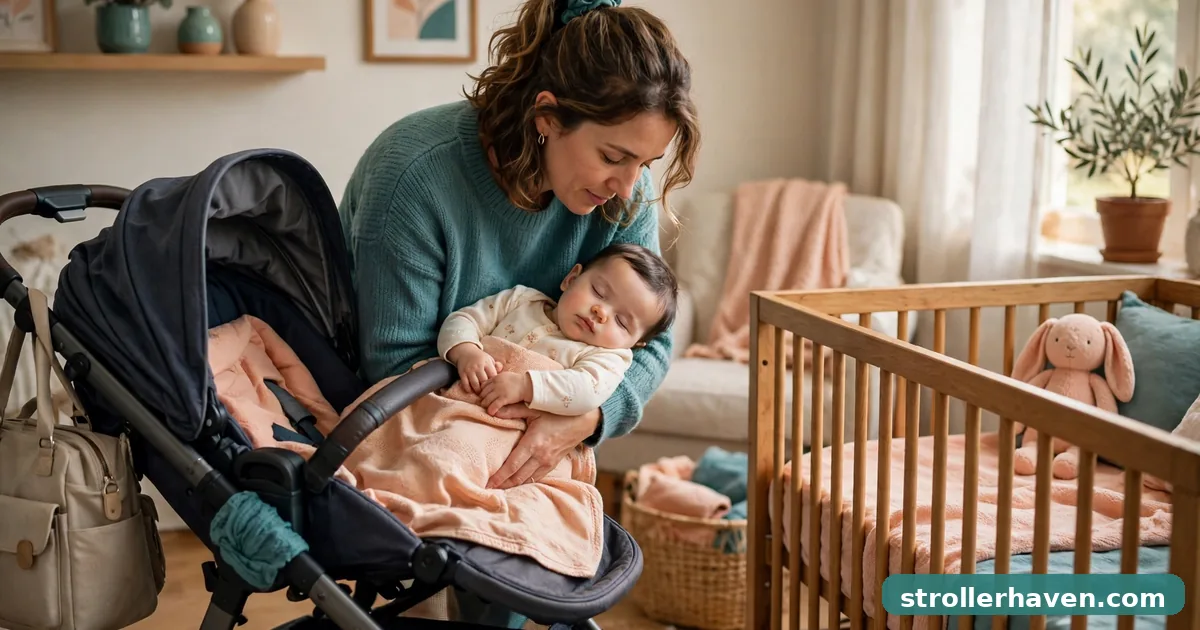
How long can baby stay in a stroller? As a working rule, about one to two hours at a stretch for most babies, with a real break out of the seat — shorter for newborns (30 minutes to an hour) and longer for toddlers (up to 2–3 hours with walking breaks). The honest answer is that the sources disagree on the exact number, and this guide shows you where each figure comes from so you can judge it yourself.
This guide is research-based, built from the three leading guides on this exact question, plus the safety guidance they point to from the American Academy of Pediatrics (AAP) and the U.S. Consumer Product Safety Commission (CPSC). It covers the age-by-age limits, why long stroller days carry real risks, how sleep in a stroller differs from sleep in a crib, and the signs that mean take your baby out now. If you are planning a long day out, also read our best stroller for Disney World 2026 guide — theme-park days are where stroller time adds up fastest.
Why Stroller Time Limits Matter
A stroller is a short-trip helper, not an all-day seat. Babies need free movement to grow strong, and every hour spent strapped into a stroller is an hour not spent on the floor learning to roll, crawl and explore. Limiting how long a baby stays in a stroller protects muscle development, posture and mood in equal measure.
That is why the guides agree on the principle even when they disagree on the number: plan breaks, watch your baby, and treat the stroller as transport between activities rather than the activity itself. A baby who rides happily for an hour and then plays on a blanket is getting the best of both worlds.
Health and Development Benefits
Free movement builds the motor skills a stroller cannot — crawling, pulling up, and walking all come from floor time, not from sitting. Stroller time should be balanced with tummy time and free play, so your baby explores the world with their whole body. Short rides with talk and smiles also support language and social development far better than a long, silent stretch in the seat.
Avoiding Physical Issues
Long stroller stays can contribute to flat head syndrome and poor posture, because a baby’s bones are still soft and one position presses on the same spot for hours. Changing positions often, taking the baby out for breaks, and alternating sides all help. The risk is not one long afternoon — it is the pattern of all-day, every-day stroller time with no floor play to balance it.
Emotional Well-being
Babies crave interaction, and in a stroller they can feel lonely if nobody is engaging with them. Short rides with talk, songs and smiles make outings joyful, while a long stretch of staring at the same canopy can turn into fussiness that looks like tiredness but is really boredom. If your baby goes quiet or stops looking around, that is often a sign they need you, not more strolling.
Factors Affecting How Long Baby Can Stay in Stroller
No single number fits every baby or every outing, because several things change the safe length of a stroller ride. Age and development matter most, but the stroller itself, your baby’s mood and health, the weather, and what the outing is for all shift the answer. Plan around all five, not just the clock.
A quick errand is different from a day out: for long trips, plan breaks into the schedule before you leave, so a stop is part of the plan rather than a rescue. The sections below turn each factor into something you can check before you head out the door.
Baby’s Age and Development Stage
Newborns are delicate and need frequent breaks, while older babies are sturdier but still have limits. Always match stroller time to your baby’s stage rather than to another family’s schedule. A newborn who needs a feed every two hours sets the outing length by itself, no matter what the stroller’s manual allows.
Stroller Type and Setup
Some strollers recline fully for newborns, while others are upright seats meant for toddlers. Check the manual for the age and weight limits of your exact model, and adjust the harness for a snug fit every time. A fully reclined bassinet or pramette mode is a different sleep position from an upright seat, and that difference matters for safety.
Baby’s Mood and Health
A happy, healthy baby might enjoy a longer ride, while a sick or tired baby will not. Listen to your baby’s cues and keep trips short if they are grumpy, teething or unwell. Pushing through a bad mood rarely ends well — a short, happy outing beats a long, miserable one every time.
Weather and Environment
Hot or cold weather shortens safe stroller time, because a baby cannot regulate temperature the way an adult can. Dress your baby in layers, use sun shades or rain covers, and pick smooth paths for a comfortable ride. In summer heat, check the back of your baby’s neck often: if it feels sweaty, they are too warm.
Purpose of the Outing
A quick errand is different from a day out, and a day out is different from a travel day. For long trips, plan breaks every hour or so — a feed, a nappy change, a stretch on a blanket. This keeps your baby comfortable and turns a marathon into a series of short, pleasant rides.
Age-by-Age Guidelines for Stroller Time
Here is a simple guide based on age, with the source named for each figure so you can see where the numbers come from. Every baby is unique, so use this as a starting point and adjust for your own child’s cues. The table below is the short version; the sections after it explain each band.
| Age | How long in the stroller | Breaks | Source |
|---|---|---|---|
| Newborns (0–3 months) | 30 minutes to 1 hour at most | Every 30 minutes | BabiesCarrier |
| Infants (4–9 months) | 1 to 2 hours | Every hour | BabiesCarrier |
| Infants (general) | 30 to 45 minutes, then longer as they grow | Watch for discomfort | Natural Parenting Center |
| Toddlers (10 months and up) | 2–3 hours total, 1–2 hours continuous | Walking breaks between rides | BabiesCarrier |
| Any age, general rule | 1 to 2 hours at a stretch | Floor play between rides | Natural Parenting Center |
Notice the one real disagreement: for infants, BabiesCarrier says 1 to 2 hours while Natural Parenting Center says 30 to 45 minutes. Neither is an official medical rule — both are parenting-guide recommendations — so the safe way to use them is to take the shorter figure for a young infant and lengthen it only as your baby shows they are comfortable.

Newborns (0-3 Months)
Newborns should stay in a stroller for 30 minutes to an hour at most, according to BabiesCarrier. They sleep a lot but need frequent feeds, so use a fully reclined stroller or bassinet for back support and take breaks every 30 minutes for cuddles or nappy changes. On a 45-minute walk, stop halfway to check on your baby and offer a feed and a snuggle.
Infants (4-9 Months)
Infants can handle 1 to 2 hours in a stroller according to BabiesCarrier, but break it up every hour — while Natural Parenting Center advises starting with 30 to 45 minutes and increasing gradually. They are more alert and curious now, so point out sights during stops and let them touch safe toys. Attach toys to the stroller for entertainment, but avoid overstimulation with too many items at once.
Toddlers (10 Months and Up)
Toddlers can stay in a stroller for 2–3 hours, but limit continuous sitting to 1–2 hours, according to BabiesCarrier. They love to move, so encourage walking breaks between rides — at the park, let your toddler walk between play areas and use the stroller for the longer stretches. This helps build leg strength and keeps the stroller a tool rather than a cage.
Understanding Baby’s Development Stages
Recognizing your baby’s development stages helps determine when to use a stroller safely, because the seat is only as safe as the baby in it. The newborn and infant phases have different needs, and the transition between them is marked by head control and sitting — not by a birthday. Watch the milestones, not just the months.
That is also why the same stroller can be right at six months and wrong at three: a baby who cannot hold their head up needs full recline and support, while a baby who sits steadily can use an upright seat. If you are unsure which stage your baby is in, ask your paediatrician rather than guessing from the calendar.

Newborn Stage
During the newborn stage, which lasts from birth to about two months, your baby requires significant support. At this time, babies cannot hold up their heads or sit up independently, so use a car seat or a stroller designed for newborns with full recline features, and look for strollers that include a bassinet attachment. Wrap your baby securely and ensure their head and neck are stable, because strollers without this support are not safe for use yet.
Infant Stage
The infant stage ranges from two months to around six months, when your baby gradually starts gaining head and neck control. Partial recline strollers can be used for infants who can sit up with support, but ensure your baby is sturdy enough to hold their head up while seated. Pay attention to signs of readiness: if your baby can hold their head up independently, a stroller can provide adventure and comfort.
Guidelines for Stroller Use
Stroller use comes with specific guidelines to ensure safety and comfort for your baby, and the two that matter most are when to start and how long to stay. Understanding these rules helps you make informed choices on every outing, from a walk around the block to a full day at a theme park. The rest of this guide turns them into habits.
Both rules work together: a baby who is not ready for an upright seat should not be in one at all, however short the ride, and a baby who is ready still needs breaks. Getting the start age right is the foundation; the duration limits in the next section are the roof.
Recommended Age to Start
Babies can generally start using a stroller around six months, according to Natural Parenting Center, because by this age most babies achieve adequate head and neck control, which makes sitting up in a stroller safer. Before six months, use strollers that fully recline for newborns, and always check your baby’s development — if your baby shows signs of readiness, such as holding their head up independently, you can transition to a stroller suitable for infants.
Duration of Use
Limit time in the stroller to about one to two hours at a stretch, according to Natural Parenting Center. While strollers offer convenience, too much time in one can restrict your baby’s movement and exploration, so ensure breaks for playtime on the ground so your baby can strengthen their muscles. For longer outings, check for comfort items like toys, snacks and a well-fitted harness to keep your baby secure.
Safety Guidelines
Safety is paramount when using a stroller, and the guidelines below are the non-negotiables that apply on every ride, at every age. The harness and the stroller’s stability do more for your baby’s safety than any feature on the box, and both need checking every time you head out. A stroller is safe when it is used the way its maker intended.
Two more safety points belong here even though no competitor gave them a heading: never leave a sleeping baby unsupervised in a stroller, and never let a baby sleep routinely in a stroller seat — the AAP’s position, quoted in the FAQ below, is to move a sleeping baby to a firm, flat sleep surface as soon as possible. For the full picture, see our stroller and infant car seat safety guide and our best stroller wagon for 2 kids 2026 guide, which covers wagon safety rules for longer family days out.

Harness and Restraints
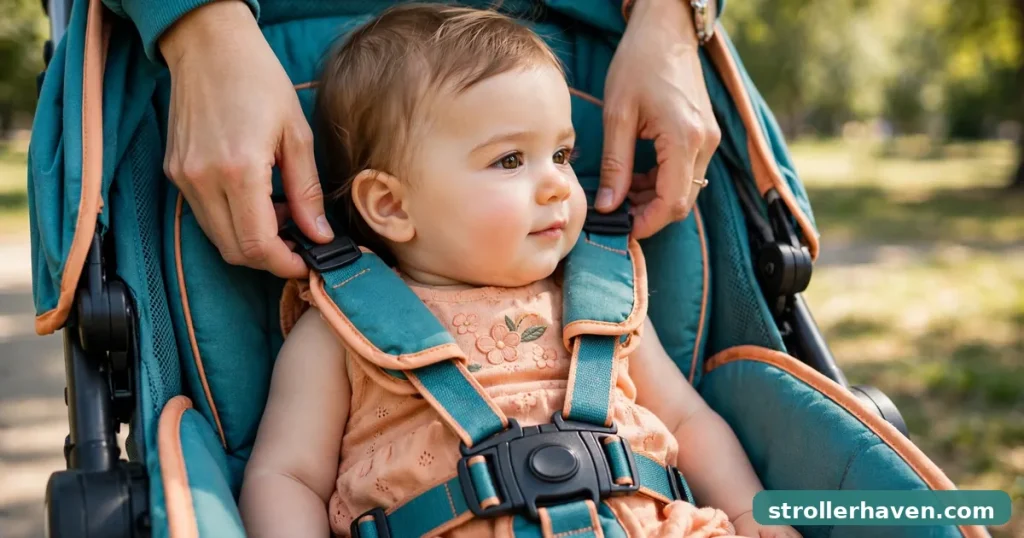
Always use the harness system on the stroller, and most strollers come equipped with a five-point harness that secures your baby at the shoulders, waist and between the legs. Buckling your baby in prevents them from slipping or climbing out, so check for proper fit — the harness should be snug but not uncomfortable — and adjust the straps as your baby grows to ensure safety remains a priority.
Stroller Stability
Choose a stroller with a wide wheelbase for better stability, because even on uneven surfaces a sturdy design minimises the risk of tipping. Lock the front wheels when stationary, especially on slopes, confirm the stroller can support your baby’s weight as specified in the manual, and watch for uneven terrain or obstacles. Never hang heavy bags from the handles, as this can cause the stroller to tip over backwards.
Recognizing When Baby Has Had Enough
Your baby will show signs when they are done with stroller time, and the clock matters less than the cues. Watch closely, because a baby who has had enough rarely waits politely — the signs below are your baby’s way of asking to get out. Stopping at the first sign is always the right call.
Learning these signs also makes longer days possible: a parent who spots fussiness early and takes a ten-minute floor-play break can often continue the outing, while a parent who pushes through usually ends up going home. The stroller works best when the baby’s comfort sets the schedule.
Physical Signs
Slouching or sliding in the seat can mean your baby is tired, while fussing or crying is a clear signal to stop. Check for red marks where straps dig into the skin, and watch for sweating or shivering — adjust clothing or move to a better spot. If your baby’s head keeps slumping forward with the chin on the chest, take them out at once and reposition them, because that chin-to-chest position can narrow a young baby’s airway.
Behavioral Signs
Loss of interest is a sign: if your baby stops looking around, they might be bored rather than tired. Attempts to escape, such as trying to climb out, mean they want freedom, while unusual quietness sometimes means discomfort rather than contentment. Any of these is a reason to stop, take a break, and let your baby move, stretch and interact with you.
Tips for Maximizing Stroller Safety and Comfort
Follow these tips to make stroller rides smooth and safe, whether the outing is ten minutes or a whole travel day. None of them needs new gear — they are habits, and they are what separate a comfortable ride from a miserable one. The five below come straight from the top guides on this question.
For travel days specifically, our best stroller for airplane overhead bin 2026 guide covers gate-check rules and which strollers actually fit the cabin, and our best lightweight double stroller 2026 guide covers long days with two children.
Proper Harness Use
Always use the five-point harness, and adjust it so you can fit two fingers between the straps and your baby — this keeps them secure without being too tight. Check the fit every time, because a harness that fitted last month may be too tight or too loose now. A snug harness also stops a sleeping baby from sliding into a slumped position.
Frequent Breaks
Plan breaks every 30–60 minutes for young babies, and use them for feeding, nappy changes or stretching — let your baby move their arms and legs freely. On a long day, a break every hour is the single most useful habit in this guide. It resets the clock on every risk in this article at once: posture, breathing position, temperature and mood.
Stroller Positioning
Adjust the recline based on activity: for naps, recline fully, and for sightseeing, keep the seat upright. Never leave the stroller on a slope when stopped, and always lock the brakes. A fully flat position for a sleeping newborn is not a luxury — it is the safest way for a baby under four months to ride.
Engage Your Baby
Talk to your baby during the ride, point out trees, cars or animals, and sing songs — this makes stroller time interactive and fun. A baby who is engaged stays comfortable longer, and you will notice the signs of tiredness sooner because you are watching them. Engagement is also the easiest way to tell boredom apart from genuine discomfort.
Check the Weather
Before heading out, check the forecast and dress your baby in layers. In summer, use a sun hat and sunscreen; in winter, bundle up with a cosy footmuff — see our best stroller footmuff for winter guide when it publishes, and until then use layers you can add or remove. Feel the back of your baby’s neck to check temperature: warm means remove a layer, cool means add one.
Choosing the Right Stroller
Selecting the right stroller is crucial for comfort and safety, because the wrong type can make even a short ride unsafe — an upright seat for a newborn, or a stroller without a proper harness, fails the basics before the outing begins. Understanding the different styles and their features ensures you make a knowledgeable choice for your baby’s stage.
For newborns, the choice that solves the most problems at once is a travel system: an infant car seat that clicks onto a stroller frame with a lie-flat pramette mode. Our best travel system stroller 2026 guide compares seven of them, including the Graco Modes Pramette Travel System on Amazon — a 3-in-1 system whose pramette mode lets a newborn ride lying flat, which is exactly the position this safety guide recommends for the youngest babies. For twins or two toddlers, compare with our best double stroller for newborn and toddler 2026 guide instead.
Types of Strollers
Standard strollers typically offer durability and storage space, suit various terrains, and come with features like adjustable seats and canopies. Lightweight strollers are easy to transport and fold, work great for quick trips and errands, but may lack some comfort features. Jogging strollers feature larger wheels and enhanced stability for active parents, but they are not suitable for infants until they can sit up unassisted. Travel systems combine an infant car seat with a stroller, eliminating the need to wake your baby when transitioning from car to stroller, and convertible strollers adapt as your child grows, transforming from an infant stroller to a toddler stroller for long-term value.
Troubleshooting Common Stroller Issues
Sometimes things do not go as planned, and a good outing can turn in minutes. Here is how to handle the common problems, in the order parents actually meet them. Each fix below starts with the simplest check first, because the cause is usually hunger, temperature or discomfort rather than the stroller itself.
If a problem keeps happening on every outing, the cause is more likely the stroller’s fit or your baby’s stage than a one-off bad day — check the manual’s age and weight limits, and consider whether a different seat position or a different stroller type would suit your baby better.
Baby Cries in the Stroller
First, check for hunger, a wet nappy or temperature issues. If all are fine, try distracting with a toy or pacifier, change your walking speed or direction, and if crying continues, take a break. A baby who cries every time the stroller stops but settles when it moves is usually bored or overtired rather than in pain — either way, the answer is a break, not a longer ride.
Overheating or Chilling
Feel your baby’s neck or back to check temperature. If warm, remove a layer; if cold, add one, and use stroller fans or a footmuff as needed. A stroller canopy can trap heat on a sunny day, so check the temperature inside the seat, not just the air outside. In cold weather, remember that a still baby in a stroller gets cold faster than a walking adult.
Refusal to Sit in Stroller
Some babies resist strollers, so start with short trips at home and make it positive with toys and praise. Gradually increase distance, and ensure the stroller is comfortable and fits well — a seat that is too upright, too hot or too tight will be refused for a reason. If refusal is sudden after months of happy rides, check for a sore spot, a pinched strap or a growth spurt that changed the harness fit.
Stroller Not Maneuvering Well
If the stroller is hard to push, check the wheels, clean them if dirty, and inflate the tyres if needed. A smooth ride is more comfortable for your baby, and a stroller that pulls to one side or judders over pavement will wake a sleeping baby and tire your arms. If cleaning and inflation do not help, check the manual — a locked swivel wheel or a bent frame needs fixing, not force.
Frequently Asked Questions
How long can baby stay in a stroller?
As a working rule, one to two hours at a stretch, with a break out of the seat — 30 minutes to an hour for newborns, 1 to 2 hours for infants (some guides say 30 to 45 minutes for young infants), and 2–3 hours total for toddlers with walking breaks. The sources disagree on the exact infant figure, so take the shorter number for a young baby.
When can I start using a stroller for my baby?
Babies can generally start using a stroller around six months old, when they achieve enough head and neck control. Before that, use only a fully reclined stroller or bassinet attachment designed for newborns.
Can my baby sleep in the stroller?
A short, supervised nap in a stroller is generally fine when the seat is reclined and the baby’s head is not slumped forward. The AAP’s position is that babies should not routinely sleep in sitting devices — car seats, strollers, swings or carriers — and that a sleeping baby should be moved to a firm, flat sleep surface on their back as soon as possible. Never leave a sleeping baby unsupervised in a stroller, and never use a stroller for overnight sleep.
What is the 2-hour rule, and does it apply to strollers?
The “2-hour rule” is guidance from car seat manufacturers, not an official AAP rule: babies should not spend more than about two hours at a stretch in a car seat. The AAP suggests stopping about every 2 to 3 hours on day trips. Parents and guides apply the same 2-hour idea to stroller seats by analogy, because the risk — a young baby’s head slumping forward and narrowing the airway — is the same in any semi-upright seat. Treat 2 hours as a sensible ceiling, not a law of physics.
What should I look for in a stroller?
Prioritise comfort and safety: a five-point harness, reliable brakes, stability, adequate canopy coverage and good shock absorption. Check the manufacturer’s age and weight limits for your exact model — most strollers are rated to 30–50 lb — and make sure the seat reclines fully if your baby is under six months.
What are the signs my baby has had enough stroller time?
Physical signs: slouching or sliding, fussing or crying, red marks from straps, sweating or shivering, and a head slumped forward with chin on chest. Behavioural signs: loss of interest in surroundings, attempts to climb out, and unusual quietness. Any of these means stop and take a break.
Can a baby stay in a stroller all day?
No. Even on a long day out, a baby needs regular breaks out of the stroller for floor play, feeding, nappy changes and flat sleep. Plan a break every hour for young babies and every 1–2 hours for toddlers, and never use the stroller as a substitute for a crib or bassinet.
How long can a baby stay in a travel system car seat clicked onto a stroller?
The same 2-hour guideline applies, because your baby is in the same semi-upright position whether the seat is in the car or on wheels. For a longer outing, transfer your baby to the flat pramette or bassinet mode, or carry them, so their airway and spine get a break.
Conclusion
How long can baby stay in a stroller? For most babies, about one to two hours at a stretch with a real break — shorter for newborns, longer for toddlers, and always guided by your baby’s cues rather than the clock alone. The number matters less than the pattern: short rides, frequent breaks, floor play between outings, and a flat sleep surface for naps.
Choose the right time to introduce your baby to a stroller by understanding their development, keep the harness snug and the brakes locked, and listen to the signs your baby gives you. With the right precautions, a stroller makes outings easier and creates wonderful opportunities for exploration and bonding — as long as it stays a helper for the journey, not a place your baby lives in. Enjoy the journey ahead as you and your baby discover the world together.

Sanat Barua is the founder of Stroller Haven. He researches stroller models, manufacturer specifications, and safety standards to help parents compare options and make confident, informed decisions.
His research draws on official manufacturer documentation and product manuals, publicly available owner feedback, and safety guidance from sources such as the U.S. Consumer Product Safety Commission (CPSC) and the American Academy of Pediatrics (AAP). Stroller Haven is a research-based website: products are not described as physically tested unless an article states that testing took place. Stroller Haven is updated regularly as new models and safety information become available.