Buying a stroller and infant car seat is one of the most important decisions new parents make. These two baby gear items are used almost every day, especially during car trips, doctor visits, shopping, family outings, and daily walks.
But here is the problem: many parents focus only on brand, price, color, and online reviews. Safety often gets checked quickly at the end, even though it should be the first thing parents think about.
This stroller and infant car seat safety guide explains the most important safety points in simple words. You will learn how to choose safer baby gear, how to use a stroller correctly, how infant car seats should be used, and what common mistakes new parents should avoid.
Quick Safety Summary for New Parents
If you are in a hurry, this table covers the most important stroller and infant car seat safety points every parent should know.
| Safety Area | What Parents Should Do |
|---|---|
| Stroller harness | Use the harness every time your baby rides in the stroller |
| Stroller brake | Lock the brake whenever the stroller is stopped |
| Heavy bags | Use the lower basket instead of hanging bags from the handlebar |
| Infant car seat | Use rear-facing mode according to the car seat manual and legal requirements |
| Car seat harness | Keep straps flat, snug, and correctly positioned |
| Travel system | Make sure the infant car seat clicks securely into the stroller |
| Sleep safety | Do not use a stroller or car seat as a long-term sleep space |
| Manuals | Read both stroller and car seat manuals before first use |
Why Stroller and Infant Car Seat Safety Matters
A stroller helps parents move around with a baby comfortably. An infant car seat protects the baby during vehicle travel. Both are useful, but both can become risky if used incorrectly.
For example, a stroller can tip if heavy bags are hanging from the handlebar. A car seat can become unsafe if the harness is too loose or the seat is installed at the wrong angle.
New parents do not need to panic. They just need to build safe habits from the beginning. Simple habits like using the harness, locking the brake, checking limits, and reading the manual can prevent many problems.
Stroller Safety Basics
Before buying or using a stroller, parents should understand the basic stroller safety features. A stroller should not only look nice. It should be stable, easy to control, and safe for your baby’s age and weight.
Important stroller safety features include:
- A secure harness system
- Easy-to-use brakes
- A stable frame
- A wide base to reduce tipping risk
- Safe folding lock
- Proper canopy coverage
- Clear weight and age limits
- A storage basket placed low under the stroller
Official source: Parents can read stroller safety advice on the HealthyChildren.org stroller safety page by the American Academy of Pediatrics.
Always Use the Stroller Harness
The stroller harness is one of the most important safety features. It helps keep your baby from sliding, standing, leaning too far, or falling out of the stroller.
A 5-point harness is usually better because it secures the shoulders, waist, and between the legs. This is especially useful for active babies and toddlers who like to move around.
When using the harness, check:
- Are the straps flat and not twisted?
- Is the buckle fully locked?
- Is the harness snug but not too tight?
- Is your child sitting properly?
- Can your child open the buckle easily?
Even if you are only walking for a few minutes, use the harness. Short trips can still lead to accidents if the child is not secured.
Lock the Stroller Brake Every Time You Stop
Many parents forget to use the stroller brake when stopping for a short time. This can be risky, especially on sloped surfaces, parking lots, sidewalks, or near roads.
Use the brake whenever:
- You stop to talk to someone
- You are putting items in the basket
- You are placing your baby in the stroller
- You are taking your baby out
- You stop near a road or parking area
- You are waiting in a line
Make braking a habit. It only takes a second, but it can prevent the stroller from rolling unexpectedly.
Do Not Hang Heavy Bags From the Handlebar
This is one of the most common stroller mistakes. Many parents hang diaper bags, shopping bags, handbags, or backpacks from the stroller handlebar. It may feel convenient, but it can make the stroller unstable.
Heavy bags on the handlebar can increase tipping risk, especially if the stroller is lightweight or the baby moves suddenly.
Safer options include:
- Use the lower storage basket
- Carry a backpack yourself
- Use a lightweight stroller organizer only for small items
- Avoid overloading the stroller
- Check the basket weight limit
A stroller is not a shopping cart. Use it within the manufacturer’s limits.
Check the Stroller Age and Weight Limit
Every stroller has age, height, and weight recommendations. Parents should not guess whether a stroller is safe for a newborn or toddler. Always check the manual and product listing.
Newborns need more support because they cannot control their head and neck well. Many standard stroller seats are not suitable for newborns unless they recline properly or work with a bassinet or infant car seat.
Before using a stroller, check:
- Minimum age recommendation
- Maximum child weight
- Maximum child height
- Seat recline level
- Newborn support instructions
- Harness fit
- Manual warnings
Helpful guide: If you are choosing a stroller for a very young baby, read our Best Infant Stroller guide.
Infant Car Seat Safety Basics
An infant car seat is designed to protect a baby during car travel. It is not just a baby carrier. It must be installed correctly, used rear-facing, and matched to your baby’s size.
Important infant car seat safety points include:
- Use the correct rear-facing position
- Install the car seat according to the manual
- Keep harness straps flat and snug
- Place the chest clip at armpit level if your seat uses one
- Do not use unapproved inserts
- Check the height and weight limits
- Never place a rear-facing seat in front of an active airbag
- Replace the seat after serious crashes according to manufacturer guidance
Official source: Parents can check car seat safety guidance on the NHTSA car seats and booster seats safety page.
Rear-Facing Car Seat Safety
Infants should ride in a rear-facing car seat. Rear-facing seats help support a baby’s head, neck, and spine during a crash.
Parents should keep children rear-facing according to the seat’s height and weight limits and local laws. Do not turn a child forward-facing too early just because the child looks bigger or seems uncomfortable.
Before every ride, check:
- Is the seat rear-facing?
- Is the seat installed tightly?
- Is the recline angle correct?
- Is the baby within the height and weight limits?
- Are the harness straps at the correct height?
- Is the harness snug?
A rear-facing car seat should be used exactly as the manual explains.
Car Seat Harness Safety
The harness protects your baby only when it is used correctly. A loose harness can allow too much movement during sudden stops or crashes.
When buckling your baby into an infant car seat, check these points:
- Baby’s back should be flat against the car seat
- Harness straps should lie flat
- Straps should not be twisted
- Harness should be snug at the shoulders
- Chest clip should be positioned correctly if included
- Bulky coats should not be worn under the harness
A simple way to check snugness is the pinch test. If you can pinch extra strap material at the shoulder, the harness may be too loose.
Do Not Use Unapproved Car Seat Accessories
Many parents buy soft head pillows, strap covers, thick inserts, or seat liners online. These may look comfortable, but they can be unsafe if they were not approved by the car seat manufacturer.
Unapproved accessories can change how the baby fits in the seat. They may also affect crash performance.
Avoid using:
- Extra head pillows not included with the seat
- Thick strap covers
- Aftermarket body inserts
- Seat liners under the baby
- Bulky blankets between baby and harness
- Any accessory the manual does not approve
If you are unsure, check the car seat manual or contact the manufacturer.
Travel System Safety: Stroller Plus Infant Car Seat
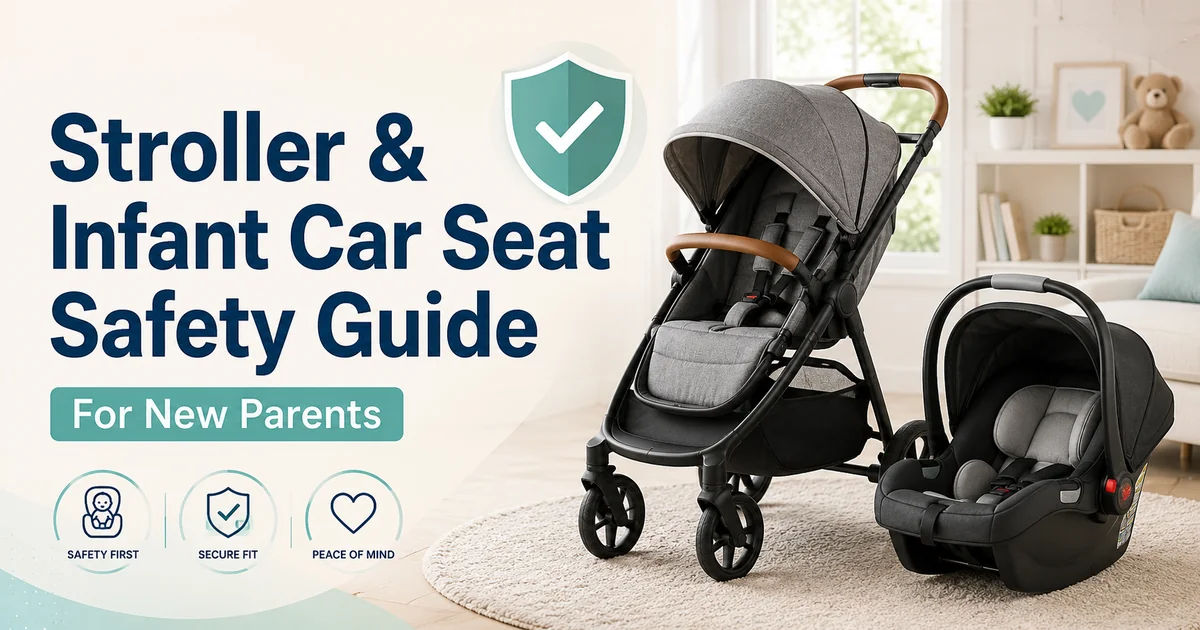
A travel system allows an infant car seat to attach to a stroller. This is convenient for quick trips because parents can move the baby from car to stroller without removing the baby from the car seat.
However, travel systems must be used carefully. The infant car seat must be compatible with the stroller and must click securely into place.
Before using a travel system, check:
- Is the infant car seat compatible with the stroller?
- Are adapters required?
- Does the car seat click securely into the stroller?
- Is the stroller locked open?
- Is the baby buckled into the car seat?
- Are you using the stroller on a safe surface?
Do not place a car seat on top of a stroller unless the stroller is designed for that exact setup.
Helpful guide: If you are comparing travel systems, read our Best Infant Car Seat and Stroller guide.
Can a Baby Sleep in a Stroller or Car Seat?
Babies often fall asleep in strollers and car seats. This is normal during travel or walks. But parents should not use a stroller or car seat as a regular sleep space.
A car seat is designed for car travel, not long sleep outside the car. A stroller is designed for movement and supervised use, not unsupervised sleeping.
Safety tips for sleeping babies:
- Keep the baby supervised
- Do not leave baby sleeping unattended in a stroller
- Do not leave baby sleeping in a car seat outside the car for long periods
- Move baby to a safe sleep surface when possible
- Do not add pillows, loose blankets, or soft padding
- Follow safe sleep guidance from your pediatrician
If your baby frequently naps during outings, consider a stroller designed for safe recline and supervised comfort.
Helpful guide: To understand newborn stroller options, read our Bassinet Stroller vs Car Seat Stroller guide.
Stroller Safety Checklist Before Every Walk
Before you leave home with a stroller, do a quick safety check. It only takes a minute and can prevent problems during the outing.
| Check | What to Look For |
|---|---|
| Frame | Stroller is fully open and locked |
| Harness | Baby is buckled securely |
| Brake | Brake works properly before use |
| Wheels | Wheels move smoothly and are not loose |
| Basket | Basket is not overloaded |
| Handlebar | No heavy bags hanging from it |
| Canopy | Provides shade but does not block airflow |
| Child position | Baby is sitting or lying correctly for age and stroller type |
Infant Car Seat Safety Checklist Before Every Ride
Car seat safety should be checked before every ride, especially during the newborn stage. Small mistakes can make a big difference.
| Check | What to Look For |
|---|---|
| Installation | Car seat or base is installed tightly |
| Direction | Seat is rear-facing |
| Angle | Seat recline angle matches the manual |
| Harness | Straps are flat, snug, and not twisted |
| Chest clip | Positioned correctly if the seat has one |
| Baby clothing | No bulky coat under the harness |
| Limits | Baby is within height and weight limits |
| Accessories | No unapproved inserts or pillows |
Common Stroller Mistakes New Parents Make
New parents often make stroller mistakes because they are tired, busy, and still learning. The good news is that these mistakes are easy to avoid once you know them.
- Not using the harness for short walks
- Forgetting to lock the brake
- Hanging heavy bags from the handlebar
- Using a stroller seat before the baby is ready
- Not checking weight limits
- Leaving baby unattended in the stroller
- Using the stroller on stairs or unsafe surfaces
- Folding the stroller while the child is too close
- Using accessories that do not fit the stroller
Safe stroller habits become easier with practice.
Common Infant Car Seat Mistakes New Parents Make
Car seat mistakes are also common. Many parents think the seat is safe just because it is expensive or highly rated. But even a good car seat must be installed and used correctly.
- Harness straps too loose
- Chest clip too low or too high
- Using bulky coats under the harness
- Turning the baby forward-facing too early
- Wrong seat angle
- Loose car seat installation
- Using expired or damaged car seats
- Buying a used car seat without knowing its history
- Adding unapproved inserts or pillows
If you are unsure, look for a certified child passenger safety technician or local car seat check program in your area.
Used Stroller and Used Car Seat Safety
Buying used baby gear can save money, but parents should be careful. A used stroller may be okay if it is clean, stable, and not recalled. A used car seat is more complicated because crash history and expiration dates matter.
Before buying a used stroller, check:
- Frame damage
- Brake function
- Wheel condition
- Harness condition
- Folding lock
- Missing screws or parts
- Recall history
Before buying a used car seat, check:
- Expiration date
- Crash history
- Missing labels
- Missing manual
- Damage or cracks
- Recall status
- Whether all original parts are included
If you do not know the full history of a used car seat, buying a new car seat is usually safer.
How to Choose a Safer Stroller
A safer stroller should match your child’s age, your lifestyle, and the surfaces you use most often. Parents should not buy only because a stroller looks beautiful online.
Look for:
- Stable frame
- Good brakes
- Secure harness
- Proper newborn support if needed
- Clear manual and weight limits
- Good wheel design for your daily use
- Safe fold lock
- Reliable brand support
If you travel often, choose a lightweight stroller. If you walk outdoors often, choose stronger wheels. If you have a newborn, check recline, bassinet, or car seat compatibility.
Helpful guide: If you need a newborn-friendly setup, read our Evenflo Stroller With Car Seat guide.
How to Choose a Safer Infant Car Seat
A safer infant car seat should fit your baby, fit your vehicle, and be easy for you to install correctly. The best car seat is not always the most expensive one. The best car seat is one you can use correctly every time.
Before buying, check:
- Baby weight and height range
- Vehicle compatibility
- Base installation method
- Harness adjustment
- Clear manual
- Expiration date
- Recall information
- Ease of daily use
Parents should also check whether the infant car seat is compatible with their stroller if they want a travel system.
Helpful guide: If you want a car seat stroller combo, read our Doona Car Seat & Stroller Review.
Amazon Buying Tips
When buying stroller or infant car seat products on Amazon, read the listing carefully. Some listings show a stroller only, while others include a travel system bundle. Product names and included accessories can be confusing.
Before buying, check:
- Exact model name
- Whether the infant car seat is included
- Whether the base is included
- Age, height, and weight limits
- Recent parent reviews
- Recent complaints about safety, installation, folding, or compatibility
- Seller name and return policy
- Official product details before final purchase
Check Safe Stroller and Infant Car Seat Options on Amazon
Final Safety Advice for New Parents
Strollers and infant car seats are helpful, but they must be used correctly. A stroller should keep your baby secure during walks. An infant car seat should protect your baby during car travel.
The most important habits are simple: use the harness, lock the brake, avoid heavy handlebar bags, keep babies rear-facing according to the car seat limits, and check the manual before using any new setup.
Parents do not need to buy the most expensive gear. They need to buy gear that fits their child, fits their lifestyle, and can be used safely every time.
Best rule: Safety first, convenience second, style third.
Frequently Asked Questions
Is a stroller safe for newborns?
A stroller can be safe for newborns only if it is designed for newborn use. Look for proper recline, bassinet support, or compatible infant car seat setup. Always check the stroller manual.
Should I use the stroller harness every time?
Yes, parents should use the stroller harness every time the child rides in the stroller, even for short walks.
Can I hang a diaper bag from the stroller handle?
It is better not to hang heavy bags from the handlebar because it can make the stroller tip. Use the lower basket instead.
Is an infant car seat safe for sleeping?
An infant car seat is designed for car travel, not long-term sleep outside the car. If your baby falls asleep, keep the baby supervised and move them to a safe sleep space when possible.
How should an infant car seat be positioned?
An infant car seat should be used rear-facing and installed according to the manual. The angle, harness, and installation should all be checked carefully.
Can I use any infant car seat with any stroller?
No. You should only use infant car seats and strollers that are compatible according to the manufacturer. Some setups need specific adapters.
Is it safe to buy a used car seat?
A used car seat can be risky if you do not know its crash history, expiration date, recall status, or whether all original parts are included. If unsure, buying new is safer.
What is the most important stroller safety tip?
The most important stroller safety tips are using the harness, locking the brake when stopped, following weight limits, and avoiding heavy bags on the handlebar.