Buying a stroller is not just about choosing a popular brand or a nice color. A stroller becomes part of your daily routine. You may use it for walks, shopping, travel, doctor visits, park outings, naps on the go, and quick errands. That is why parents should carefully check stroller features before buying.
Quick Answer: What Are the Best Stroller Features to Check Before Buying?
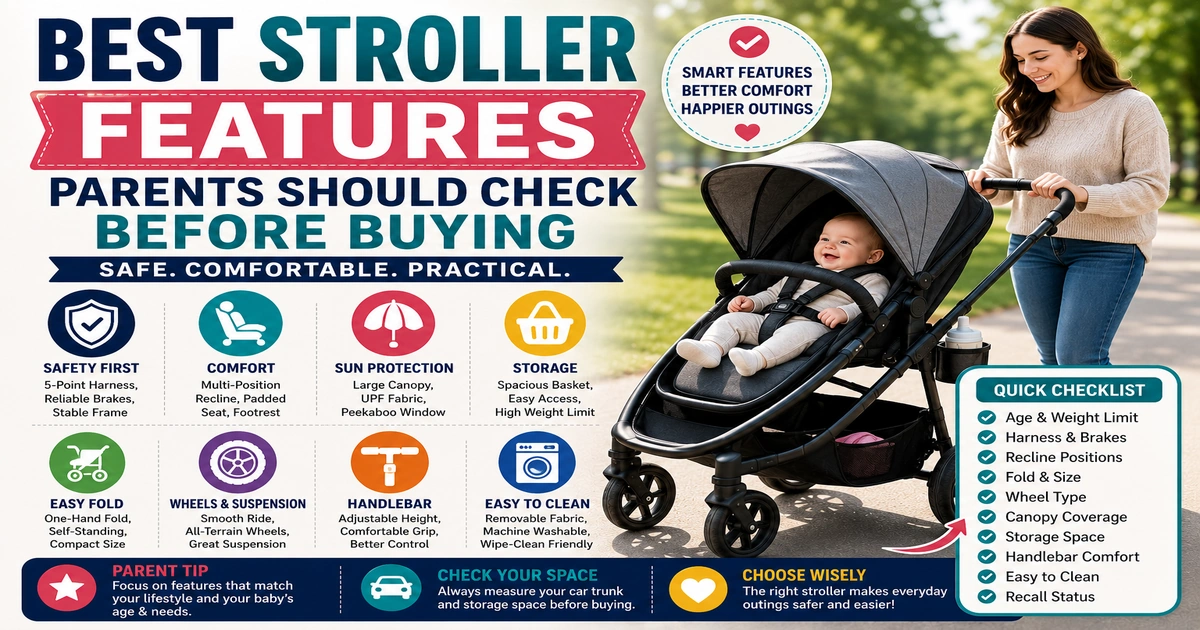
The best stroller features to check before buying include a secure harness, reliable brakes, age-appropriate recline, strong frame, easy fold, manageable weight, suitable wheels, good suspension, large canopy, comfortable seat, storage basket, adjustable handlebar, washable fabric, and clear weight limits.
Parents should also check whether the stroller fits their car trunk, home storage space, walking surface, and daily lifestyle. A stroller should be safe for the baby and easy for parents to use every day.
1. Age-Appropriate Newborn Support
The first stroller feature parents should check is whether the stroller is suitable for the baby’s age. Newborns need more support than older babies and toddlers because they do not have strong head and neck control yet.
For newborns, helpful stroller features may include:
- Bassinet attachment
- Full recline seat approved from birth
- Infant car seat compatibility
- Supportive newborn insert if approved by the manufacturer
- Stable frame with proper weight guidance
- Good airflow and shade
Do not assume every stroller is newborn-friendly. Some lightweight or umbrella strollers are better for older babies who can sit with support. If you are buying for a young baby, read our guide on what type of stroller is safe for newborns.
Amazon buying tip: If you are shopping for a newborn, compare bassinet strollers, full-recline strollers, and infant car seat travel systems before choosing one. Check newborn-friendly stroller options on Amazon.
2. Secure 5-Point Harness
A secure harness is one of the most important stroller safety features. Babies and toddlers can move suddenly, lean forward, twist sideways, or try to stand. A proper harness helps keep the child safely positioned in the stroller seat.
A 5-point harness usually includes straps over both shoulders, around the waist, and between the legs. This design helps keep the child more secure than a simple waist belt.
Before buying, check:
- Does the stroller have a secure harness?
- Is the harness easy to adjust?
- Does the buckle click firmly?
- Are the straps comfortable?
- Can the harness grow with your baby?
- Is it difficult for a toddler to open?
Use the harness every time your child rides in the stroller, even for short walks. For more details, read our 5-point harness stroller safety guide.
HealthyChildren.org from the American Academy of Pediatrics recommends choosing a stroller with a seat belt or harness and using stroller straps according to the stroller instructions. You can read the official guidance here: HealthyChildren.org stroller safety guide.
3. Reliable Stroller Brakes
A stroller brake should be easy to use and strong enough to keep the stroller from rolling when stopped. Parents often stop near cars, shops, parks, sidewalks, driveways, and doorways. A reliable brake is important in all of these situations.
Before buying, test or check:
- Is the brake easy to press?
- Does it lock securely?
- Can you release it easily?
- Can you use it with shoes?
- Does it lock one wheel or both rear wheels?
- Is the brake difficult for a child to reach?
Use the brake whenever the stroller is stopped, even on flat ground. For more safety details, read our stroller brake safety guide for parents.
4. Strong and Stable Frame
The stroller frame should feel strong, balanced, and stable. A weak or wobbly frame can make the stroller harder to control, especially when turning, folding, or pushing on uneven surfaces.
Check these frame features:
- Stable base
- Strong frame joints
- Secure seat attachment
- Good balance when baby is seated
- No loose movement when pushing
- Frame lock that clicks fully open
- Clear weight limit information
A stroller should not tip easily when used correctly. Avoid hanging heavy bags from the handlebar, because that can make even a good stroller unstable.
The U.S. Consumer Product Safety Commission provides official stroller and carriage safety guidance, including areas such as stability, brakes, restraint systems, latches, folding mechanisms, structure, wheels, and openings. You can review the official resource here: CPSC carriages and strollers guidance.
5. Easy and Safe Folding System
A stroller that folds easily can make daily parenting much easier. Parents often need to fold a stroller near a car, in a hallway, at the airport, or while carrying bags. But the folding system should also be safe.
Before buying, check:
- Does the stroller fold smoothly?
- Does it need one hand or two hands?
- Does it lock when folded?
- Does it stand when folded?
- Is there a risk of pinching fingers?
- Does the seat need to be removed before folding?
- Can you lift it easily after folding?
Never force a stroller to fold. If the frame does not fold smoothly, check the manual. Keep children away from hinges and folding joints when folding or unfolding.
6. Stroller Weight and Carrying Comfort
Stroller weight matters more than many first-time parents expect. A heavy stroller may feel stable, but it can be difficult to lift into a car trunk, carry upstairs, or travel with. A lightweight stroller may be easier to carry, but parents should still check safety, comfort, and age suitability.
Before buying, ask yourself:
- Will I lift the stroller often?
- Do I live in an apartment?
- Do I use stairs?
- Do I drive a small car?
- Will I travel with this stroller?
- Can I lift it alone?
If you need daily portability, a lightweight compact stroller may be more practical. If you need comfort and storage, a full-size stroller may be better.
Amazon buying tip: If you need an easy everyday stroller, compare lightweight and compact strollers with clear folded dimensions, safe harness, and reliable brakes. View lightweight stroller options on Amazon.
7. Folded Size and Car Trunk Fit
A stroller may look compact in photos but still take up too much space when folded. Before buying, compare the stroller’s folded dimensions with your car trunk and home storage space.
Check these measurements:
- Folded height
- Folded width
- Folded length
- Car trunk opening
- Storage closet space
- Room left for bags or groceries
This is especially important if you drive a small car, live in an apartment, or travel often. A stroller that fits easily into your daily life will be used more comfortably.
For practical tips, read our guide on how to choose a stroller for small car trunks.
8. Wheel Type and Tire Quality
Wheel quality affects how smoothly a stroller moves. Small plastic wheels may work well indoors or on smooth sidewalks, while larger rubber or air-filled wheels may handle parks, uneven paths, or rougher outdoor areas better.
Common wheel features to check:
- Wheel size
- Front wheel swivel
- Lockable front wheel
- All-terrain wheels
- Rubber tires
- Air-filled tires
- Foam-filled tires
- Wheel durability
If you mostly walk in malls and smooth areas, compact wheels may be enough. If you walk on grass, parks, uneven sidewalks, or gravel paths, stronger wheels may be worth considering.
Amazon buying tip: If your daily walks include parks, grass, or uneven sidewalks, compare all-terrain strollers with larger wheels, better suspension, and strong brakes. Compare all-terrain stroller options on Amazon.
9. Suspension for Smooth Rides
Suspension helps reduce bumps and vibration when pushing a stroller. This can make rides more comfortable for babies and easier for parents to control.
Suspension is especially helpful if you walk on:
- Uneven sidewalks
- Park paths
- Grass
- Light gravel
- Older roads
- Outdoor event areas
Not every stroller needs advanced suspension. But if you plan to use the stroller outdoors often, suspension can be an important comfort feature.
10. Comfortable Seat and Recline Positions
A stroller seat should support your baby comfortably. Seat comfort matters for daily walks, naps on the go, and longer outings. The seat should match your child’s age and development.
Check these seat features:
- Soft but supportive padding
- Good back support
- Multiple recline positions
- Full recline if approved for newborn use
- Adjustable footrest
- Enough seat width
- Enough headroom for toddlers
- Easy-to-clean fabric
If your baby still needs head and neck support, check whether the recline is approved for that age. Do not use an upright seat too early.
11. Large Canopy and Sun Protection
A good canopy helps protect your baby from sun, glare, and light weather exposure. A small canopy may not cover enough, especially when the sun comes from the side.
Good canopy features include:
- Large adjustable coverage
- UPF-rated fabric if available
- Peekaboo window
- Mesh ventilation
- Quiet movement
- Side coverage
- Easy parent visibility
Do not fully cover the stroller with a thick blanket in warm weather. Shade is important, but airflow and baby visibility matter too. For more details, read our stroller sun shade safety guide for parents.
Amazon buying tip: For sunny walks, compare strollers with large canopies, mesh ventilation, peekaboo windows, and UPF-rated shade features when available. Check stroller canopy-friendly options on Amazon.
12. Storage Basket Size and Access
A storage basket can make daily outings easier. Parents often need space for diapers, wipes, snacks, bottles, toys, blankets, jackets, small shopping items, and baby essentials.
Before buying, check:
- Is the basket easy to reach?
- Can it hold your daily items?
- Does it have a clear weight limit?
- Can you access it when the seat is reclined?
- Does it touch the wheels?
- Does it affect folding?
A large basket is useful, but do not overload it. Heavy bags should not hang from the handlebar because this can affect stroller balance.
13. Adjustable Handlebar
An adjustable handlebar can make the stroller more comfortable for different caregivers. If one parent is tall and another is shorter, handlebar adjustability can make daily pushing easier.
Check:
- Is the handlebar comfortable to hold?
- Can the height be adjusted?
- Does it feel strong and secure?
- Does it give enough walking space?
- Does it help with steering control?
- Does it feel stable when turning?
A comfortable handlebar can reduce wrist, arm, and back strain during longer walks.
14. Easy Cleaning and Washable Fabric
Babies and toddlers make messes. Snacks, milk, spit-up, sunscreen, dust, mud, and crumbs can all reach the stroller. A stroller that is easy to clean will feel more practical over time.
Before buying, check:
- Is the fabric removable?
- Is it machine washable or spot-clean only?
- Can the seat be wiped easily?
- Are crumbs easy to remove from seams?
- Can the wheels be cleaned easily?
- Does the basket collect dirt?
Always follow the stroller manual for cleaning instructions. Harsh chemicals or incorrect washing can damage fabric or stroller parts.
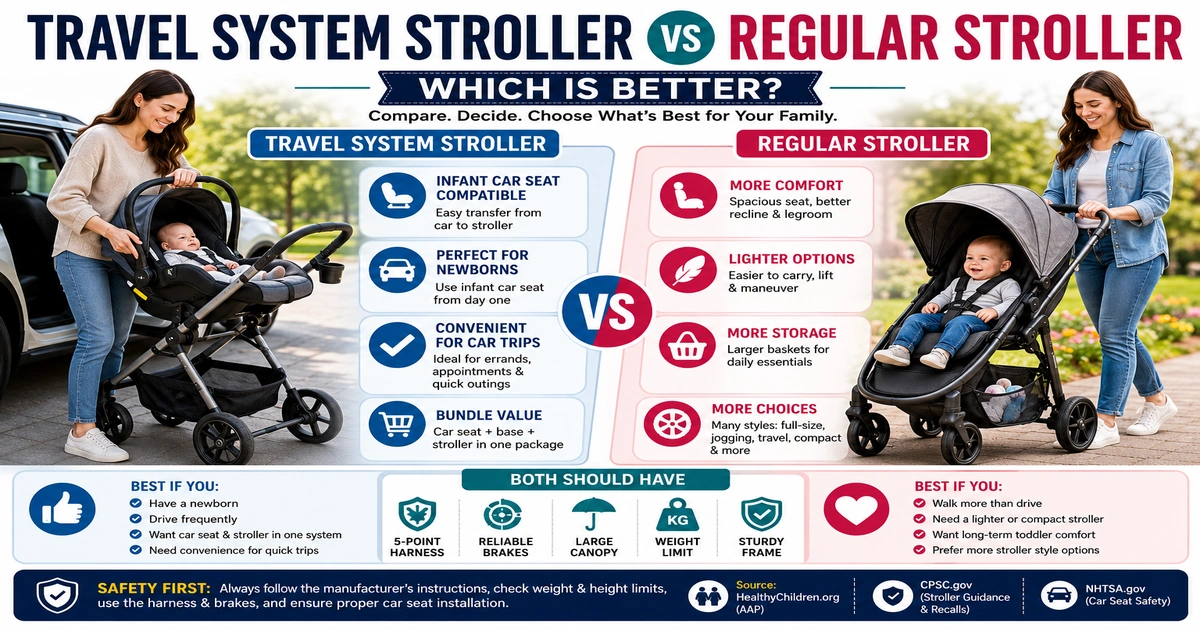
15. Travel System Compatibility
If you plan to use an infant car seat with your stroller, travel system compatibility is important. Not every car seat fits every stroller. Some need adapters, while others are sold as complete systems.
Before buying, check:
- Is your infant car seat compatible?
- Is the adapter manufacturer-approved?
- Does the car seat click securely?
- Does the stroller remain stable with the car seat attached?
- Can you remove the car seat easily?
- Do both manuals approve the setup?
Travel systems can be convenient for short trips, but parents should still follow car seat and stroller safety instructions carefully.
16. Parent Convenience Features
Parent convenience features are not always essential, but they can make daily use easier. The key is to choose useful features without ignoring safety.
Helpful convenience features may include:
- One-hand fold
- Self-standing fold
- Parent cup holder
- Peekaboo window
- Large storage basket
- Adjustable handlebar
- Easy seat recline
- Carry strap for travel strollers
- Compact folded shape
Do not choose a stroller only because it has many extras. Choose features that match your real daily routine.
17. Clear Weight Limits
Every stroller should clearly list weight limits. Parents should check both child weight and storage weight. If a stroller is used beyond its limit, it may become harder to push, less stable, or more likely to wear out.
Check:
- Maximum child weight
- Minimum age or weight
- Storage basket weight limit
- Parent organizer weight limit
- Second seat weight limit if double stroller
- Car seat adapter weight limit if used
Choose a stroller that can support your child’s current stage and possible future growth.
18. Recall Status and Product Safety Information
If you are buying a used stroller or older model, recall status is important. A stroller may look fine but still have a safety recall or missing updated part.
Before buying used, check:
- Brand name
- Model number
- Manufacture date
- Recall status
- Original manual
- Harness condition
- Brake function
- Wheel condition
- Frame stability
- Missing parts
You can check stroller and car seat recalls on the official CPSC recall page here: CPSC stroller and car seat recalls.
19. Best Stroller Features Comparison Table
| Feature | Why It Matters | What Parents Should Check |
|---|---|---|
| Newborn support | Newborns need proper position | Bassinet, full recline, or travel system |
| 5-point harness | Helps keep baby secure | Adjustable straps and strong buckle |
| Brakes | Stops stroller from rolling | Easy lock and release |
| Easy fold | Helps with car and storage | Secure fold lock and simple mechanism |
| Stroller weight | Affects daily carrying | Can you lift it alone? |
| Wheels | Affects smooth ride | Match wheels to terrain |
| Canopy | Helps with sun protection | Large, adjustable, breathable shade |
| Storage basket | Holds daily baby items | Easy access and weight limit |
| Washable fabric | Helps with messes | Check cleaning instructions |
| Recall status | Important for used strollers | Check official recall information |
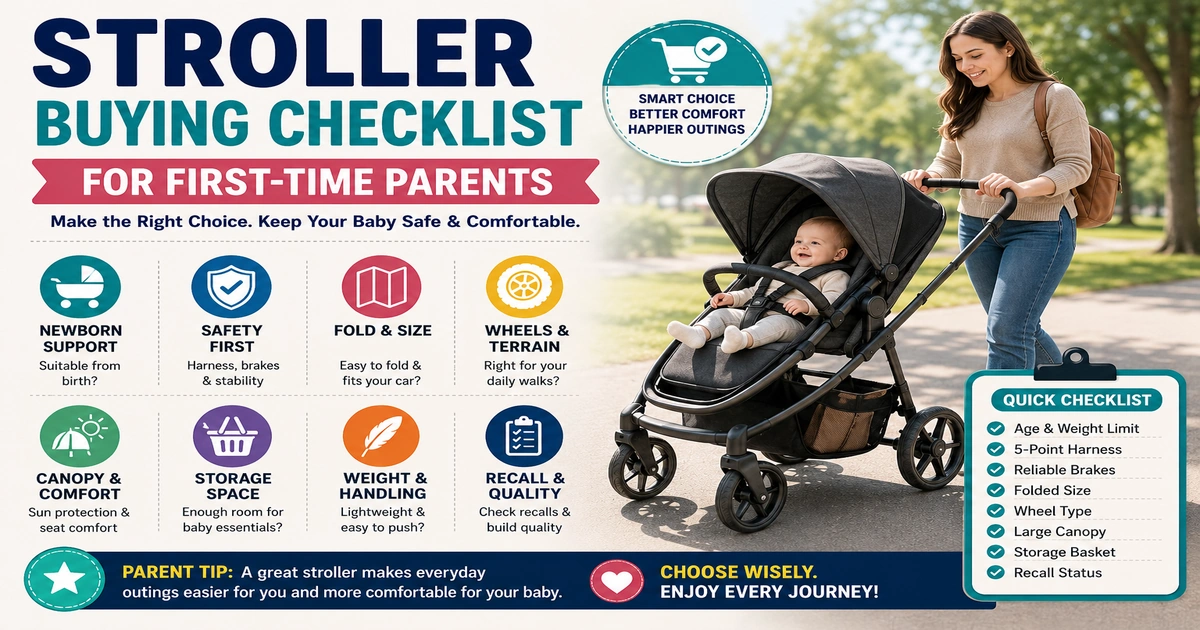
20. Quick Feature Checklist Before Buying
Use this checklist before choosing your stroller:
- Is the stroller suitable for your baby’s age?
- Does it support newborn use if needed?
- Does it have a secure harness?
- Are the brakes easy and reliable?
- Is the frame stable?
- Is it easy to fold?
- Can you lift it comfortably?
- Does it fit your car trunk?
- Are the wheels right for your walking surface?
- Is the seat comfortable?
- Does the canopy provide enough shade?
- Is there enough storage?
- Is the handlebar comfortable?
- Is the fabric easy to clean?
- Are weight limits clear?
- Have you checked recalls if buying used?
Common Feature Mistakes Parents Should Avoid
Many parents buy a stroller quickly and later realize it does not fit their lifestyle. Try to avoid these common feature mistakes:
- Choosing style over safety
- Ignoring newborn support
- Buying a stroller that is too heavy
- Forgetting to measure car trunk space
- Not checking harness quality
- Ignoring brake design
- Choosing small wheels for rough paths
- Buying a stroller with poor canopy coverage
- Choosing fabric that is hard to clean
- Buying used without checking recalls
FAQ: Best Stroller Features
What is the most important stroller feature?
The most important stroller features are age-appropriate support, secure harness, reliable brakes, stable frame, and clear weight limits. These features help support safer everyday use.
What stroller feature matters most for newborns?
For newborns, the most important feature is proper support, such as a bassinet, full recline approved from birth, or compatible infant car seat system.
Is a 5-point harness necessary in a stroller?
A 5-point harness is strongly preferred by many parents because it helps secure the shoulders, waist, and between the legs. Always use the harness according to the stroller instructions.
Should I choose a lightweight or full-size stroller?
Choose a lightweight stroller if portability, travel, and small storage matter most. Choose a full-size stroller if comfort, storage, and daily long walks matter more.
What stroller wheels are best?
The best wheels depend on your walking surface. Small wheels may work for smooth sidewalks and stores. Larger wheels or all-terrain wheels may be better for parks, grass, and uneven paths.
Is a large canopy important?
Yes, a large canopy is helpful for sun protection, glare reduction, and comfort. Look for adjustable coverage, airflow, and parent visibility.
Should I buy a used stroller?
You can buy a used stroller if it is complete, undamaged, not recalled, and includes the manual. Check the harness, brakes, wheels, frame, and folding lock carefully.
Final Thoughts
The best stroller features are not the same for every family. A city parent may need a compact fold, while an active parent may need larger wheels and suspension. A newborn needs proper recline or bassinet support, while a toddler needs room, comfort, and a secure harness.
Before buying, focus on safety first: age suitability, harness, brakes, frame stability, weight limits, and manufacturer instructions. Then compare lifestyle features such as fold size, stroller weight, wheels, canopy, storage, cleaning, and travel system compatibility.
A stroller should make daily parenting easier while keeping your baby comfortable and secure. When you check the right features before buying, you are more likely to choose a stroller that works well for your family from the first walk.