Buying your first stroller can feel exciting and confusing at the same time. There are full-size strollers, lightweight strollers, travel systems, jogging strollers, stroller wagons, bassinet strollers, compact strollers, and many more options. Every model looks helpful, but not every stroller is right for every family.
Quick Answer: What Should First-Time Parents Check Before Buying a Stroller?
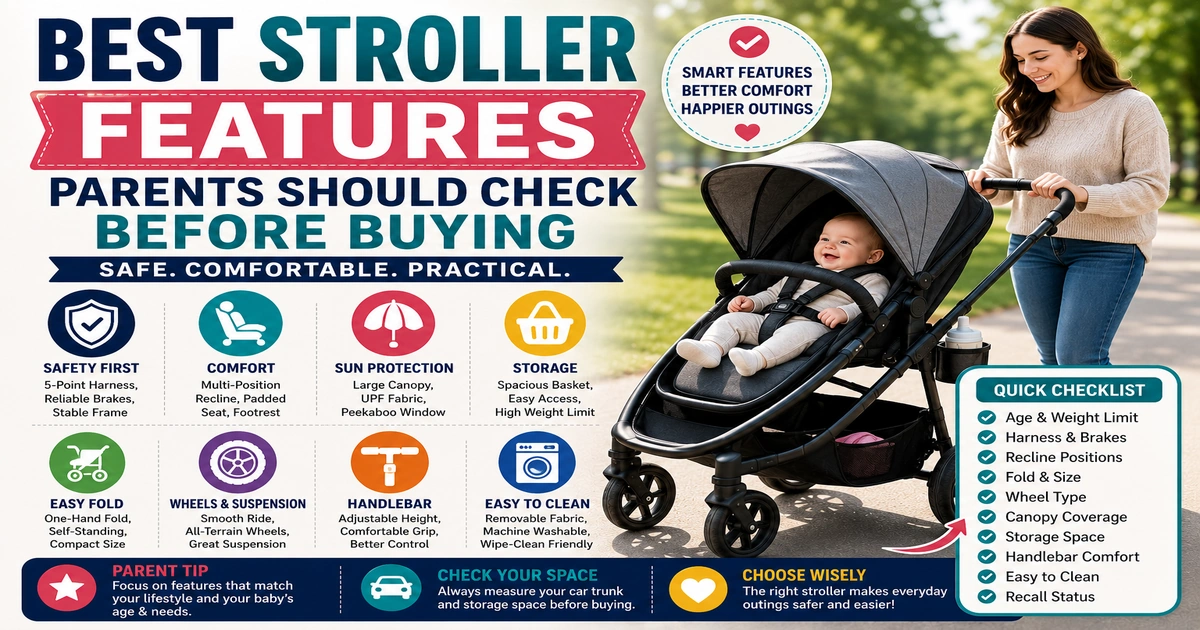
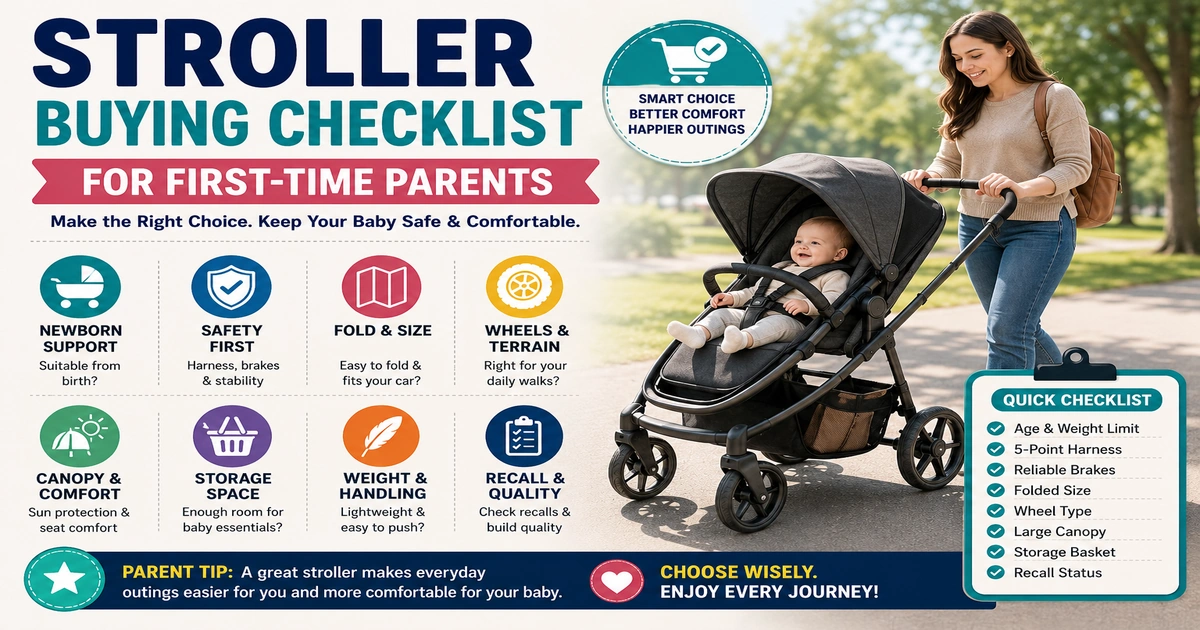
First-time parents should check the baby’s age, newborn support, harness, brakes, stroller weight, fold size, car trunk fit, wheel type, storage basket, canopy, handlebar height, seat comfort, safety labels, recall status, and real daily use before buying a stroller.
The best stroller is not always the most expensive stroller. It is the stroller that fits your baby safely and matches your daily lifestyle.
1. Check Your Baby’s Age and Stage First
The first question is simple: how old is your baby, and what support does your baby need? A newborn needs more support than a toddler. A stroller that works well for a 2-year-old may not be suitable for a newborn.
Before buying, check whether the stroller is designed for:
- Newborns from birth
- Infants who need recline support
- Babies who can sit with support
- Toddlers who need more seat space
- Older children within the stroller’s weight limit
For newborns, look for a bassinet, approved full recline, or compatible infant car seat system. Do not assume every stroller is safe from birth. If you are buying for a newborn, read our guide on what type of stroller is safe for newborns.
Amazon buying tip: If you need a stroller from birth, compare bassinet strollers, full-recline strollers, and infant car seat travel systems before buying. Check newborn-friendly stroller options on Amazon.
2. Choose the Right Stroller Type for Your Lifestyle
There is no single stroller that is perfect for every parent. A family living in a small apartment may need a compact stroller, while another family may need a strong stroller for daily outdoor walks.
Common stroller types include:
- Full-size stroller: Good for daily use, comfort, and storage.
- Lightweight stroller: Easier to carry and store.
- Travel system: Combines an infant car seat with a stroller frame.
- Bassinet stroller: Useful for newborn positioning when approved from birth.
- Jogging stroller: Designed for active parents and rougher paths.
- Umbrella stroller: Simple, light, and often better for older babies or toddlers.
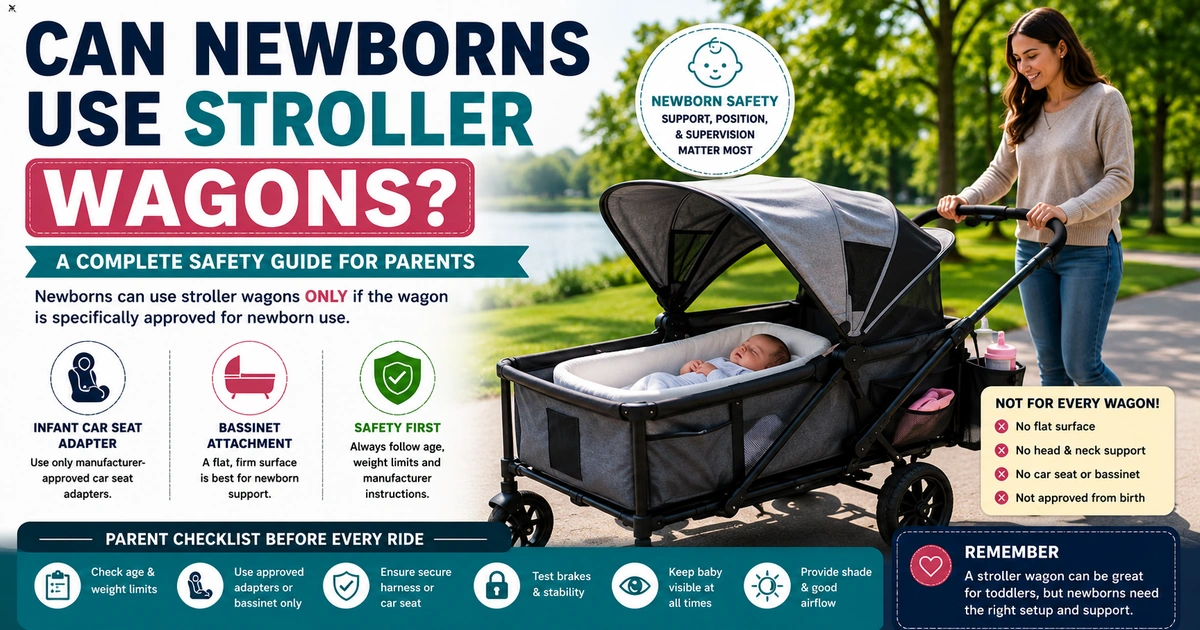
- Stroller wagon: Useful for toddlers and outdoor family trips, depending on the model.
Think about your real daily routine. Do you walk every day? Do you drive often? Do you need to carry the stroller upstairs? Do you travel? Do you need room for groceries or baby gear? Your lifestyle should guide your choice.
3. Check the Harness System
A secure harness is one of the most important stroller safety features. A baby or toddler can lean, twist, slide, or suddenly move while riding. A proper harness helps keep the child positioned safely in the stroller seat.
Many parents prefer a 5-point harness because it secures the shoulders, waist, and between the legs. Before buying, check:
- Does the stroller have a secure harness?
- Is it easy for parents to buckle?
- Can it be adjusted as the baby grows?
- Are the straps comfortable?
- Is the buckle strong and easy to use?
- Can the child easily unbuckle it?
Use the harness every time your baby rides in the stroller, even for short walks. For more details, read our 5-point harness stroller safety guide.
HealthyChildren.org from the American Academy of Pediatrics recommends choosing a stroller with a seat belt or harness and using stroller straps according to the stroller instructions. You can read the official guidance here: HealthyChildren.org stroller safety guide.
4. Test the Brake Before Buying
A stroller brake should be easy for parents to use and strong enough to keep the stroller from rolling when stopped. A stroller may look great, but if the brake is hard to press, weak, or awkward, it may become frustrating or unsafe in daily use.
Before buying, check:
- Is the brake easy to lock?
- Is it easy to release?
- Does it lock the stroller securely?
- Can you use it while wearing shoes?
- Is it difficult for a child to reach?
- Does it lock one wheel or both rear wheels?
Use the brake whenever the stroller is stopped. This is important near cars, sidewalks, parks, shops, driveways, and even inside the home.
5. Check the Stroller Weight Limit
Every stroller has a weight limit. Some strollers are designed for smaller babies, while others can support bigger toddlers. First-time parents should check both child weight capacity and storage basket capacity before buying.
Check these weight details:
- Minimum baby weight or age
- Maximum child weight
- Storage basket weight limit
- Parent organizer weight limit if included
- Car seat adapter weight limit if using a travel system
- Second seat weight limit for double strollers
A stroller may become less stable or harder to control if it is overloaded. For more help, read our stroller weight limit guide for parents.
6. Measure Your Car Trunk Space
Many first-time parents forget to check whether the stroller fits in the car trunk. This mistake can become frustrating after purchase, especially if you drive often.
Before buying, check the folded dimensions and compare them with your trunk space. Measure:
- Folded length
- Folded width
- Folded height
- Trunk opening width
- Available trunk depth
- Room left for groceries, bags, or travel items
Some strollers look compact online but still take up too much space when folded. If you drive a small car, compact fold may matter more than extra luxury features.
For more practical tips, read our guide on how to choose a stroller for small car trunks.
Amazon buying tip: If you drive a small car or live in a small apartment, compare lightweight compact strollers with clear folded dimensions and self-standing fold. View compact stroller options on Amazon.
7. Check How Easy the Stroller Is to Fold
A stroller may feel perfect in the store but become annoying if it is difficult to fold every day. First-time parents often need to fold a stroller while holding bags, standing near a car, or moving through a busy doorway.
Before buying, ask:
- Can I fold it easily?
- Does it fold with one hand or two hands?
- Does it stand when folded?
- Is the fold lock secure?
- Can I lift it after folding?
- Does the seat need to be removed before folding?
- Does the canopy get caught?
Never force a stroller to fold. If it does not fold smoothly, check the manual. A stroller with a simple, safe fold can make daily use much easier.
The Consumer Product Safety Office advises keeping children at a safe distance when folding or unfolding a stroller and making sure all locking devices are engaged before use. You can read their stroller safety tips here: Consumer Product Safety Office stroller safety tips.
8. Look at Wheel Size and Terrain
Stroller wheels affect how smoothly the stroller moves. Small wheels may work well in malls, stores, and smooth sidewalks. Larger wheels may be better for parks, uneven paths, grass, or rougher outdoor surfaces.
Before buying, think about where you will walk most often:
- Smooth sidewalks
- Shopping malls
- Apartment hallways
- Parks and grass
- Gravel paths
- Beach boardwalks
- Uneven roads
- Neighborhood walks
Check whether the front wheels swivel, lock straight, or handle rough terrain. For active parents, a true jogging stroller is different from a regular stroller.
Amazon buying tip: If you walk on parks, grass, or rougher paths, compare all-terrain strollers or jogging strollers with larger wheels, suspension, and strong brakes. Compare all-terrain stroller options on Amazon.
9. Check Seat Comfort and Recline
Your baby may spend a lot of time in the stroller, so seat comfort matters. A good stroller seat should support your child properly and adjust as your baby grows.
Check these seat features:
- Seat padding
- Back support
- Recline positions
- Newborn-approved recline if needed
- Adjustable footrest
- Seat width
- Headroom for toddlers
- Washable or wipeable fabric
If your baby is young, make sure the recline position is approved for your baby’s age. A seat that only reclines slightly may not be suitable from birth.
10. Check the Canopy and Sun Protection
A stroller canopy helps protect your baby from sun, light wind, and glare. A small canopy may not be enough for hot or sunny weather, especially when sunlight comes from the side.
Look for canopy features such as:
- Large adjustable canopy
- UPF-rated fabric if available
- Peekaboo window
- Mesh ventilation
- Quiet adjustment
- Side sun coverage
- Easy parent visibility
Do not fully cover a stroller with a thick blanket in warm weather. Shade is helpful, but airflow is also important. For a full safety guide, read our stroller sun shade safety guide for parents.
Amazon buying tip: For sunny walks, compare strollers with large canopies, mesh ventilation, and UPF-rated shade features when available. Check stroller canopy-friendly options on Amazon.
11. Check Storage Basket Size and Access
Storage is one of the most useful stroller features. Parents often need space for diapers, wipes, snacks, extra clothes, toys, bottles, shopping items, or small bags.
Before buying, check:
- Is the basket easy to reach?
- Can it hold your daily items?
- Does it have a weight limit?
- Can you access it when the seat is reclined?
- Does it drag near the wheels?
- Does it affect folding?
A larger basket is useful, but do not overload it. Heavy items should stay low and centered. Avoid hanging heavy bags from the handlebar because this can make the stroller unstable.
12. Check Handlebar Height and Grip
The handlebar affects parent comfort and control. If the handlebar is too low or too high, pushing the stroller can become uncomfortable. This matters even more if both parents or caregivers have different heights.
Check these handlebar features:
- Comfortable grip
- Adjustable height if needed
- Strong frame connection
- Easy steering control
- No loose movement
- Enough walking space for your stride
Do not hang heavy bags from the handlebar unless the manual allows it. Even then, follow the manufacturer’s limits carefully.
13. Check Frame Stability and Build Quality
A stroller should feel stable, not wobbly. A strong frame helps with daily use, turning, folding, and carrying. Stability is especially important for newborn strollers, jogging strollers, double strollers, and stroller wagons.
Before buying, check:
- Does the frame feel strong?
- Does the stroller wobble?
- Is the base wide enough?
- Are wheels attached securely?
- Does the stroller tip easily?
- Does the seat lock properly?
- Does the frame click open securely?
The U.S. Consumer Product Safety Commission provides official guidance for carriages and strollers, including safety areas such as stability, brakes, restraint systems, latches, folding mechanisms, structure, wheels, and openings. You can review the official resource here: CPSC carriages and strollers guidance.
14. Check Cleaning and Fabric Care
Babies are messy. Snacks, milk, spit-up, dust, sunscreen, and outdoor dirt can all reach the stroller. A stroller that is hard to clean may become frustrating quickly.
Before buying, check:
- Is the fabric removable?
- Is it machine washable or spot-clean only?
- Can the seat be wiped easily?
- Are crumbs easy to remove from seams?
- Does the basket collect dirt?
- Are wheels easy to clean?
Choose a stroller that fits your cleaning routine. A beautiful stroller may not feel practical if it is hard to keep clean.
15. Check Travel System Compatibility
If you plan to use an infant car seat with your stroller, compatibility is very important. Not every car seat fits every stroller. Some strollers need brand-specific adapters, while others are part of a complete travel system.
Before buying a travel system or adapter, check:
- Is the car seat compatible with the stroller?
- Does the car seat click securely into place?
- Is the adapter approved by the manufacturer?
- Does the setup follow both manuals?
- Can you remove the car seat easily?
- Is the stroller stable with the car seat attached?
For more details, read our stroller and infant car seat safety guide for new parents.
16. Check Recall Status Before Buying Used
A second-hand stroller can save money, but it needs careful checking. Used strollers may have missing parts, worn brakes, broken folding locks, damaged harness straps, or past recall issues.
Before buying a used stroller, check:
- Brand and model number
- Manufacture date
- Recall status
- Original manual
- Harness condition
- Brake function
- Wheel condition
- Frame stability
- Missing screws or parts
- Car seat adapter condition if included
You can check stroller and car seat recalls on the official CPSC recall page here: CPSC stroller and car seat recalls.
17. Compare Price with Long-Term Value
Price matters, but the cheapest stroller is not always the best value. A very cheap stroller may work for occasional use, but it may not offer the comfort, safety features, wheel quality, or long-term durability you need.
Think about value instead of price alone:
- Can the stroller grow with your baby?
- Will it work for daily use?
- Does it fit your car?
- Is it easy to fold?
- Are replacement parts available?
- Does it have the features you actually need?
- Will you need to replace it soon?
A stroller that fits your needs from the beginning can save money and stress later.
18. Read Real Parent Reviews Carefully
Reviews can be helpful, but not all reviews matter equally. Look for reviews from parents who use the stroller in a similar way to you. A stroller that works well for city sidewalks may not work well for grass or rough paths.
When reading reviews, look for comments about:
- Fold ease
- Car trunk fit
- Brake quality
- Harness comfort
- Wheel smoothness
- Seat comfort
- Canopy coverage
- Storage access
- Long-term durability
- Customer support
Do not choose a stroller only because it has many reviews. Read the details to understand whether the stroller fits your lifestyle.
19. Stroller Buying Checklist Table
| Checklist Item | Why It Matters | What to Check |
|---|---|---|
| Baby age | Newborns need special support | Check age and recline guidance |
| Harness | Helps keep baby secure | Look for adjustable straps |
| Brake | Stops stroller from rolling | Test before buying |
| Weight limit | Prevents unsafe overuse | Check child and basket limits |
| Fold size | Important for car and storage | Compare folded dimensions |
| Wheels | Affects smooth movement | Match wheels to terrain |
| Canopy | Helps with sun protection | Check coverage and airflow |
| Storage | Useful for daily items | Check access and weight limit |
| Cleaning | Baby gear gets messy | Check fabric care instructions |
| Recall status | Important for used strollers | Check official recall pages |
20. Quick Stroller Buying Checklist
Use this quick checklist before making a final decision:
- Is the stroller suitable for your baby’s age?
- Does it support newborn use if needed?
- Does it have a secure harness?
- Are the brakes easy and reliable?
- Does the stroller fit your car trunk?
- Can you fold and lift it comfortably?
- Are the wheels right for your walking surface?
- Is the seat comfortable and supportive?
- Does the canopy provide enough shade?
- Is there enough storage?
- Is the handlebar comfortable?
- Is the fabric easy to clean?
- Are age and weight limits clear?
- Is the manual available?
- Have you checked recall status if buying used?
Common Stroller Buying Mistakes to Avoid
First-time parents often make simple stroller buying mistakes. Try to avoid these before spending money:
- Buying only because the stroller looks stylish
- Ignoring newborn support
- Not checking folded dimensions
- Choosing a stroller that is too heavy
- Skipping brake and harness checks
- Ignoring stroller weight limits
- Buying a jogging stroller for everyday indoor use only
- Buying a lightweight stroller too early for a newborn
- Not checking car seat compatibility
- Buying used without checking recalls
For a deeper guide, read our post on common stroller mistakes first-time parents make.
FAQ: Stroller Buying Checklist for First-Time Parents
What should I check first before buying a stroller?
First, check your baby’s age and whether the stroller is suitable for that stage. Newborns need more support than older babies and toddlers.
What stroller is best for first-time parents?
The best stroller for first-time parents depends on lifestyle. Many parents prefer a safe, easy-fold stroller with good brakes, a secure harness, useful storage, and newborn support if needed.
Should I buy a travel system or a regular stroller?
A travel system can be useful for newborns and car trips because it combines an infant car seat and stroller. A regular stroller may be better if you do not need car seat compatibility.
Is a lightweight stroller good for a newborn?
Some lightweight strollers are not suitable for newborns unless they offer an approved full recline or newborn-safe setup. Always check the manufacturer’s age guidance.
How important is stroller weight?
Stroller weight is very important if you lift it often, live in an apartment, use stairs, travel, or drive a small car. A heavy stroller may feel stable but harder to manage daily.
Can I buy a used stroller?
You can buy a used stroller if it is complete, undamaged, not recalled, and includes safety instructions. Always check the brake, harness, wheels, frame, fold lock, and recall status.
How many strollers do first-time parents need?
Many parents start with one stroller that fits their main daily needs. Some families later add a travel stroller, jogging stroller, or stroller wagon depending on lifestyle.
Final Thoughts
A stroller is one of the most important baby products first-time parents buy. It affects daily comfort, safety, travel, storage, and how easy it feels to leave home with your baby.
Before buying, use this stroller buying checklist to compare safety features, newborn support, harness, brakes, fold size, car trunk fit, wheel quality, canopy, storage, fabric care, and long-term value.
The right stroller should not only look good. It should fit your baby, your home, your car, your walking routine, and your everyday parenting needs.