What Is a Bassinet Stroller?
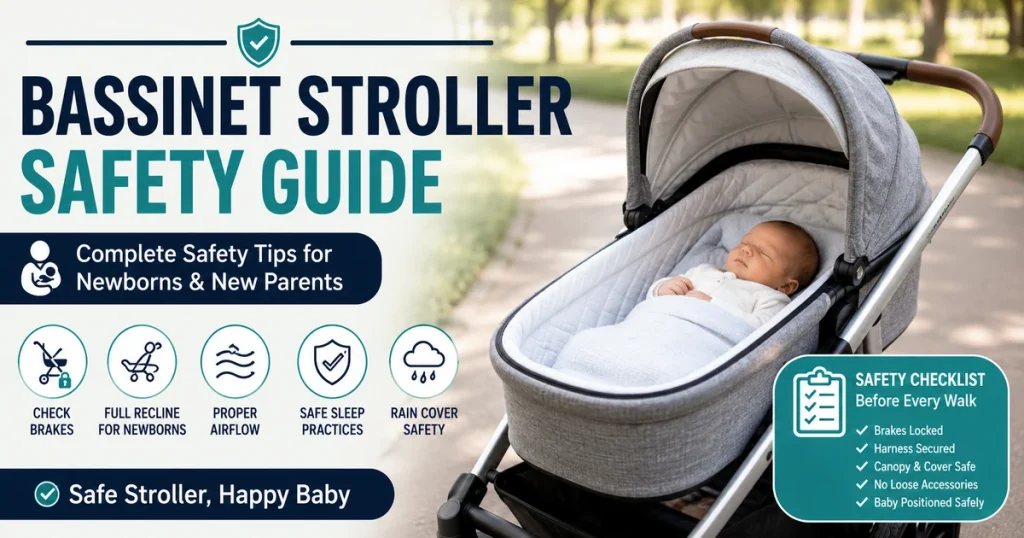
A bassinet stroller is a stroller that uses a flat bassinet-style attachment instead of only an upright toddler seat. It is mainly designed for newborns and young infants who cannot sit up, control their head well, or stay comfortable in a seated position for long.
The bassinet area usually gives the baby more room to rest on their back while parents push the stroller. This makes it different from many standard stroller seats that are better for older babies and toddlers. A bassinet stroller can be useful for neighborhood walks, doctor visits, shopping trips, and daily outdoor routines.
Many parents also compare bassinet strollers with car seat stroller systems. A car seat stroller can be useful for quick transfers from the car, but a bassinet stroller may be more comfortable for longer supervised walks because it gives the newborn a flatter resting position. For a full comparison, read our guide on bassinet stroller vs car seat stroller.
Why Newborns Need Flat Support
Newborns are not like older babies. Their neck muscles are still weak, their head control is limited, and they cannot easily adjust their own body position. This is why stroller positioning matters so much during the first few months.
A flat or near-flat stroller setup can help keep the baby’s body more naturally supported during supervised movement. It can also reduce the chance of the baby slumping forward in a way that may feel uncomfortable. However, parents should always check the baby’s position often because no stroller should be treated as a “set and forget” product.
If you are still learning which stroller types are suitable for newborns, this guide works well with our article on what type of stroller is safe for newborns.
1. Choose a Newborn-Approved Bassinet Stroller
The first safety step is choosing a stroller that clearly says it is suitable for newborn use. Do not assume every bassinet-looking stroller is safe for a newborn. Some stroller seats look flat in product photos but may still have age or development limits.
Check the product manual, brand website, and product listing carefully. Look for wording such as newborn-ready, bassinet approved from birth, or suitable from birth when used with the bassinet attachment. Also check whether the bassinet is included or sold separately.
A safe newborn setup should feel stable, firm, and properly supported. The bassinet should not sag deeply under the baby’s weight. The frame should not feel loose or shaky. The stroller should also have clear instructions for attachment, folding, cleaning, and weight limits.
When comparing newborn stroller options, choose models that clearly mention newborn use, bassinet attachment, flat support, and strong parent reviews.
2. Check the Bassinet Lock Before Every Walk
A bassinet stroller is only safe when the bassinet is attached correctly to the stroller frame. Before placing your baby inside, check both sides of the bassinet connection. Gently lift and move the bassinet to confirm it is locked into place.
This step is important because many parents remove and reattach the bassinet often. You may switch between a bassinet, toddler seat, or car seat adapter. You may also fold the stroller, place it in a car trunk, or store it between uses. Each time the bassinet is reattached, it should be checked again.
If one side clicks but the other side does not, the bassinet may look attached but still be unsafe. Never use the stroller if the bassinet feels tilted, loose, uneven, or unstable.
3. Understand Safe Sleep Rules
A bassinet stroller may allow your baby to rest during a supervised walk, but parents should understand the difference between stroller rest and safe sleep. A stroller should not replace a crib, bassinet, or approved sleep space for long or unsupervised sleep.
The U.S. Consumer Product Safety Commission explains that the safest sleep setup for babies is flat on the back, without pillows, blankets, or toys in the sleep space. You can read the official guidance here: CPSC Safe Sleep.
If your newborn falls asleep during a walk, keep your baby visible and check their position often. Make sure the face is not pressed against fabric, blankets, toys, or the side of the bassinet. Once the outing is over, move the baby to a safe sleep space recommended by your pediatrician.
This also matters for parents who use car seat stroller systems. Car seats are made for vehicle travel and short transfers, not as a regular sleep place. For more details, read our stroller and infant car seat safety guide.
4. Always Test the Stroller Brake
The stroller brake is one of the most important safety features on a bassinet stroller. Before placing your baby inside, lock the brake and gently push the stroller forward and backward. The stroller should stay firmly in place.
Always use the brake when you stop, even if you are stopping for only a few seconds. This includes checking your phone, adjusting the canopy, loading the basket, talking to someone, or helping another child. A stroller can roll unexpectedly on a driveway, parking lot, ramp, or uneven sidewalk.
HealthyChildren.org from the American Academy of Pediatrics recommends using stroller brakes whenever stopped and choosing a stroller with easy-to-use brakes and a wide base for better stability. You can read the official stroller safety guidance here: AAP / HealthyChildren stroller safety tips.
If you want a deeper parent checklist for this specific topic, see our stroller brake safety guide for parents.
5. Check Wheels, Frame, and Folding Parts
A bassinet stroller does not need to be made for jogging, but it should still roll smoothly and feel stable. Wheels, frame joints, and folding locks should be checked often because these parts affect stroller control.
Before walking, check that all wheels are fully attached. Look for cracks, wobbling, dirt buildup, stuck hair, small stones, or anything that may block smooth movement. If the stroller pulls to one side or makes unusual sounds, stop and inspect it before continuing.
Also check the frame and folding lock. A loose frame can make the bassinet area feel unstable. Folding hinges should open and close smoothly, but they should not collapse or move unexpectedly. Keep your baby away from folding parts when opening or closing the stroller.
6. Use the Canopy Without Blocking Airflow
A stroller canopy helps protect your newborn from direct sunlight, light wind, and outdoor distractions. But the canopy should not completely block airflow. One common mistake is covering the stroller opening with a thick blanket to create shade. This can trap heat inside the stroller area.
Use the built-in canopy first. If the stroller has mesh panels or ventilation windows, use them when the weather allows. Check your baby often for signs of overheating, such as sweating, flushed skin, unusual fussiness, or fast breathing.
If you need extra shade, choose a breathable stroller sun shade that fits the stroller properly. Avoid heavy fabric covers that make it hard to see the baby or reduce air movement. For more detail, read our stroller canopy safety guide for parents.
For sunny walks, compare breathable stroller sun shades or bassinet strollers with extendable canopies and mesh ventilation.
7. Use Rain Covers Carefully
A rain cover can help during light rain or windy weather, but it should be used carefully with newborns. A poor-fitting rain cover may touch the baby’s face, reduce airflow, trap heat, or make it harder for parents to see the baby clearly.
Use a rain cover that fits your stroller model or bassinet shape properly. Make sure the cover has ventilation and does not collapse into the bassinet area. If the weather is very hot, humid, stormy, or unsafe, it may be better to avoid going out unless necessary.
Never leave your baby inside a fully covered stroller for a long time without checking them. A clear cover may look safe, but temperature and airflow can change quickly. For a complete guide, read our stroller rain cover safety guide for parents.
If you need weather protection, look for a bassinet stroller rain cover with proper fit, clear visibility, and ventilation openings.
8. Keep Storage Weight Low and Balanced
Many parents carry diaper bags, bottles, wipes, toys, shopping items, and personal belongings during stroller walks. Storage is useful, but poor storage habits can make a stroller unstable.
Avoid hanging heavy bags from the handlebar. Heavy handlebar weight can make the stroller tip backward, especially when the bassinet area is lighter than a toddler seat. Instead, place heavier items in the lower storage basket and keep them balanced.
Always check the stroller manual for storage basket limits. A large basket does not always mean unlimited weight. Overloading the basket can affect handling, folding, and frame balance.
9. Avoid Rough Terrain With a Newborn
Bassinet strollers are best for smooth and stable surfaces. Sidewalks, paved park paths, hospital corridors, shopping malls, and flat neighborhood roads are usually better choices for newborn walks.
Avoid rough trails, stairs, steep slopes, gravel, sand, broken sidewalks, and bumpy roads. Too much shaking can make the ride uncomfortable and may affect your newborn’s body position inside the bassinet.
If you are an active parent and want to jog, do not use a bassinet stroller for jogging unless the manufacturer clearly allows that exact setup and your pediatrician agrees. Most bassinet strollers are not made for jogging with newborns.
10. Follow Age, Weight, and Development Limits
Every bassinet stroller has its own age, weight, height, and development limits. Some bassinets are only suitable for the early months, while others may last longer depending on the baby’s size and the brand’s instructions.
Do not use the bassinet just because your baby still looks small. Stop using it when your baby reaches the weight limit, becomes too long for the bassinet, starts rolling, pushes up strongly, or tries to sit. These signs may mean it is time to move to a stroller seat that matches your baby’s next stage.
If you are unsure when to move from bassinet mode to stroller seat mode, read our guide on when a baby can sit in a stroller.
Should You Buy a Used Bassinet Stroller?
A used bassinet stroller may save money, but it needs careful inspection. Newborn products should be checked more seriously because babies are more sensitive and cannot protect themselves from unsafe positioning or unstable equipment.
Before buying used, check the brand name, model number, manufacture date, frame condition, bassinet lock, brake system, wheels, fabric, and missing parts. Avoid any stroller with a bent frame, weak brake, loose bassinet, mold smell, cracked wheel, or missing manual.
You should also check whether the stroller has been recalled. The U.S. Consumer Product Safety Commission keeps recall information on its official website here: CPSC recalls and product safety warnings.
Bassinet Stroller Buying Safety Checklist
Before buying a bassinet stroller, compare safety features first and style second. A beautiful stroller is not the best choice if it is hard to brake, hard to fold, poorly balanced, or unclear about newborn use.
- Newborn approval: The stroller should clearly mention newborn or from-birth use with the bassinet.
- Flat and firm surface: The bassinet should support the baby without deep sinking.
- Secure attachment: The bassinet should lock firmly into the stroller frame.
- Reliable brake: The brake should be easy for parents to use and strong enough to stop movement.
- Stable frame: A wide and balanced base can help reduce tipping risk.
- Good airflow: Look for canopy ventilation, mesh panels, or breathable design.
- Clear limits: Check weight, age, height, and development limits before buying.
- Storage basket: The basket should be practical but should also have a clear weight limit.
- Easy cleaning: Removable or wipeable fabric can make daily maintenance easier.
- Manual and warranty: A clear manual and brand support can help parents use the stroller correctly.
Daily Bassinet Stroller Safety Checklist
A daily stroller check does not need to take long. Before every walk, spend one minute checking the most important safety points. This habit is especially useful for new parents who are still getting used to the stroller.
- Check that the bassinet is locked into the stroller frame.
- Test the brake before placing your baby inside.
- Look at all wheels for dirt, cracks, or looseness.
- Make sure your baby is lying flat and comfortably positioned.
- Remove pillows, toys, thick blankets, and loose items from the bassinet.
- Use the canopy for shade without blocking airflow.
- Keep heavy bags in the lower storage basket.
- Check the weather before using a rain cover.
- Avoid rough ground, stairs, and steep slopes.
- Keep your newborn visible and supervised at all times.
Common Bassinet Stroller Safety Mistakes
Most stroller safety mistakes happen because parents are busy, tired, or trying to make outings easier. The good news is that many of these mistakes are easy to avoid once you know what to watch for.
- Using a bassinet stroller without checking if it is newborn-approved.
- Adding pillows, thick blankets, or loose bedding inside the bassinet.
- Leaving a sleeping baby unsupervised in the stroller.
- Forgetting to lock the brake when stopped.
- Hanging heavy diaper bags from the handlebar.
- Covering the stroller with thick fabric on hot days.
- Using a rain cover without checking airflow.
- Walking over rough ground that shakes the bassinet too much.
- Using the bassinet after the baby reaches the limit.
- Buying a used stroller without checking recall information.
If you avoid these mistakes and follow a simple daily checklist, a bassinet stroller can be a helpful and comfortable option for newborn outings.
FAQs About Bassinet Stroller Safety
Are bassinet strollers safe for newborns?
Yes, bassinet strollers can be safe for newborns when the stroller is designed for newborn use, the bassinet is attached correctly, the surface is firm and flat, and parents follow the manual.
Can a newborn sleep in a bassinet stroller?
A newborn may fall asleep during a supervised walk, but a stroller should not replace a safe sleep space for long or unsupervised sleep. Move your baby to an approved sleep area after the outing.
When should I stop using the bassinet attachment?
Stop using the bassinet when your baby reaches the product’s weight, height, age, or development limit. Also stop if your baby starts rolling, pushing up, or trying to sit.
Is a bassinet stroller better than a car seat stroller?
A bassinet stroller may be better for longer supervised walks because it gives the newborn a flatter resting position. A car seat stroller is useful for short car-to-stroller transfers.
Can I jog with a bassinet stroller?
Usually, no. Most bassinet strollers are not made for jogging with newborns. Only jog if the manufacturer clearly allows it and your pediatrician agrees.
Do I need a rain cover for a bassinet stroller?
A rain cover can be useful during light rain, but it should fit properly and allow airflow. Never leave your baby inside a fully covered stroller for a long time without checking them.
Can I use a secondhand bassinet stroller?
A secondhand bassinet stroller may be okay only if it has no recalls, no missing parts, no frame damage, strong brakes, clean fabric, and a secure bassinet lock.
Final Thoughts
A bassinet stroller can be a smart choice for newborn outings, but safety should guide every decision. The best stroller is not just the one that looks premium. It is the stroller that supports your baby properly, stays stable, allows airflow, brakes well, and matches your daily routine.
Before every walk, check the bassinet lock, brake, wheels, canopy, storage area, and your baby’s position. Avoid loose bedding, heavy handlebar bags, poor-fitting covers, rough terrain, and unsupervised stroller sleep.
With the right product and safe daily habits, a bassinet stroller can help new parents enjoy smoother, calmer, and more confident walks with their newborn.