Stroller wagons have become popular with parents who want more space, easier outdoor trips, and a flexible way to carry toddlers, snacks, toys, bags, and family gear. They can be useful for parks, zoos, beach walks, neighborhood outings, sports events, and family travel days.
Important note: This article is for general educational purposes only. Always follow your stroller wagon manual, age limits, weight limits, safety labels, and pediatric guidance.
Quick Answer: Are Stroller Wagons Safe for Toddlers?
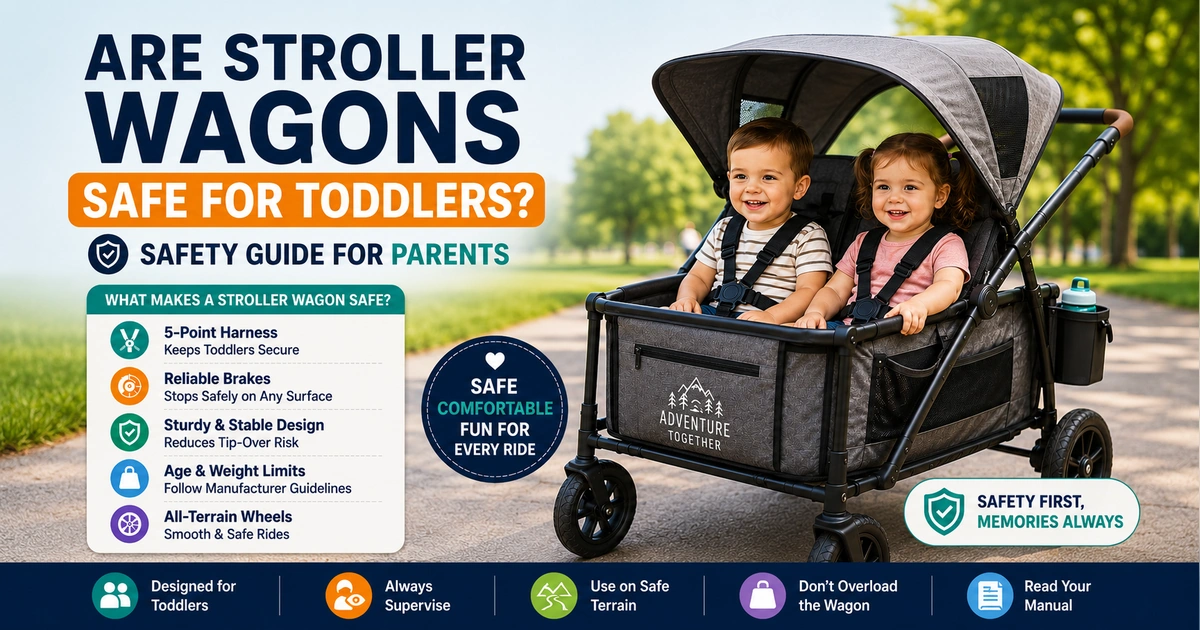
Yes, stroller wagons can be safe for toddlers when they are made for children, used within the recommended age and weight limits, and include key safety features such as a secure harness, stable frame, reliable brakes, proper seating, safe wheels, and a parent-controlled handle.
A stroller wagon is not automatically safe just because it looks roomy or comfortable. Parents should check the product manual, use the harness every ride, lock the brake when stopped, avoid overloading, and choose safe walking surfaces.
What Is a Stroller Wagon?
A stroller wagon is a child-carrying wagon designed with stroller-like features. It usually has seats or a seating area, a push or pull handle, wheels, brakes, storage space, and sometimes a canopy. Some models are built for one child, while others are designed for two or more children.
A stroller wagon is different from a regular garden wagon or utility wagon. A utility wagon may be designed for cargo, not children. It may not have harness straps, child seating, brakes, or safety features needed for toddlers.
Before using any wagon for your toddler, check whether it is actually designed and labeled for child use.
1. Check the Toddler Age and Weight Limit First
The first safety step is checking the stroller wagon’s age and weight limit. Every stroller wagon should have manufacturer guidance that explains who can use it and how much weight it can safely carry.
Parents should check:
- Minimum age recommendation
- Maximum child weight per seat
- Total wagon weight capacity
- Storage basket weight limit
- Whether two children can ride safely
- Whether the wagon is suitable for toddlers only or older children too
Do not guess based on the size of the wagon. A large wagon can still have specific child weight limits and seating restrictions. If your toddler is near the maximum weight limit, choose a model designed for higher capacity or stop using the wagon if it no longer meets the manual’s limits.
For more details about child weight limits, read our stroller weight limit guide for parents.
2. Choose a Stroller Wagon with a Secure Harness
A harness is one of the most important toddler stroller wagon safety features. Toddlers move, lean, twist, stand, and try to climb. A harness helps keep the child seated and better positioned inside the wagon.
A safer stroller wagon should have a harness system for each child seat. Many parents prefer a 5-point harness because it secures the shoulders, waist, and between the legs. Some wagon models may use different restraint systems, so always check the manual.
Common harness safety tips:
- Use the harness every ride.
- Adjust straps to fit your toddler properly.
- Do not let toddlers stand while the wagon is moving.
- Check that the buckle clicks securely.
- Do not use the wagon if harness straps are torn or weak.
- Make sure each child has their own harness if the wagon carries more than one child.
For a full explanation, read our 5-point harness stroller safety guide.
The American Academy of Pediatrics advises parents to always use stroller harness straps as described in the stroller instructions. You can read the AAP stroller safety tips here: AAP stroller safety tips.
Amazon buying tip: When comparing stroller wagons for toddlers, look for models with a secure harness, reliable brakes, stable wheels, and clear toddler weight limits. Check toddler stroller wagon options on Amazon.
3. Make Sure the Brake Works Well
A stroller wagon should have a brake that is easy for parents to use and strong enough to keep the wagon from rolling when stopped. This is especially important because stroller wagons are often heavier than standard strollers.
Use the brake when:
- Loading your toddler into the wagon
- Taking your toddler out
- Stopping at a park or sidewalk
- Standing near a car
- Stopping on a slight slope
- Adjusting bags, snacks, or accessories
Before every outing, test the brake on a flat surface. Press the brake, gently try to move the wagon, and confirm that it stays in place. If the brake feels loose, stuck, or unreliable, do not ignore it.
For more help, read our stroller brake safety guide for parents.
4. Check Stability and Tip-Over Risk
Stroller wagons are usually wider than regular strollers, which can help with stability. However, they can still tip if used incorrectly, overloaded, pulled too quickly, or used on unsafe terrain.
To reduce tip-over risk:
- Keep toddlers seated while moving.
- Do not let children climb in or out without help.
- Place heavier items low and centered.
- Do not hang heavy bags from the handle.
- Do not exceed the total weight capacity.
- Avoid sharp turns at speed.
- Be careful near curbs, steps, and slopes.
Stroller wagons can feel sturdy, but parents should still treat them as child transport products, not play equipment.
The U.S. Consumer Product Safety Commission provides official safety guidance for carriages and strollers, including areas such as stability, brakes, restraint systems, latches, folding mechanisms, structure, wheels, and openings. You can review the guidance here: CPSC carriages and strollers guidance.
5. Use the Wagon on Suitable Terrain
Stroller wagons are often used outdoors, but not every model is made for every surface. Some work best on smooth sidewalks, while others are designed with larger all-terrain wheels for parks, grass, gravel paths, or beach-style outings.
Common toddler stroller wagon surfaces include:
- Sidewalks
- Parks
- Grass
- Zoo paths
- Outdoor events
- Boardwalks
- Light gravel paths
Be careful on steep hills, stairs, escalators, deep sand, uneven rocks, wet slopes, or rough trails. If the wagon feels hard to control, turn back or choose a safer route.
For wheel checks and terrain safety, read our stroller wheel safety guide for parents.
6. Do Not Use a Regular Utility Wagon as a Toddler Stroller Wagon
A regular utility wagon may look similar to a stroller wagon, but it may not be designed for children. Cargo wagons are often made for beach gear, garden tools, sports equipment, or shopping items. They may not have child seating, harness straps, brakes, or safety testing for toddlers.
Before placing a toddler in any wagon, check:
- Is it clearly designed for children?
- Does it have child seating?
- Does it include a harness?
- Does it have a brake?
- Does the manual allow child riding?
- Does it list age and weight limits?
If the product is not made for carrying children, it should not be used as a toddler stroller wagon.
7. Supervise Toddlers at All Times
A stroller wagon gives toddlers more space than many standard strollers, which can be comfortable. But more space also means toddlers may try to stand, reach, twist, or climb.
Parents should always supervise toddlers in a stroller wagon. Do not leave a toddler unattended, even if the brake is locked. Toddlers can shift their weight, undo straps, reach for objects, or try to climb out.
During each ride, check that:
- Your toddler remains seated.
- The harness stays secure.
- Hands and feet stay inside the wagon.
- No toys or straps are near the wheels.
- The child is not leaning over the side.
- The wagon is not overloaded.
For a daily safety routine, read our stroller safety checklist before every walk.
8. Be Careful with Two Toddlers in One Wagon
Many stroller wagons are designed to carry two children. This can be helpful for siblings, twins, cousins, or playdate outings. However, two toddlers can also shift weight, kick, lean, or interact in ways that affect safety.
If using a wagon for two toddlers:
- Use each child’s harness.
- Balance weight evenly.
- Do not exceed total weight capacity.
- Keep snacks and toys organized.
- Stop the wagon if children start standing or rough playing.
- Make sure both children have enough space.
If your stroller wagon feels difficult to steer or stop with two children inside, it may not be the right model for your family’s use.
9. Check the Handle Design
Some stroller wagons are push wagons, some are pull wagons, and some allow both push and pull modes. The handle design affects control, visibility, and comfort.
When choosing a stroller wagon, check:
- Can you push and steer comfortably?
- Can you see your toddler while walking?
- Is the handle height comfortable?
- Does the handle lock securely?
- Is the wagon easy to control when loaded?
- Does pulling reduce your ability to monitor your child?
Many parents prefer push mode because it feels more like a stroller and may allow better control. Pull mode can be useful on some terrain, but parents should still keep checking the child.
For more handle safety tips, read our stroller handlebar safety guide for parents.
10. Do Not Overload the Wagon with Bags and Gear
One reason parents like stroller wagons is storage. They can hold diaper bags, snacks, water bottles, toys, blankets, and outdoor items. However, too much gear can affect stability and control.
Overloading may make the wagon:
- Harder to push or pull
- Harder to stop
- Less stable on slopes
- More likely to tip during sharp turns
- Uncomfortable for toddlers
- Harder to fold or lift
Always follow the total weight capacity. Keep heavier items low and centered, and avoid hanging heavy bags from the handle.
11. Use the Canopy Safely
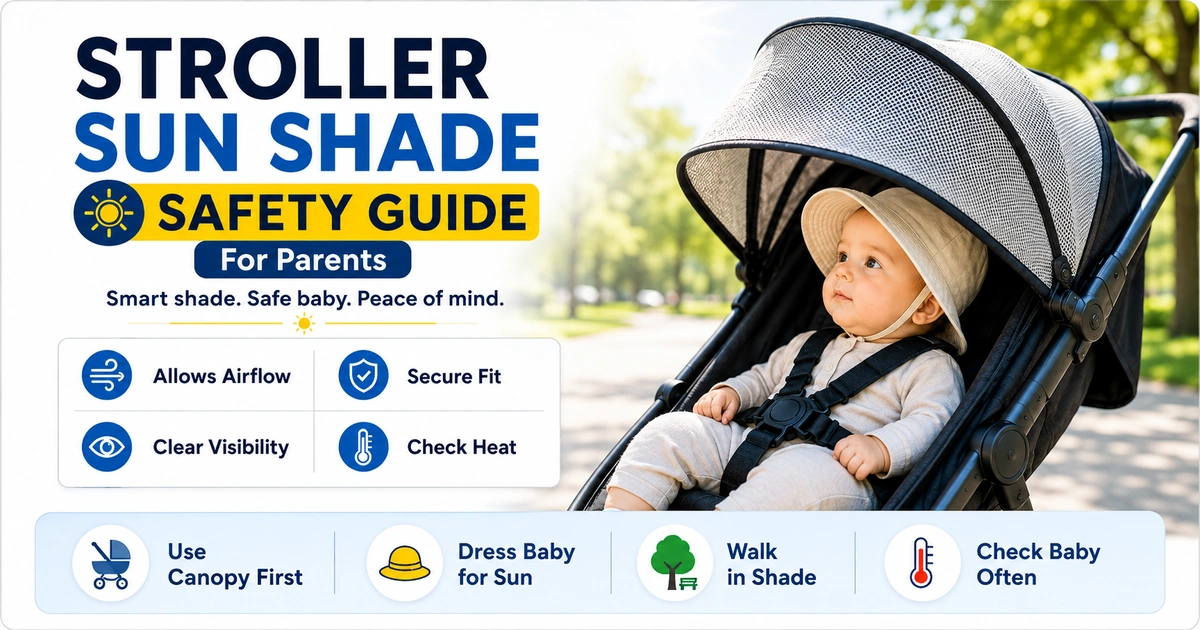
Many stroller wagons include a canopy or shade cover. This can help protect toddlers from sun, glare, and light wind. However, the canopy should allow airflow and should not fully trap heat inside the wagon.
Canopy safety tips:
- Use breathable shade when possible.
- Do not fully cover the wagon with thick blankets.
- Check toddlers often in warm weather.
- Make sure the canopy is attached securely.
- Keep shade away from children’s faces.
- Remove or adjust the canopy if it blocks visibility.
If you often use a stroller wagon outdoors, shade and airflow matter. For more sun protection tips, read our stroller sun shade safety guide for parents.
Amazon buying tip: For outdoor family trips, compare stroller wagons with breathable canopies, secure harness seating, and smooth all-terrain wheels. View stroller wagons with canopy on Amazon.
12. Avoid Using a Stroller Wagon for Toddler Sleep
Toddlers may get tired and fall asleep during outings. However, a stroller wagon should not replace a proper sleep space. If your toddler falls asleep in the wagon, stay close, keep the child properly positioned, and follow the product instructions.
Avoid adding soft pillows, loose blankets, or extra padding that the manual does not recommend. If you return home and your child needs more sleep, move them to a safe sleep space appropriate for their age and development.
A stroller wagon is mainly for supervised transport and outdoor convenience, not long unsupervised sleep.
13. Check Folding Locks and Frame Before Use
Many stroller wagons fold for storage or car travel. Before each use, make sure the wagon is fully open and the frame locks are secure. A partly locked frame can be unsafe.
Before placing your toddler inside, check:
- The frame is fully open.
- The folding locks are engaged.
- The handle locks properly.
- The seat area is secure.
- The wheels are attached firmly.
- The brake works correctly.
- The harness straps are not twisted.
If a fold lock is loose or broken, stop using the wagon until it is repaired or replaced according to the manufacturer’s instructions.
14. Check for Recalls Before Buying Used
Second-hand stroller wagons can save money, but parents should inspect them carefully. Used child gear may have missing parts, worn wheels, damaged brakes, torn harness straps, or past recall issues.
Before buying a used stroller wagon, check:
- Brand and model number
- Manufacture date
- Recall status
- Harness condition
- Brake function
- Wheel condition
- Frame stability
- Canopy condition
- Original manual availability
- Missing parts or screws
You can search official stroller and related child product recalls on the CPSC recall page here: CPSC stroller and car seat recalls.
15. When Is a Stroller Wagon Not Safe for a Toddler?
A stroller wagon may not be safe for a toddler if it is not designed for child use, has no harness, has no brake, has damaged wheels, exceeds weight limits, or is used on unsafe terrain.
Do not use a stroller wagon if:
- The product manual does not allow child riding.
- The toddler is below the minimum age or above the weight limit.
- The harness is missing or damaged.
- The brake does not work reliably.
- The frame does not lock securely.
- The wheels are loose or cracked.
- The wagon tips easily.
- The child cannot sit safely.
- The wagon is overloaded with gear.
- The terrain is too steep or rough to control.
Safety should come before convenience. If a stroller wagon does not feel stable, controlled, and suitable for your child, choose a safer stroller option.
Stroller Wagon Safety Checklist for Toddlers
Before every stroller wagon outing, use this checklist:
- Check the age and weight limit.
- Use the harness for each toddler.
- Lock the brake when stopped.
- Keep toddlers seated while moving.
- Do not overload the wagon.
- Keep bags low and centered.
- Check the wheels and terrain.
- Use the canopy without blocking airflow.
- Keep hands, feet, toys, and straps away from wheels.
- Supervise toddlers at all times.
- Check frame locks before use.
- Check recall status when buying used.
Stroller Wagon Safety Features to Look For
| Safety Feature | Why It Matters | What Parents Should Check |
|---|---|---|
| Harness | Keeps toddlers seated and secure | Look for secure straps for each seat |
| Brake | Stops wagon from rolling when parked | Test before each outing |
| Stable frame | Reduces tip-over risk | Check wide base and strong structure |
| Weight limit | Prevents overloading | Check child and total capacity |
| All-terrain wheels | Helps on grass, parks, or uneven paths | Match wheels to your walking surface |
| Canopy | Adds shade and comfort | Check airflow and secure attachment |
| Fold lock | Keeps frame secure after opening | Make sure it clicks fully before use |
Stroller Wagon vs Regular Stroller for Toddlers
| Feature | Stroller Wagon | Regular Stroller |
|---|---|---|
| Space | More room for toddlers and gear | Usually more compact |
| Storage | Often larger storage area | Smaller basket in many models |
| Portability | Can be bulky and heavy | Often easier to fold and lift |
| Safety restraint | Depends on model and seat design | Usually has dedicated stroller harness |
| Terrain | Good for parks and outdoor events if wheels are suitable | Depends on stroller type |
| Best use | Family outings, parks, outdoor events | Daily errands, travel, sidewalks |
A stroller wagon is not always better than a stroller. It depends on your family’s lifestyle, your toddler’s needs, and how often you need extra space.
Common Stroller Wagon Mistakes Parents Should Avoid
Many stroller wagon safety problems happen because parents treat wagons like open play spaces instead of child transport products. Try to avoid these mistakes:
- Letting toddlers stand while the wagon moves
- Using a wagon with no child harness
- Buying a utility wagon instead of a child stroller wagon
- Ignoring age and weight limits
- Overloading the wagon with bags
- Hanging heavy bags from the handle
- Using the wagon on steep or unsafe terrain
- Forgetting to lock the brake when stopped
- Leaving toddlers unattended
- Using a damaged or recalled wagon
- Blocking airflow with thick covers
- Letting straps or toys hang near the wheels
FAQ: Are Stroller Wagons Safe for Toddlers?
Are stroller wagons safe for toddlers?
Stroller wagons can be safe for toddlers when they are designed for children, used within age and weight limits, and include safety features like a harness, brake, stable frame, and secure seating.
What age can a toddler use a stroller wagon?
The right age depends on the stroller wagon model and manufacturer instructions. Always check the minimum age, seating requirements, and weight limits before use.
Do stroller wagons need a harness?
Yes, a harness is an important safety feature for toddlers. It helps keep the child seated and better positioned while the wagon is moving.
Can two toddlers ride in one stroller wagon?
Two toddlers can ride in a stroller wagon only if the model is designed for two children and the total weight stays within the manufacturer’s limit. Each child should use their own harness.
Are stroller wagons safe on hills?
Parents should be very careful on hills. A loaded stroller wagon can become harder to control on slopes. Avoid steep hills and always use the brake when stopped.
Can toddlers sleep in a stroller wagon?
A stroller wagon should not replace a safe sleep space. If a toddler falls asleep during an outing, supervise closely and follow the product instructions.
Is a stroller wagon better than a regular stroller?
A stroller wagon may be better for outdoor family trips, parks, and carrying extra gear. A regular stroller may be better for daily errands, small cars, narrow spaces, and quick travel.
Final Thoughts
So, are stroller wagons safe for toddlers? They can be safe when parents choose a child-friendly stroller wagon and use it correctly. The safest models include a secure harness, reliable brake, stable frame, proper toddler seating, clear weight limits, and wheels suited for your walking surfaces.
Parents should avoid using regular utility wagons as toddler carriers, overloading the wagon, skipping the harness, or using the wagon on unsafe terrain. Always supervise toddlers, lock the brake when stopped, and follow the product manual.
A stroller wagon can be a helpful family product, especially for parks, outdoor events, and longer outings. But like any stroller, safety depends on choosing the right model and using it the right way every time.