

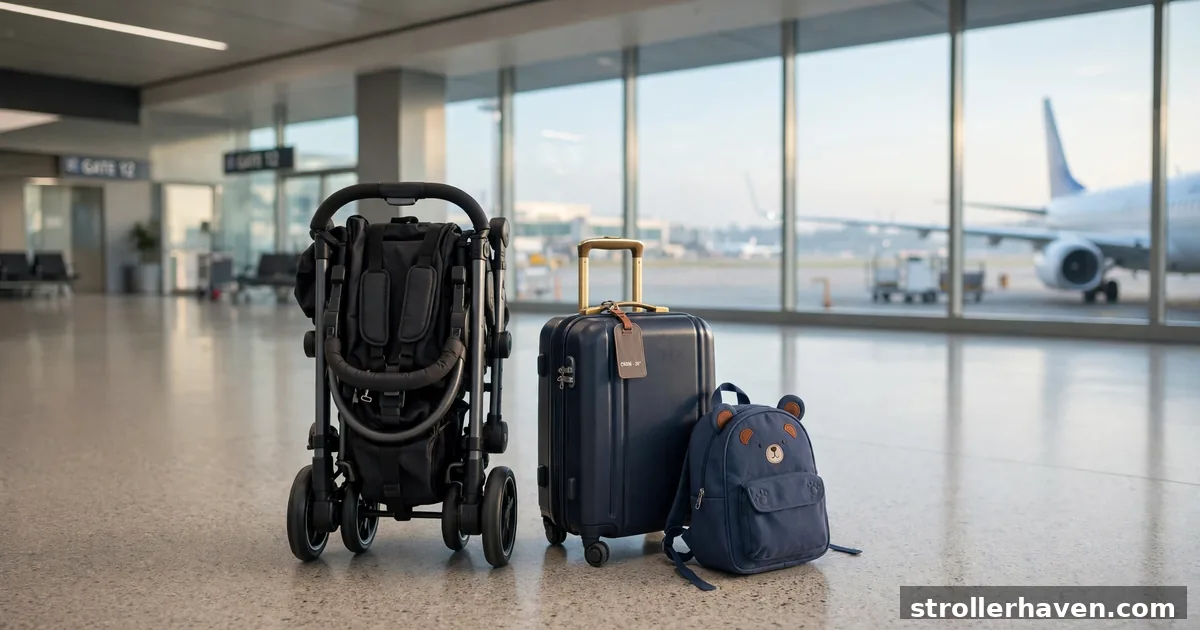
Best Air Travel with Toddler 2026 comes down to seven decisions: buy the seat or fly lap, bring the car seat or the CARES harness, time the flight around the nap, pack one under-seat bag and nothing more, board last unless you are solo, keep your toddler swallowing on descent, and rotate one activity at a time instead of opening everything at once. Get those seven right and most flights with a toddler are manageable — not perfect, not silent, but manageable.
This guide is research-based: it follows the three leading toddler-flying guides of 2026 in journey order and checks their safety claims against FAA and AAP guidance. The full stroller comparison lives in our best stroller for airplane / overhead bin 2026 guide. No stroller here is described as physically tested by StrollerHaven, and no price is stated as current.
Best Air Travel with Toddler 2026: Booking the Flight (The Most Important Part)
Booking is where the flight is won or lost, and the first decision is the one parents argue about most: lap or own seat. On US domestic flights, a child under two may fly on a parent’s lap for free, and from the second birthday, the child needs their own paid seat. The safety picture is different: the FAA allows lap children under two but strongly discourages it, because your arms cannot hold a child in turbulence, and both the FAA and the AAP say the safest place for a child under two is in an approved child restraint system in their own seat. Buying a ticket for your child is the only way to guarantee you can use one.
So the trade-off is simple. Lap is free and works for short flights under two hours. For anything longer, the seat pays for itself three ways: you can bring an FAA-approved car seat, which gives the toddler a bounded, familiar space that helps with containment and sleep; you get a tray table and a clear space for snacks and activities; and you stop being squished for five hours. FamilyTripPlan puts it bluntly — buy the seat for under-2s on flights over two hours — and Tovi agrees. If the seat is not realistic for this trip, that is fine too; plenty of toddlers fly held or belted in a standard lap-child setup.
The second booking decision is the restraint, and here the rules are precise. The FAA and the AAP recommend that children under 40 pounds ride in their own seat in a car seat labelled for aircraft use. Look for the label “This restraint is certified for use in motor vehicles and aircraft” — without it, the airline can refuse the seat on board. The seat must be installed in a forward-facing aircraft seat, following the label’s directions, and babies must be removed from carriers during takeoff and landing; babywearing is not a substitute for a restraint. Booster seats cannot be used on a plane at all — they need a lap-shoulder belt, and aeroplanes only have lap belts — so check the booster as luggage instead.
The lighter alternative is the CARES harness — the Child Aviation Restraint System from Kids Fly Safe, made by AmSafe. It is the only FAA-approved child restraint that is not a full car seat. It weighs about a pound, packs into a small stuff sack, loops around the seat back and works with the aircraft lap belt. The FAA certifies it for children who weigh 22 to 44 pounds, are up to 40 inches tall, are at least one year old, and can sit upright in their own seat, for every phase of flight. Two warnings matter: it is approved for aircraft only, never for cars, so you still need a car seat at your destination; and the FAA warns about counterfeit CARES harnesses sold online — buy direct from the manufacturer, Kids Fly Safe, and check for the FAA approval wording before your first flight. A car seat is the safer and more familiar option for a child under two; CARES is the lighter option for a one-to-four-year-old who already sits upright well and where a car seat is waiting at the other end.
Two corrections to a claim you may read elsewhere: FamilyTripPlan’s FAQ says that over two, “the FAA requires a car seat or CARES harness” and that CARES is “mandatory for under-2 if you want the seat”. Neither is true: over two, the child must have a seat, but the aircraft lap belt is permitted, with a car seat or CARES recommended under 40 lb. CARES is an option, never mandatory.
The third booking decision is timing, and every competitor agrees on it. Aim for the flight that lines up with a nap: a two-to-four-hour flight scheduled across naptime does a lot of the work for you, and the 10am to 1pm departure is the sweet spot for most toddlers. A 6am departure is, in FamilyTripPlan’s words, torture for everyone. Red-eyes are a real strategy, but only for toddlers who reliably sleep in motion. Choose a direct flight no matter the cost, if you can — the connection is where toddlers melt down. FamilyTripPlan puts the premium at $200–400 and calls it worth it. If a connection is unavoidable, build in at least 60 to 75 minutes, and pick a layover long enough for a proper walk and a toilet break.
The fourth booking decision is the seat. The competitors disagree, and both sides are worth hearing. Tovi says: aisle, and as far forward as you can reasonably get, unless you are travelling solo — aisle seats mean bathroom trips and pacing the aisle do not require asking a stranger to move. FamilyTripPlan says: aisle seat in the back third of the plane, and avoid the bulkhead unless you need the bassinet, because bulkhead seats have no under-seat storage. NomadMum says the opposite on bulkhead: bulkhead seats give the most floor space. All three describe the same trade-off: bulkhead buys floor space and loses under-seat storage; aisle buys movement and loses the view. For most toddler flights, the aisle wins — and if you are travelling as a pair on a three-seat row, taking window and aisle and leaving the middle for your toddler is NomadMum’s favourite setup.
How To Prepare For Flying With a Toddler
Book Smart
Booking smart is the whole section above, applied in one pass: buy the seat if the flight is over two hours, decide car seat vs CARES before you book (a car seat needs a window seat where possible, so it does not block an evacuation), pick the nap-aligned direct flight, and take the aisle. Two more booking moves: if you fly with a lap toddler and there is an empty seat next to you, ask whether your car seat can go there. And check the airline’s own stroller and car-seat policy page before you fly, including whether your car seat fits the aeroplane seat width. For international flights, toddlers need their own passport.
How To Prepare Your Toddler For Their First Flight
Talking about the flight before you go really helps, and this is the part parents skip. Explain what will happen in simple words: the big plane, the seat belt, the noise at takeoff, and the fun part, like the snack trolley or watching shows. Walk your child through the day — security, waiting, takeoff, seatbelt, quiet voice — and practise “airport manners” at home. If they will use headphones for the first time, try them at home: watch a short show together so the new feeling is not a surprise on the plane. Do not forget comfort items: a loved teddy, a worn-out blankie, or a pacifier can be magic in a busy airport. Preparing your toddler in advance turns the whole thing into an adventure instead of a shock.
The 3-1-1 Rule and How to Pack Around It
TSA’s 3-1-1 rule is simple: liquids, gels and aerosols in carry-on must be in containers of 3.4 ounces (100 ml) or less, all fitting in one quart-size clear zip bag, one bag per passenger. Toddlers need more liquids than the average traveller, and the rule has an exception written for exactly that. Breast milk, formula, toddler drinks and baby food are treated as medically necessary liquids: they are exempt from the 3-1-1 rule and allowed in your carry-on in reasonable quantities over 3.4 oz, including the water you bring to mix formula and the ice or gel packs that keep them cold.
The exemption only works if you declare it. Tell the officer at the very start of screening that you are carrying breast milk, formula, toddler drinks or baby food in amounts over 3.4 oz, take those items out of your bag so they can be screened separately, and expect additional checks. TSA states that screening will never include putting anything into the milk or food. What is not exempt: ordinary drinks — buy water after security. Pack the qualifying liquids where you can reach them easily.
Packing Checklist For Flying With a Toddler
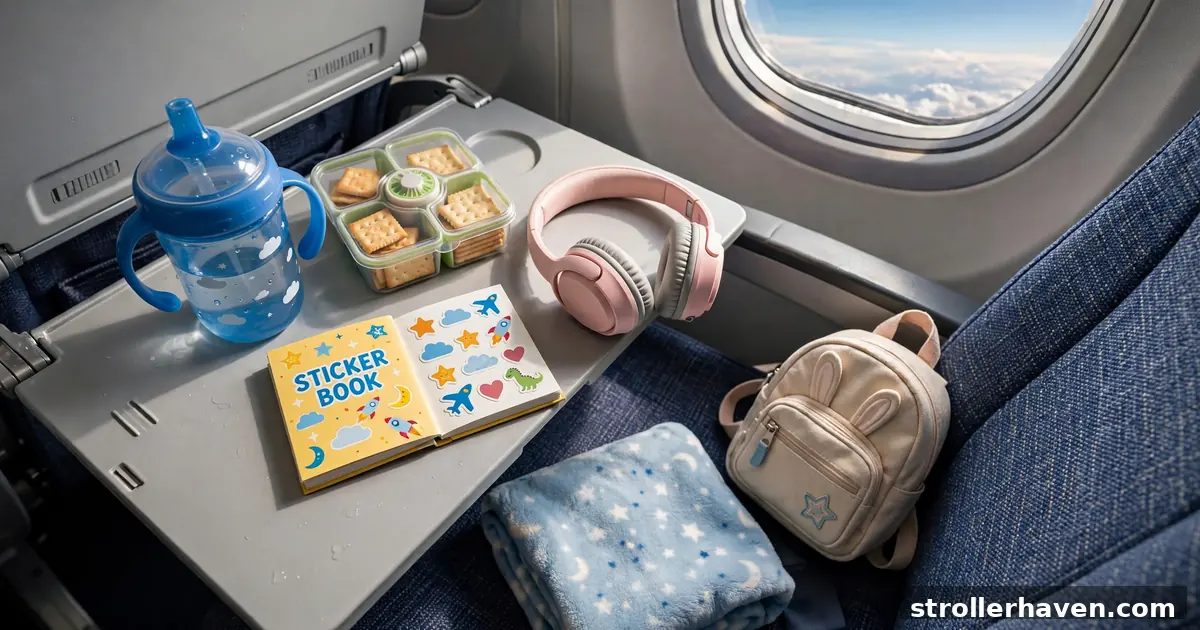
Packing smart will save your sanity. Start with the non-negotiables: snacks your toddler already loves; three to five small toys or activities; a comfort item like a blanket or soft toy; a full change of clothes for your child; and a simple spare top or leggings for you. For toys, the competitors converge on the same short list: sticker books, magnetic drawing boards, Water Wow books, small puzzles, and one or two surprise toys. Avoid anything noisy or with a million tiny pieces — a dropped puzzle piece under a plane seat is gone for good. Try not to overpack: you have to carry all of it through the airport, so focus on compact items that do more than one job — a snack spinner, for example, is both a snack box and entertainment, and a magnetic board is drawing, erasing and starting again with no crayons rolling under seats.
Have Backup Plans For Delays
Delays with a toddler feel ten times longer than delays alone. Always pack extra snacks, more nappies or pull-ups than you think you need, and one or two bonus activities that stay hidden until a delay happens. It is much easier to handle a delay when you can pull out a new sticker book or a fresh bag of snacks. Keep one wrapped surprise toy in reserve for the delay, not the flight — the reveal is the entertainment. And keep the delay kit in the under-seat bag, not the overhead bin: if the delay happens at the gate, the overhead bin is already closed and your bag is out of reach.
The Survival Kit (Carry-On Only — Under Seat)
Pack one small personal item that fits under the seat in front of you. This is your “must reach mid-flight” bag — everything else goes in the overhead bin, where you cannot get to it with a toddler on your lap.
| Item | Why |
|---|---|
| 2–3 pacifiers (if applicable) | They get lost, dropped, or thrown |
| 2–3 small favourite toys, new or rarely used | Rotate through to keep interest; novelty buys more attention than familiarity |
| 1 stuffed animal / lovey | The familiar one for sleep — the real one, not a backup |
| 1 tablet + 1 pair of kid headphones + 1 charging cable | The big-gun distraction; download everything before you leave |
| 1 change of clothes for your toddler + 1 shirt for you | Spills, spit-up, accidents — with zero warning |
| Nappies (1 per 2 hours of travel + 2 spare) | Blowouts are real; put pull-ups on any child under 5, especially on a long-haul flight |
| Wipes (large pack) | Everything |
| 2–3 snacks (puffs, crackers, dried fruit) | Low-mess, low-choking-risk; slow snacks beat fast ones |
| 1 sippy cup + 1 backup | Hydration and ear pressure during descent |
| Small pack of tissues | Runny noses, spills, everything |
| 1 small ziplock for dirty nappies/clothes | Trust the competitors on this one |
| 1–2 disposable changing pads | Aeroplane changing tables are gross |
| Hand sanitiser (3.4 oz or less) | Post-nappy, pre-snack |
| Empty water bottle (fill after security) | For mixing, drinking, and refills from the crew |
In your overhead bin: extra nappies for the rest of the day and anything you will not need until landing.
Flying With a Toddler: At the Airport
When To Arrive At the Airport
Try to arrive early enough for check-in, security and a toilet stop, but not so early that you have three hours to fill with a bored toddler. NomadMum’s rule — about one and a half hours before a domestic flight and two and a half hours before an international flight — works well.
Help Your Toddler Burn Off Energy
Flying with a toddler is easier if they move a lot before boarding. Look for play areas in the airport. If there is none, make your own games: race between chairs, play “Red Light, Green Light”, walk along a line on the floor like it is a balance beam. A small balloon can be a lifesaver in a quiet corner, and little “jobs” — throwing something in the bin, running around one row of seats ten times — burn energy too. The more they move now, the calmer they usually are on the plane.
Security And TSA Tips With a Toddler
Pack liquids like formula, breast milk or juice in containers you can easily pull out, in one small bag at the top of your backpack, and declare them at the start of screening (see the 3-1-1 section above). Snacks are almost never a problem, especially dry ones like crackers or rice cakes. Put nappies, wipes and a small changing set together so you can grab them quickly. Children under 12 do not need to remove their shoes. You will need to take your child out of the stroller and send the stroller through the X-ray machine, or ask for a hand inspection.
Boarding Strategy With a Toddler
There are two main ways to board when you are flying with a toddler, and the right one depends on who is travelling. Pre-boarding: you get on early, find your seats, and have space in the overhead bins — but your toddler has to sit longer while everyone else boards. Boarding last: you stay at the gate as long as possible and let your child play until the last minute. Tovi’s rule is the cleanest version: board as late as your airline’s policy allows, unless you are travelling solo. If you are flying alone, pre-board instead — you lose the “walk them around” option, so trade it for extra time to get bags stowed and the seat set up without a toddler underfoot. If you are travelling with a partner, split the job: one boards early to stow bags while the other walks the toddler around the terminal until the last boarding call.
What To Do With Strollers And Car Seats
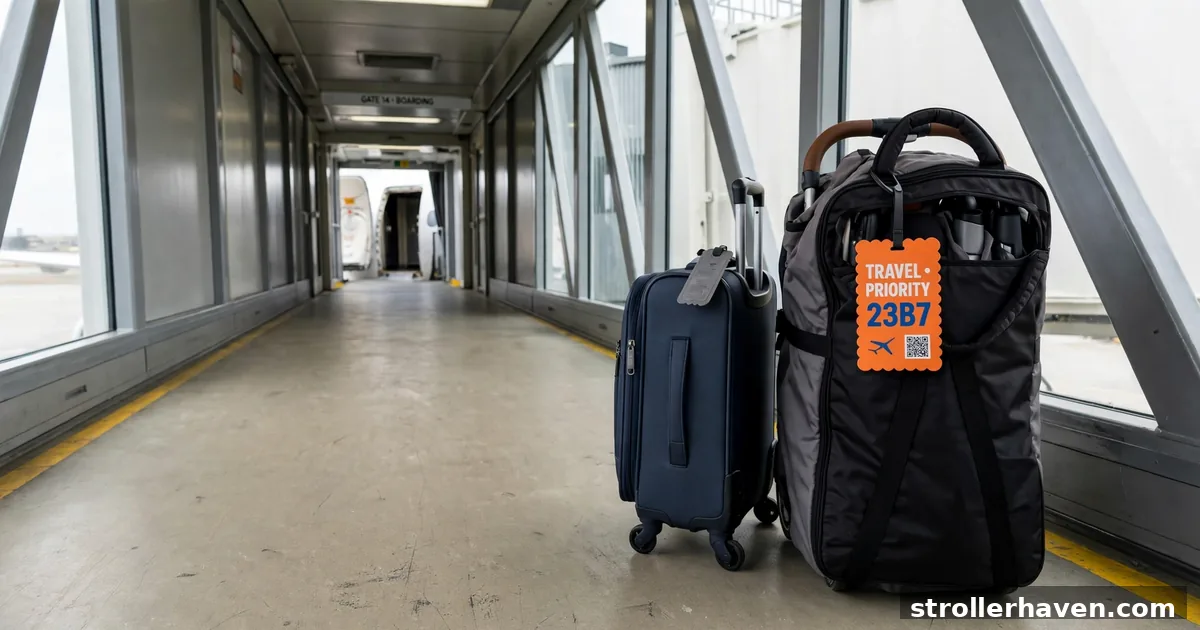
Having your own stroller and car seat can make travel days much smoother, and you have four options. 1. Gate-check for convenience. Take your stroller and car seat through the airport and gate-check both: you can push tired kids and pile bags on the stroller, and if you fly with a lap toddler and there is an empty seat, you already have the car seat with you. Gate-checking is free on US airlines, and your stroller is returned to you at the jet bridge when you land. Bag the stroller first and ask for a tag early so you are not stressed at the door. 2. Check at baggage drop. If you prefer walking light through the terminal, check everything at the counter and use a baby carrier for your toddler. 3. Bring a stroller on board. Some travel strollers fold small enough for the overhead locker — only three models truly fit a standard 22 x 14 x 9 inch carry-on envelope, the gb Pockit Air All-Terrain, the Cybex Libelle 2 and the Munchkin Sparrow. The full comparison is in our best stroller for airplane / overhead bin 2026 guide. 4. Rent at your destination. In many big cities you can rent strollers and car seats. Whatever you choose, protect your gear: gate-checked strollers take hits in the hold, and a travel bag is the cheapest insurance.
Two tagged products belong in this section because they are the two ends of the stroller decision. The Baby Trend Expedition Zero Flat Jogger with LED Lights is a gate-check stroller, not a cabin stroller: at 29.9 lb with folded dimensions of 24 x 34.25 x 18.75 inches it is far too wide for the overhead bin, but it is a real jogger with a 50 lb limit — the stroller you gate-check when the trip includes running at the destination. The Graco Modes Pramette is the opposite end: a full-size 3-in-1 travel system at 20.9 lb with the SnugRide LX infant car seat (rear-facing 4–30 lb, up to 32 inches) and a 50 lb stroller limit — it goes in the hold as checked luggage, never in the cabin. If you are choosing a travel system for home and travel together, read our best travel system stroller 2026 guide first. And one warning that belongs here: the Graco Modes Nest Travel System is under NHTSA recall campaign 26C003 — its carrier may detach from its base — so it is not recommended in this guide at all.
In-Flight Survival When You Are Flying With a Toddler
Comfort Essentials And Ear Pressure
Planes can feel cold and then suddenly warm, so dress your toddler in comfy layers. Ear pressure at takeoff and landing is the number one reason many toddlers cry: help them swallow during those moments — a bottle, breast, water bottle, pouch or lollipop; older kids can use chewing gum. Carry two to four lollipops in your bag. The descent is the worst part, because cabin pressure changes faster than on takeoff — time the swallow for the descent window, starting 30 to 45 minutes before landing.
Keeping Your Toddler Entertained On a Plane
A bored toddler on a plane is a loud toddler, so plan a simple entertainment flow before every trip. Start with looking out of the window, then move to books, sticker books or a magnetic drawing board. Save screens and new toys for later in the flight. The rule the competitors all agree on: rotate one activity at a time, not all at once, so there is always something slightly new to reach for. Let each child carry a small backpack with their own snacks and toys — they feel proud, and you carry a little less.
Toddler Travel Toys: Real Plane Activities That Work
Here are the travel toys that actually work: small, quiet, and fun to rotate.
1. Sticker books and reusable sticker sets. The biggest hit across all three guides — save them for long waits at the gate or the moment everyone is tired and grumpy.
2. Magnetic drawing board and magnetic games. No crayons rolling under seats: a magnetic board lets your toddler draw, erase, and start again.
3. Water Wow books (mess-free painting). Fill the pen with water and the colours appear; once it dries, they can do it again. No stains, no tears.
4. Window clings and simple sensory toys. Perfect for takeoff and landing: stick animals, cars or shapes on the aeroplane window — and remove them before landing.
5. Surprise toys and “busy bags”. Pack a little busy bag for each child — small surprises in drawstring pouches. Wrap one or two new toys like tiny presents; unwrapping feels special and buys you a few more quiet minutes. Novelty matters more than quality here: a $4 toy they have never seen buys more focused attention than a favourite toy from home, because the favourite toy has already lost its mystery.
6. Travel tray for easy play. A small travel tray turns the tray table into a contained play surface.
7. Kids tablet and headphones. Download shows and games in advance so everything works offline, and bring child-size headphones — try them at home first.
8. Bento boxes and snack spinners. Technically not toys, but they act like them: toddlers love opening, closing, and choosing what to eat next.
9. Activity books for curious toddlers. A new picture book, a small puzzle of three or four pieces, or a “busy bag” with random small items — anything new is interesting.
Snacks Save the Day
Snacks are magic on flights with toddlers: they distract, comfort, and help with ear pressure. Pack fruit pouches, crackers or breadsticks, small granola bars, a few treats, and lollipops for takeoff and landing. Use a leak-proof snack box or spinner so everything stays in one place, and bring a spill-proof cup plus a refillable water bottle — flight attendants are usually happy to refill it. The trick is slowness: a snack that takes fifteen minutes to eat is worth more than a toy — a snack maze, a pouch with a narrow straw, dried fruit one piece at a time, or a lollipop for older toddlers, which doubles as the ear-pressure swallow reflex. Avoid anything that is gone in four bites, and avoid anything very sticky at security.
Handling Toddler Meltdowns On a Plane
Meltdowns happen, even with perfect planning. First, breathe — you are not the only parent who has been here. Then try one of these: offer a snack or drink; change the scenery with a short walk in the aisle; start a simple game like “I spy something blue”; whisper a story in their ear and hold them tight. A meltdown at 30,000 feet is not a parenting failure: toddlers lack the regulation skills to sit still for hours in a loud, pressurised tube, and that is developmentally normal. You do not need to apologise to the whole cabin. If a tantrum is escalating, walk to the back of the plane: the galley area and a few minutes of standing usually break the cycle. One rough flight does not predict the next one.
The Time-Killers (Rotate Every 30-45 Minutes)
The trick to a successful flight with a toddler is rotation of activities: no single activity holds their attention for more than 30 to 45 minutes. Here is the rotation, adapted from FamilyTripPlan’s timetable and NomadMum’s 3-3-3 rule:
| Flight window | What to do |
|---|---|
| 0–15 min | Boarding excitement, looking out the window |
| 15–30 min | Snack + sippy cup (the early-flight sugar helps) |
| 30–60 min | Tablet time (downloaded show or game) — or books and sticker books first, tablet later |
| 60–90 min | New toy surprise (wrap 2–3 small toys, open one at a time) |
| 90–120 min | Walk the aisles (if awake and not too turbulent) |
| 120+ min | Nap time (if the timing works) |
Screen time is OK on a flight — download two or three episodes of their favourite show plus one or two episodes of a new show you have been holding back. And keep the 3-3-3 rule in your pocket for long flights: plan three activities, three snacks, and three short walks across the flight. Pull out one toy, not five. Offer a snack, not the whole bag. Walk the aisle, then sit back down. Repeat. It is not magic, but it works most of the time.
The Ear Pressure Problem
Ear pain is the number one reason kids cry on planes. Babies’ and young children’s Eustachian tubes are narrower than ours, so they do not equalise pressure as easily. Swallowing, yawning or chewing opens the tube and equalises the pressure, and the descent is the worst part, because cabin pressure changes faster than on takeoff. If they cry, try not to panic: crying can help too.
| Age | Best trick |
|---|---|
| 0–6 months | Nurse or bottle during descent |
| 6–18 months | Pacifier, then nurse or bottle during descent |
| 18 months–3 years | Sippy cup, snack, or chew toy during descent |
| 3+ years | Chewing gum, or eat a snack during descent |
Start early: for older kids, sips of water, a chewy snack, yawning, or a “swallow game”, starting 30 to 45 minutes before descent. Keep your toddler awake and drinking on the way down — asleep is fine for takeoff, but a toddler asleep for the whole descent does not swallow enough to keep pressure equalised, so gently wake them 20 to 30 minutes before landing. For sick kids, the advice splits. FamilyTripPlan suggests paediatric saline nasal spray 15 to 30 minutes before descent, and a paediatric decongestant for a really congested child; LittleOnes says decongestants are not recommended for young children and have not been shown to help. This guide follows the cautious line: saline spray is the low-risk option, and any decongestant is a question for your paediatrician, not a routine packing item. Avoid flying with a fever or an active ear infection if you can reschedule.
The Tantrum Playbook (It Will Happen)
A toddler tantrum on a plane is not a personal failure — it is a developmental inevitability. The goal is not to prevent all tantrums; it is to reduce the frequency, reduce the duration, and survive it without losing your cool. When the tantrum happens, work the steps in order. Step 1: check the basics. Are they hungry, thirsty, tired, hot or cold, ear pressure? Most toddler “tantrums” are actually a need. Step 2: distract. New toy, new snack, walk the aisle, look out the window. Step 3: hold the line. If the tantrum is pure frustration, not a need, hold them calmly and quietly. The tantrum will peak and then subside — most are five to ten minutes. Step 4: ignore the looks. Other passengers have been there, and flight attendants have seen thousands of toddler tantrums. Step 5: the safety valve. If the tantrum is escalating, walk to the back of the plane — the galley area and a few minutes of standing break the cycle.
Special Tips For Long Haul Flights With a Toddler
Sleep Tips For Long Flights
Stick to bedtime routines: copy your normal routine as much as you can — pyjamas, a short story, teeth, then cuddle. Bring a small travel pillow and your toddler’s own blanket so their seat feels like a tiny bed, and a sleep mask and soft kid headphones to block out light and noise. If your airline allows it, an inflatable footrest can make the seat longer — always check the rules in advance, because some airlines do not allow these. Dim the screens an hour before landing. Accept that they might not sleep — try anyway.
Move Often
On long flights with toddlers, walk a lot: short walks up and down the aisle, little stretches near the galley, or a “wiggle break” at the back of the plane. Time the walks for cruise, not for takeoff, landing, or turbulence.
Sleeping on the Plane (The Holy Grail)
A sleeping toddler equals a successful flight. For red-eye flights: bring the bedtime routine (pyjamas, lovey, pacifier, white noise via headphones), dim the screens one hour before landing, and use a baby carrier or your chest for comfort. For daytime flights: time the flight for nap time (a 12–2pm flight is the sweet spot for most one-to-two-year-olds) and bring a small blanket, the lovey, the pacifier, and white noise via headphones. If your toddler sleeps through car rides, the red-eye is your best bet; if they fight sleep anywhere unfamiliar, take the daytime nap flight. And if nobody sleeps, that is survivable too — the kids will not remember the flight. They will remember the trip.
What Is the 3-3-3 Rule for Flights With a Toddler?
The 3-3-3 rule is a simple framework parents use to break a long flight into manageable chunks: plan three activities, three snacks, and three short walks across the flight. It keeps things fresh and stops you from burning through all your entertainment in the first hour. Pull out one toy, not five. Offer a snack, not the whole bag. Walk the aisle, then sit back down. Repeat. For most families the rough version looks like this: first third, window watching, books, and a snack; middle third, sticker books, a new surprise toy, and a walk; final third, tablet, a lollipop for ear prep, and one more snack. It is not magic, but it works most of the time.
Adjusting After Landing With a Toddler
Landing is another ear-pressure moment: use the same tricks as takeoff, timed for the descent. After a long flight, toddlers are usually tired, wired, and confused — go straight to your hotel or apartment, eat together, and keep the evening very simple. This little landing routine helps everyone reset. Once you land, switch to local time with plenty of daylight and your normal bedtime routine. If you are flying to Walt Disney World, one rule is worth knowing before you land: Disney’s parks allow strollers up to 31 inches wide by 52 inches long, and stroller wagons are prohibited in the parks. Our best stroller for Disney World 2026 and best double stroller for Disney World 2026 guides cover the picks that fit — check them before you pack a stroller that will be turned away at the gate. And remember the stroller-time rule from our how long can baby stay in a stroller guide: a toddler needs breaks out of the stroller.
What NOT to Worry About
Other passengers’ opinions. A crying toddler is not a moral failing; most parents are sympathetic. The “perfect” flight. There is no such thing — the goal is a manageable flight, not a perfect one. Other passengers’ kids being perfect. They are not; every kid has terrible days. The “your kid will be traumatised”. They will not — they will sleep, wake up, and ask “where are we?”
What to Definitely Do
- Time the flight around the nap — 10am to 1pm departure is the sweet spot.
- Buy the seat for under-2s — the space and the car seat are worth it on flights over two hours.
- Bring a car seat or CARES harness — for safety and sleep positioning, if your child is in the right weight range.
- Use a baby carrier for boarding, deplaning, and walks.
- Pack the 3-1-1 workarounds — exempt liquids, pre-measured formula, empty bottles.
- Time the descent snack — feed during descent for ear pressure.
- Bring 1–2 new toys wrapped in tissue paper for the “reveal” effect.
- Use the tablet liberally — four hours of screen time is not the end of the world.
- Arrive at the airport 30 minutes earlier than you think you need — toddler logistics are slow.
Best Air Travel with Toddler 2026: Frequently Asked Questions
What age is hardest to fly with a toddler? Most parents and flight crews agree the one-to-two-year range is the toughest window — old enough to want to move, too young to reason with. Infants under about nine months are often easier, and by age three most toddlers can sit through a screen, a story, and a snack sequence. If you have flexibility, skip the 12-to-24-month window if you can.
How do I stop my toddler’s ears from hurting on a plane? Swallowing, sucking, or chewing during descent is the most reliable fix, because it works the same muscles that open the Eustachian tube. Nurse or offer a bottle on the way down if your toddler still takes one; for older toddlers, a sippy cup, a pouch they have to suck, or chewy snacks during descent work well. Staying awake for descent helps too — gently wake them 20 to 30 minutes before landing.
Should I bring a car seat on the plane for my toddler? The FAA allows — and recommends — using an FAA-approved car seat on board for children under 40 pounds: it helps with containment during a meltdown and gives a toddler a familiar, bounded space. A CARES harness — the only FAA-approved child restraint that is not a full car seat — is a lighter alternative for children 22 to 44 pounds and up to 40 inches tall. It is not mandatory; it is an option.
Do toddlers need their own seat on a plane? Under two, they can legally fly free as a lap infant on most airlines, but most experienced parents say buy the seat — the extra space is worth the cost on flights over two hours. Over two, they must have their own seat. The FAA does not require a car seat or a CARES harness in that seat; the aircraft lap belt is permitted, with a car seat or CARES recommended under 40 lb.
What should I pack in a toddler flight bag? Prioritise density over variety: three or four new-to-them small toys or activity books, a tablet loaded with downloaded shows as a backup, snacks that take a long time to eat, a change of clothes for both of you, and the comfort item they sleep with. Skip anything with lots of small loose pieces. The full list is in “The Survival Kit” table above.
Is it harder to fly with a toddler alone than with a partner? Yes, logistically — you lose the ability to tag-team a meltdown, a bathroom trip, or stowing a bag in the overhead bin. The fixes are packing lighter than you think you can (one bag, worn, not rolled), choosing an aisle seat near the back, and boarding as late as your airline allows — or pre-boarding specifically to stow bags without a toddler underfoot.
When can babies fly? Most airlines allow babies as young as two weeks (some require seven days for full-term babies, fourteen days for preemies). Paediatricians generally recommend waiting until two months for full-term babies. For international flights, three to six months is the sweet spot. Check your airline’s own minimum age before you book.
What’s the 3-1-1 rule and how do you pack for it with a toddler? TSA’s 3-1-1 rule: liquids, gels and aerosols in carry-on must be in 3.4 oz (100 ml) containers, all fitting in one quart-size clear zip bag, one bag per passenger. For toddlers, breast milk, formula, baby food and juice are exempt in reasonable quantities — declare them at security and screen them separately. Bring empty bottles and pre-measured formula, or buy water after security to mix.
Final Word
Best Air Travel with Toddler 2026 is not about a perfect flight. There is no such thing. It is about the seven decisions that make a flight manageable: buy the seat on flights over two hours, bring the car seat or the CARES harness if your child is in range, time the flight around the nap, pack one under-seat bag, board last unless you are solo, keep your toddler swallowing on descent, and rotate one activity at a time. Book the direct flight. Buy the seat. Bring the car seat. And go. The kids will not remember the flight. They will remember the trip.

Sanat Barua is the founder of Stroller Haven. He researches stroller models, manufacturer specifications, and safety standards to help parents compare options and make confident, informed decisions.
His research draws on official manufacturer documentation and product manuals, publicly available owner feedback, and safety guidance from sources such as the U.S. Consumer Product Safety Commission (CPSC) and the American Academy of Pediatrics (AAP). Stroller Haven is a research-based website: products are not described as physically tested unless an article states that testing took place. Stroller Haven is updated regularly as new models and safety information become available.