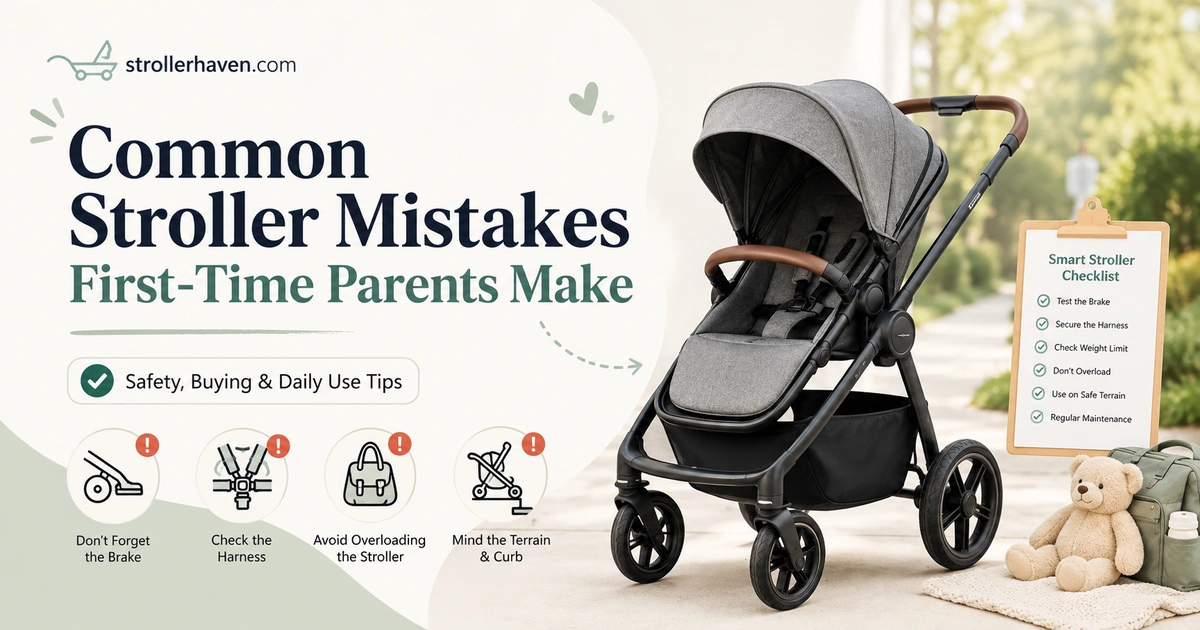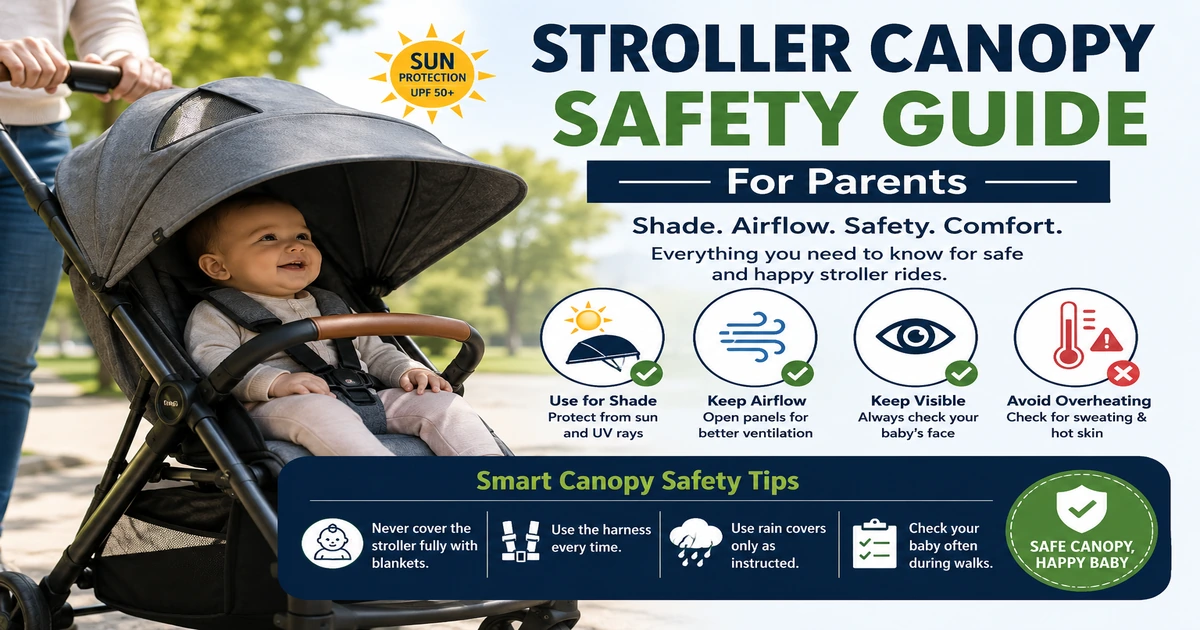
A stroller canopy looks like a simple shade cover, but it plays an important role in baby comfort and safety. It can help protect your baby from direct sunlight, light wind, mild weather changes, and outdoor distractions during walks.
This Stroller Canopy Safety Guide explains how parents should use a stroller canopy safely, what mistakes to avoid, how to prevent overheating, when to use extra shade, and what canopy features to check before buying a stroller.
The key rule is simple: a stroller canopy should give shade without blocking airflow, visibility, or safe supervision.
Quick Answer
A stroller canopy is useful for sun protection and comfort, but parents should not fully cover the stroller with thick blankets or unsafe covers. Keep airflow open, check baby often, avoid overheating, use the canopy correctly, and follow the stroller manual.
| Canopy Safety Check | What Parents Should Confirm |
|---|---|
| Sun shade | Canopy gives enough shade without fully trapping heat |
| Airflow | Baby gets fresh air and ventilation |
| Visibility | Parent can still check baby easily |
| Face clear | Nothing covers baby’s nose, mouth, or face |
| Secure canopy | Canopy is attached properly and does not collapse |
| Weather use | Rain covers or sun shades are used only as instructed |
Why Stroller Canopy Safety Matters
A stroller canopy can make walks more comfortable, but wrong canopy use can create problems. If parents cover the stroller too much, airflow can become poor and the stroller may become too warm inside.
Canopy safety matters most when:
- You walk in hot weather
- Your baby is younger than 6 months
- Your baby falls asleep in the stroller
- You use a rain cover
- You walk during strong sun
- You use a travel stroller with a small canopy
- You are out for a long walk
- You use extra blankets or covers
Helpful guide: For a full safety routine before walks, read our Stroller Safety Checklist Before Every Walk.
1. Use the Canopy for Shade, Not Full Covering
The stroller canopy should help shade your baby from direct sunlight. But it should not turn the stroller into a closed space with poor airflow.
Safe canopy use means:
- Use the built-in canopy as designed.
- Keep airflow open around the stroller.
- Keep baby’s face visible.
- Check baby often during hot weather.
- Do not fully cover the stroller with thick blankets.
- Do not block all side openings.
If you feel heat building inside the stroller, move to shade and check your baby immediately.
2. Avoid Covering the Stroller With Heavy Blankets
Many parents place a blanket over the stroller to block the sun. This may feel protective, but it can reduce airflow and trap heat inside the stroller.
Avoid using:
- Thick blankets over the canopy
- Heavy cloth covers
- Dark covers in hot weather
- Loose fabric near baby’s face
- Any cover that blocks parent visibility
- Any cover that makes the stroller feel warm inside
If extra shade is needed, use stroller accessories designed for airflow and follow the manufacturer’s instructions.
3. Keep Baby’s Face Visible
Parents should be able to see the baby during stroller use. If the canopy, blanket, rain cover, or sunshade blocks your view completely, you may miss signs of discomfort.
Keep checking:
- Baby’s face is visible
- Baby is breathing comfortably
- Baby is not sweating too much
- Baby is not slumping forward
- Baby’s chin is not pressed to the chest
- No cloth is near the nose or mouth
Helpful guide: If you are unsure how long your baby should stay in a stroller, read our How Long Can a Baby Stay in a Stroller? guide.
4. Check Airflow During Hot Weather
Hot weather can make stroller canopy use tricky. Shade is helpful, but airflow is also important. A shaded stroller can still become warm if air cannot move freely.
Hot weather canopy tips:
- Use the stroller canopy for shade.
- Keep side airflow open.
- Walk during cooler parts of the day when possible.
- Stop in shaded areas for breaks.
- Check baby’s neck, chest, and back for sweating.
- Avoid fully covering the stroller.
- Use breathable clothing for baby.
If your baby looks flushed, sweaty, unusually sleepy, or uncomfortable, stop walking and cool your baby safely.
5. Use Extra Shade Carefully
Sometimes the built-in canopy may not give enough shade. In that case, parents may use stroller sunshades, clip-on shades, umbrellas, or canopy extenders.
Before using extra shade, check:
- Does it attach securely?
- Does it block airflow?
- Can you still see your baby?
- Can it fall onto baby’s face?
- Does it interfere with folding?
- Does it change stroller balance?
Extra shade should improve safety and comfort, not create a new risk.
6. Canopy Safety for Newborns
Newborns need extra protection because they cannot control their body temperature well and have limited head and neck control. They should be kept out of direct sunlight as much as possible.
For newborn canopy safety:
- Use shade whenever possible.
- Use a newborn-approved stroller setup.
- Make sure the canopy does not touch baby’s face.
- Keep airflow open.
- Check baby’s position often.
- Avoid long walks in strong heat.
- Do not add loose pillows or thick covers.
Helpful guide: For newborn stroller choices, read our What Type of Stroller Is Safe for Newborns? guide.
7. Canopy Safety for Older Babies
Older babies may sit more upright and look around during walks. A good canopy can protect their eyes and face from direct sun while still giving them enough airflow.
For older babies, check:
- Canopy gives shade when baby is upright.
- Baby can still see comfortably.
- Harness fits correctly under the canopy.
- Baby is not pulling the canopy down.
- Canopy does not block parent supervision.
- Ventilation panels are open if available.
As babies grow, their sitting position changes, so adjust the canopy as needed.
8. Canopy Safety for Toddlers
Toddlers may push, pull, kick, or play with the canopy. Some toddlers also dislike being fully covered because they want to see outside.
For toddlers:
- Do not let them pull hard on the canopy.
- Check that canopy joints are not loose.
- Keep fingers away from folding canopy parts.
- Make sure the canopy does not block their view too much.
- Use the harness every time.
- Check the stroller weight limit and seat fit.
If your toddler often grabs the canopy, check it more often for loose parts.
9. Use Peekaboo Windows Properly
Many stroller canopies have a small peekaboo window. This helps parents check the baby without fully opening the canopy.
Peekaboo window safety tips:
- Use it to check baby during walks.
- Keep it open if ventilation is needed.
- Make sure flap magnets or Velcro are secure.
- Do not let loose flaps touch baby’s face.
- Clean the window if it becomes dusty.
- Do not rely only on the window; stop and check baby closely too.
A peekaboo window is a helpful feature, especially during long walks or stroller naps.
10. Canopy Ventilation Panels
Some strollers include mesh panels or ventilation windows in the canopy. These can help airflow, especially in warmer weather.
When checking ventilation panels:
- Make sure mesh is not torn.
- Open panels when extra airflow is needed.
- Check that insects cannot easily enter.
- Keep panels clean from dust.
- Do not block panels with blankets or bags.
- Follow the stroller manual for correct use.
Ventilation does not mean you can leave the stroller in direct heat for a long time. It only helps airflow during safe use.
11. Rain Cover and Canopy Safety
A rain cover can help during light rain, but it can also reduce airflow if used for too long or in warm weather. Use rain covers carefully and only as instructed.
Rain cover safety tips:
- Use a cover made for your stroller model if possible.
- Make sure air vents remain open.
- Do not use rain covers in hot weather unless needed briefly.
- Check baby often for sweating or discomfort.
- Remove the cover when rain stops.
- Dry the stroller after use.
Never use a rain cover as a regular sun cover unless the product is designed for that purpose.
12. Canopy Safety in Cold Weather
In cold weather, parents may use stroller covers to block wind. This can help, but baby’s face should stay clear and airflow should not be completely blocked.
Cold weather canopy tips:
- Dress baby in safe layers.
- Keep face uncovered.
- Do not use loose blankets near baby’s mouth.
- Check baby’s hands, feet, neck, and chest.
- Use stroller covers according to instructions.
- Take indoor breaks during long outings.
Cold protection should keep baby comfortable without blocking breathing or supervision.
13. Canopy Safety During Stroller Naps
Many babies fall asleep during stroller walks. A canopy can help reduce light and distractions, but parents should still supervise baby closely.
During stroller naps:
- Keep baby’s face visible.
- Use the harness properly.
- Make sure baby is not slumping.
- Keep airflow open.
- Do not add loose pillows or thick blankets.
- Move baby to a safe sleep space when possible.
Helpful guide: For stroller nap and time safety, read our How Long Can a Baby Stay in a Stroller? guide.
14. Canopy Safety and Stroller Harness
The canopy does not replace the harness. Even if the baby looks relaxed under the canopy, the harness should still be used every time.
Harness and canopy checklist:
- Harness is buckled before closing canopy.
- Straps are flat and snug.
- Baby cannot slide down under the canopy.
- Canopy does not hide poor baby posture.
- Parent checks baby after adjusting canopy.
Helpful guide: For harness fit details, read our 5-Point Harness Stroller Safety Guide.
15. Canopy Safety and Stroller Storage
Sometimes parents place blankets, bags, jackets, or toys on top of the canopy. This can make the canopy unstable, block airflow, or fall into the stroller.
Do not place these items on the canopy:
- Heavy jackets
- Shopping bags
- Large toys
- Loose blankets
- Water bottles
- Diaper bags
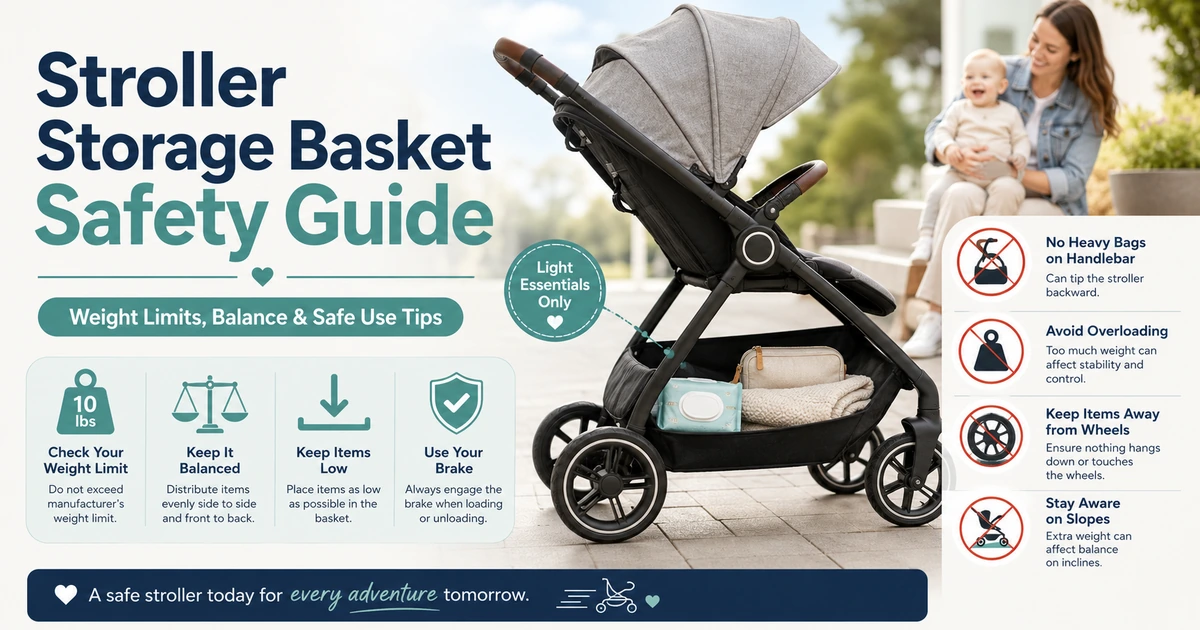
Helpful guide: For safer storage habits, read our Stroller Storage Basket Safety Guide for Parents.
16. Canopy Safety for Travel Strollers
Travel strollers often have smaller canopies. They are lightweight and compact, but they may not always give full sun coverage.
For travel stroller canopies:
- Check canopy size before buying.
- Look for UPF-rated fabric if available.
- Check if canopy extends forward.
- Check airflow panels.
- Make sure canopy folds securely.
- Use safe extra shade if needed.
A compact stroller is convenient, but canopy coverage still matters for sunny walks.
17. Canopy Safety for Jogging Strollers
Jogging strollers are often used outdoors, so canopy coverage can be important. However, parents should not use canopy adjustments while running or moving quickly.
Jogging stroller canopy tips:
- Adjust the canopy before starting.
- Use the wrist strap if provided.
- Check baby’s face and position often.
- Do not fully block airflow.
- Use the brake when stopping for adjustments.
- Follow the stroller manual for jogging age guidance.
Outdoor stroller use needs both shade and control.
18. Signs Your Baby Is Too Hot Under the Canopy
Parents should check for overheating signs during warm weather. A baby may become uncomfortable before crying loudly.
Warning signs include:
- Sweaty neck or back
- Flushed face
- Hot skin
- Fast breathing
- Unusual fussiness
- Unusual sleepiness
- Damp hair
- Baby feels too warm inside the stroller
If you notice these signs, move to shade, remove unnecessary layers, improve airflow, and seek medical help if symptoms seem serious.
19. Used Stroller Canopy Safety
If you buy or receive a used stroller, check the canopy carefully. A damaged canopy may not stay open, may collapse, or may have loose parts.
Used stroller canopy checklist:
- Canopy opens and closes smoothly.
- Canopy locks or stays in place.
- No broken joints or loose hinges.
- No torn fabric near baby’s face.
- Mesh panels are not damaged.
- Peekaboo window closes securely.
- Rain cover or shade accessories match the stroller.
- Recall history is checked.
If the canopy is broken or unstable, contact the manufacturer before using the stroller.
20. Official Stroller Canopy Safety Basics
Canopy safety should be part of complete stroller safety. Parents should check shade, airflow, baby position, harness, brakes, wheels, storage, and manufacturer instructions.
Important basics include:
- Keep babies out of direct sun when possible.
- Use stroller canopy for shade.
- Keep airflow open.
- Keep baby’s face visible.
- Use the harness every time.
- Use brakes whenever stopped.
- Follow stroller manual instructions.
Official source: Parents can read sun safety guidance from HealthyChildren.org by the American Academy of Pediatrics.
Official source: Parents can also review stroller and carriage safety information from the U.S. Consumer Product Safety Commission stroller guidance page.
Stroller Canopy Safety Checklist
| Canopy Check | Done? |
|---|---|
| Canopy opens and stays secure | Yes / No |
| Baby gets shade from direct sun | Yes / No |
| Airflow is not fully blocked | Yes / No |
| Baby’s face is visible and uncovered | Yes / No |
| No heavy blanket covers the stroller | Yes / No |
| Ventilation panels are open if needed | Yes / No |
| Rain cover is used only as instructed | Yes / No |
| Baby is checked often in hot weather | Yes / No |
Common Canopy Safety Mistakes Parents Should Avoid
Most canopy mistakes happen when parents are trying to protect the baby from sun, wind, or rain. The intention is good, but the method may not be safe.
- Covering the stroller fully with a thick blanket
- Blocking airflow in hot weather
- Not checking baby under the canopy
- Letting fabric touch baby’s face
- Using rain covers for too long
- Putting bags or jackets on top of the canopy
- Using damaged canopy parts
- Ignoring overheating signs
- Using accessories that do not fit the stroller
- Assuming shade alone means baby is cool
Amazon Buying Tips
When buying a stroller on Amazon, check the canopy carefully. A beautiful stroller may still have a small or weak canopy that does not give enough shade.
Before buying, check:
- Large extendable canopy
- UPF-rated fabric if available
- Peekaboo window
- Ventilation panels
- Secure canopy hinges
- Rain cover compatibility
- Parent reviews about sun coverage
- Seat recline and canopy coverage together
- Fold compatibility
- Manufacturer details
Check Strollers With Large Canopies on Amazon
Final Verdict: Stroller Canopy Safety Guide
A stroller canopy is useful for shade and comfort, but it must be used carefully. Parents should keep airflow open, check baby often, avoid thick blanket covers, and make sure the baby’s face stays visible and uncovered.
The safest canopy is one that gives shade without blocking supervision or ventilation. For hot weather, shade is only one part of safety. Parents should also watch for overheating, use breaks, and avoid direct sun when possible.
Best rule: Shade your baby, but never fully seal the stroller.
Frequently Asked Questions
Is a stroller canopy safe for babies?
Yes, a stroller canopy can be safe and useful when it provides shade without blocking airflow, visibility, or baby’s face.
Can I cover a stroller with a blanket for sun protection?
It is better to avoid covering the stroller fully with a blanket because it can reduce airflow and trap heat, especially in warm weather.
What is the safest way to shade a baby in a stroller?
Use the stroller canopy, stay in shade when possible, keep airflow open, dress baby appropriately, and check baby often.
Should newborns use a stroller canopy?
Yes, newborns should be protected from direct sun. Use a canopy or shade, but keep airflow open and baby’s face visible.
Are stroller rain covers safe?
Rain covers can be safe when used as instructed, but they should not block airflow for long periods, especially in warm weather.
What canopy features should I look for?
Look for an extendable canopy, breathable panels, peekaboo window, secure hinges, good sun coverage, and parent reviews about real-life use.
How do I know if baby is too hot under the canopy?
Check for sweating, flushed face, hot skin, damp hair, fast breathing, unusual fussiness, or unusual sleepiness.
Can I put bags or clothes on top of the canopy?
It is better not to place heavy bags, jackets, or loose items on top of the canopy because they may block airflow or fall into the stroller.