Every stroller has a weight limit, but many parents do not check it carefully. They may keep using the same stroller because the child still fits inside it, even when the stroller may already be close to its maximum safe capacity.
This stroller weight limit guide explains what stroller weight limits mean, why they matter, how to check your stroller’s limit, what signs show your child may be outgrowing the stroller, and what parents should check before buying a new stroller.
A stroller weight limit is not just a number on the product page. It affects safety, comfort, steering, braking, stability, and daily use. If you use a stroller beyond the recommended limit, it may become harder to control and less stable.
Quick Answer
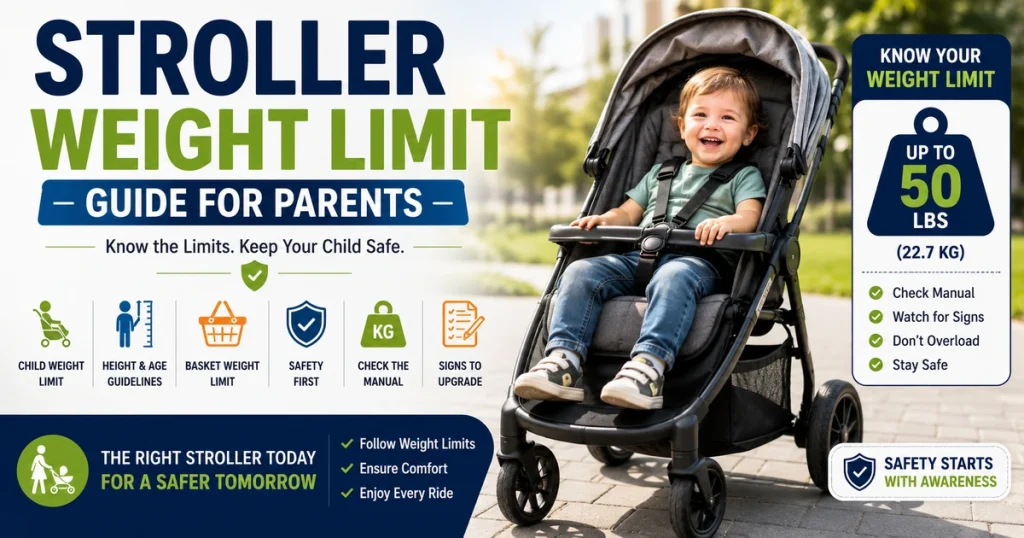
A stroller weight limit is the maximum child weight the manufacturer allows for safe use. Parents should follow this limit, along with height, age, basket weight, and accessory limits listed in the stroller manual.
| Stroller Area | What Parents Should Check |
|---|---|
| Child seat limit | Maximum child weight allowed in the stroller seat |
| Height limit | Whether your child still fits safely under the canopy and harness |
| Basket limit | Maximum weight allowed in the storage basket |
| Accessory limit | Weight limits for trays, organizers, adapters, or ride-on boards |
| Age recommendation | Whether the stroller is suitable for newborns, babies, or toddlers |
| Manual guidance | The final rule for safe use from the manufacturer |
What Is a Stroller Weight Limit?
A stroller weight limit is the maximum weight the stroller seat is designed to hold safely. This limit is set by the manufacturer based on the stroller’s frame, seat, wheels, brakes, harness, and overall design.
For example, one stroller may support a child up to 50 pounds, while another may support only 35 pounds. Double strollers, jogging strollers, travel strollers, and umbrella strollers can all have different weight limits.
The stroller weight limit usually applies to the child sitting in the seat. Storage basket weight and accessories may have separate limits.
Helpful guide: If you are choosing a stroller for an older child, read our How to Choose a Stroller for a Toddler guide.
Why Stroller Weight Limits Matter
Stroller weight limits matter because they help protect the stroller’s safety and performance. When a stroller carries more weight than recommended, it may become harder to push, harder to brake, and easier to tip.
Following the weight limit helps with:
- Stroller stability
- Brake performance
- Wheel control
- Frame strength
- Harness safety
- Seat comfort
- Long-term stroller durability
A stroller may still move when overloaded, but that does not mean it is safe to use that way.
Where to Find the Stroller Weight Limit
The best place to find the stroller weight limit is the official stroller manual. You may also find it on the product label, product page, brand website, or Amazon listing.
Check these places:
- Stroller user manual
- Sticker or label on the stroller frame
- Product box
- Official brand website
- Amazon product details
- Manufacturer FAQ page
- Customer support page
If the Amazon listing and official manual show different information, follow the official manufacturer manual.
Common Stroller Weight Limit Ranges
Stroller weight limits vary by stroller type. These ranges are general examples only. Always check the exact stroller manual before using any stroller.
| Stroller Type | Common Weight Limit Range | Best Use |
|---|---|---|
| Umbrella stroller | Often lower to medium | Short trips and older babies or toddlers |
| Travel stroller | Medium, depending on model | Trips, airports, car trunks, daily errands |
| Full-size stroller | Medium to higher | Daily use, comfort, storage |
| Jogging stroller | Often higher | Outdoor paths and active parents |
| Double stroller | Separate limit per seat and total limit | Two children |
| Stroller wagon | Usually higher total capacity | Older children and family outings |
Do not assume a larger stroller always has a higher weight limit. Always check the official number.
Weight Limit vs Age Limit
Weight limit and age limit are not the same. A stroller may say it is suitable for children up to a certain weight, but it may also have age or developmental recommendations.
For newborns, weight is not the only issue. Newborns need proper recline and head support. For toddlers, weight and height usually become more important.
| Limit Type | Meaning |
|---|---|
| Weight limit | Maximum child weight allowed |
| Height limit | Whether the child still fits the seat, canopy, and harness safely |
| Age recommendation | Whether the stroller is suitable for the child’s stage |
| Developmental readiness | Whether baby has enough head, neck, and sitting control |
A child can be within the weight limit but still too tall or uncomfortable for the stroller seat.
Signs Your Child Is Outgrowing the Stroller
Your child may outgrow a stroller before reaching the printed weight limit. Height, seat space, harness fit, and comfort all matter.
Signs your child may be outgrowing the stroller include:
- Your child is close to or over the weight limit.
- Your child’s head is too close to the canopy.
- The harness does not fit comfortably.
- Your child’s shoulders are above the harness slots.
- Your child looks cramped in the seat.
- The stroller becomes hard to push.
- The wheels feel stressed or unstable.
- The stroller feels harder to brake.
- Your child tries to stand or climb out often.
If you notice several of these signs, it may be time to switch to a stroller with a higher capacity or a more toddler-friendly design.
Do Not Forget the Basket Weight Limit
The child seat is not the only part with a weight limit. The storage basket also has a maximum weight. Many parents overload the basket with diaper bags, groceries, toys, and water bottles.
Overloading the basket can affect stroller movement and stability. It may also damage the basket fabric or frame.
Common basket items include:
- Diaper bag
- Small blanket
- Baby wipes
- Snacks
- Light shopping items
- Water bottle
- Extra clothes
Use the basket, but do not treat the stroller like a shopping cart.
Never Hang Heavy Bags From the Handlebar
Many parents hang bags from the stroller handlebar because it feels convenient. But this can make the stroller unstable and increase tipping risk, especially when the child moves or gets out.
Safer options:
- Use the lower storage basket
- Carry a backpack yourself
- Use a lightweight organizer for small items only
- Keep heavy items low
- Follow the basket weight limit
Official source: Parents can read stroller safety tips from the American Academy of Pediatrics stroller injury prevention guidance.
Weight Limit and Harness Safety
A stroller harness helps keep your child secure, but the harness must fit correctly. As your child grows, the harness may become too tight, too low, or uncomfortable.
Check the harness if your child is near the stroller weight limit:
- Can the shoulder straps still adjust properly?
- Does the waist strap sit correctly?
- Does the crotch strap still fit comfortably?
- Can your child slip arms out?
- Does the buckle close fully?
- Are the straps flat and not twisted?
Helpful guide: For harness fit and safety details, read our 5-Point Harness Stroller Safety Guide.
Weight Limit and Brake Safety
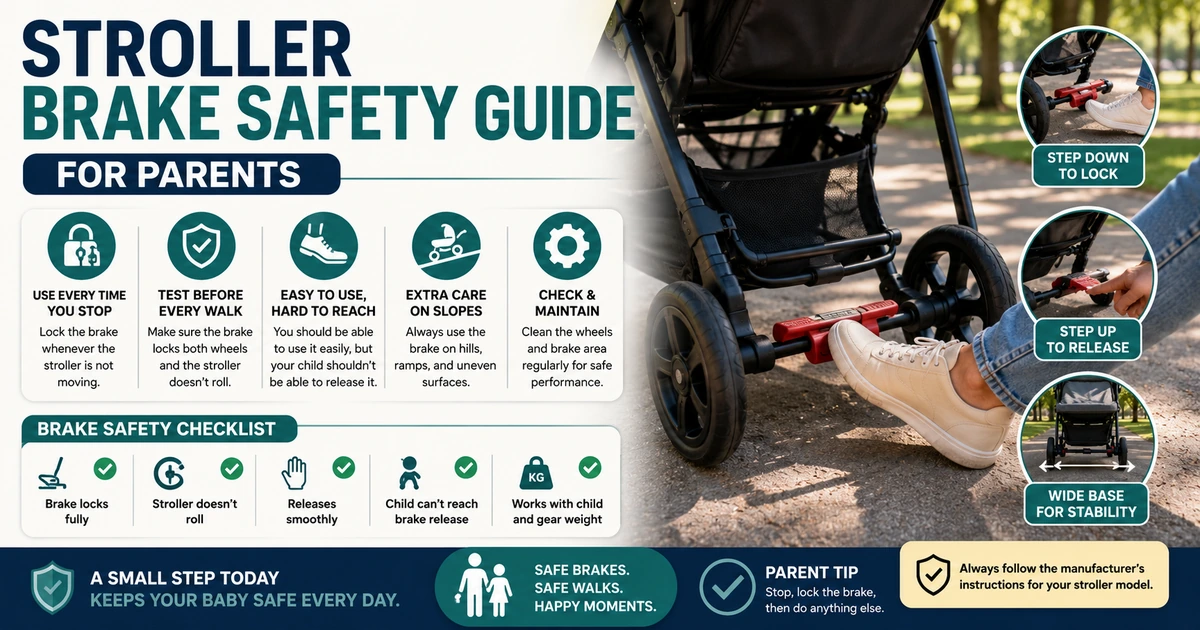
A heavier child can put more pressure on the stroller. This makes brake performance important. Brakes should lock securely when the stroller is stopped.
Use the brake when:
- You stop near a road
- You place your child in the stroller
- You take your child out
- You stop on a slope
- You adjust bags or the canopy
- You pause in a parking lot
If the brake feels weak, loose, or unreliable, stop using the stroller until the issue is fixed.
Weight Limit and Wheel Performance
As your child gets heavier, wheel quality becomes more important. A stroller that pushed smoothly with a small baby may feel harder to push with a heavier toddler.
Watch for these signs:
- Wheels wobble
- Stroller pulls to one side
- Pushing feels difficult
- Wheels make unusual noise
- Stroller feels unstable on turns
- Brakes do not hold well
If the stroller is close to its limit and pushing feels difficult, consider a stroller designed for higher toddler weight or stronger wheels.
Weight Limit for Travel Strollers
Travel strollers are popular because they are lightweight and compact. However, parents should still check the weight limit carefully. Some travel strollers support toddlers well, while others are better for smaller babies.
Before buying a travel stroller, check:
- Maximum child weight
- Seat width
- Harness adjustability
- Wheel strength
- Frame stability
- Folded size
- Storage basket limit
Helpful guide: If you want compact options, read our Best Lightweight Travel Stroller guide.
Weight Limit for Umbrella Strollers
Umbrella strollers are often lightweight and simple, but they may have lower comfort and support than full-size or travel strollers. Some umbrella strollers have lower weight limits, while others support toddlers better.
Before using an umbrella stroller, check:
- Child weight limit
- Seat support
- Harness quality
- Wheel strength
- Brake function
- Canopy size
- Fold lock
An umbrella stroller can be useful for short errands, but it may not be the best option for heavier toddlers or long outings.
Weight Limit for Double Strollers
Double strollers can be confusing because they may have a limit per seat and a total stroller capacity. Parents should check both.
For double strollers, check:
- Maximum weight per seat
- Total stroller weight capacity
- Basket weight limit
- Ride-on board limit if included
- Balance when one seat is empty
- Brake strength
- Frame stability
Do not place a heavier child in a seat that is not designed for their weight. Follow the seat-specific guidance.
Weight Limit for Jogging Strollers
Jogging strollers often have strong frames and larger wheels, but that does not mean parents can ignore weight limits. Running or fast walking adds more movement, so correct weight and age guidance matters.
Before using a jogging stroller, check:
- Child weight limit
- Age recommendation for jogging
- Front wheel lock instructions
- Harness fit
- Brake condition
- Wheel pressure or wheel condition
- Manufacturer manual
Do not use a jogging stroller for running if your child does not meet the stroller’s age, weight, and developmental guidance.
Weight Limit for Stroller Accessories
Accessories can also have weight limits. Ride-on boards, parent organizers, trays, cup holders, and adapters should be used only as recommended by the manufacturer.
Check limits for:
- Ride-on boards
- Second seats
- Infant car seat adapters
- Snack trays
- Parent organizers
- Cup holders
- Storage baskets
Too many accessories can change stroller balance and make it harder to fold, push, or store.
How to Weigh Your Child Before Stroller Use
You do not need to weigh your child before every stroller ride, but you should know their approximate weight if they are growing close to the stroller limit.
Simple ways to check:
- Use your child’s recent doctor visit weight.
- Use a home scale if available.
- Check growth regularly during toddler years.
- Compare current weight with stroller manual limits.
- Leave some safety room instead of using the stroller at the exact maximum.
If your child is very close to the limit, start looking for a stroller with higher capacity.
Stroller Weight Limit and Small Car Trunks
Parents with small car trunks often choose compact strollers. But compact strollers can have different weight limits. Some are great for toddlers, while others are better for younger babies.
Before buying a compact stroller, check both:
- Will it fit your car trunk?
- Will it safely support your child’s weight?
Helpful guide: If trunk space is your main concern, read our How to Choose a Stroller for Small Car Trunks guide.
When Should You Stop Using a Stroller?
There is no single age when every child must stop using a stroller. Some toddlers stop early, while others still need a stroller for travel, long walks, or busy days.
However, you should stop using a specific stroller when:
- Your child exceeds the weight limit.
- Your child exceeds the height limit.
- The harness no longer fits properly.
- The stroller feels unstable.
- The brakes do not hold well.
- Your child is uncomfortable or cramped.
- The frame or wheels are damaged.
Stopping use does not always mean your child needs no stroller. It may simply mean they need a different stroller with a higher limit or better fit.
Safety Checklist Before Every Stroller Ride
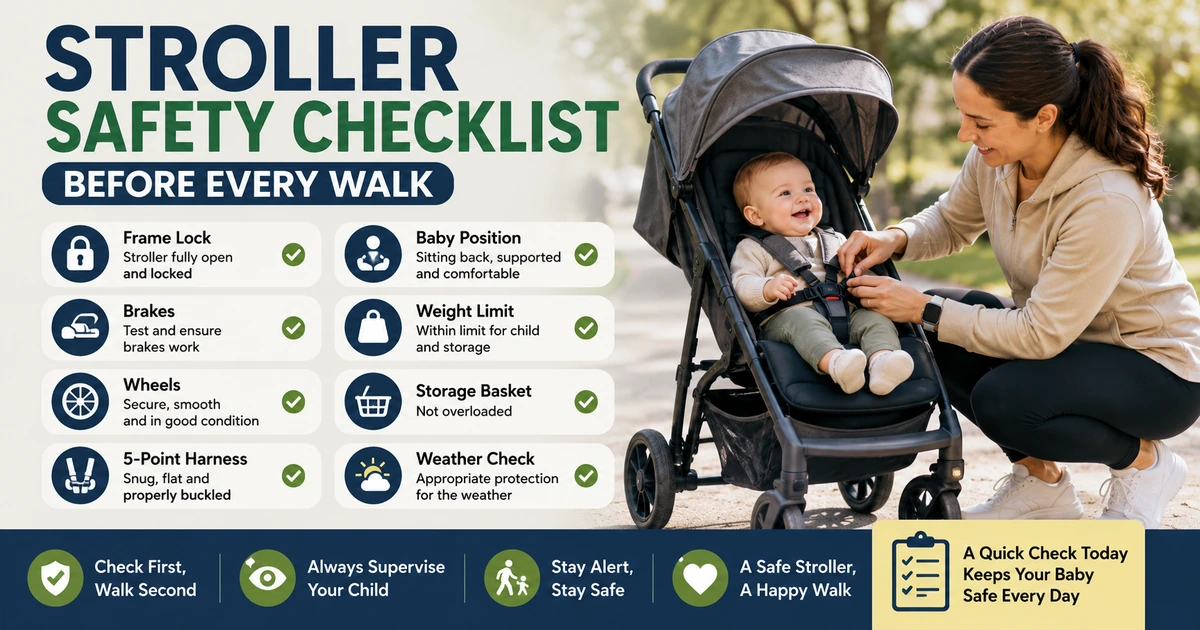
Use this checklist, especially if your child is getting close to the stroller weight limit.
| Check | What to Look For |
|---|---|
| Weight limit | Child is under the stroller’s maximum weight |
| Harness | Fits snugly and buckles properly |
| Brake | Locks securely when stopped |
| Wheels | No wobbling, damage, or loose parts |
| Frame | No cracks, bending, or weak joints |
| Basket | Not overloaded |
| Fold lock | Stroller is fully open and locked before use |
Helpful guide: For a wider safety checklist, read our Stroller and Infant Car Seat Safety Guide.
Common Mistakes Parents Should Avoid
Many stroller weight limit mistakes happen because parents focus only on convenience or habit.
- Using a stroller after the child exceeds the limit
- Ignoring height and harness fit
- Overloading the storage basket
- Hanging heavy bags from the handlebar
- Using a ride-on board beyond its limit
- Assuming all strollers have the same capacity
- Buying a used stroller without checking the manual
- Using a stroller with weak brakes or damaged wheels
- Letting a heavier child sit in a seat not made for their weight
- Not checking double stroller seat-specific limits
Amazon Buying Tips
When shopping for a stroller on Amazon, check the weight limit before looking at color, style, or price. Some listings make strollers look strong, but the official limit may be lower than expected.
Before buying, check:
- Maximum child weight
- Maximum child height
- Seat width
- Harness type
- Basket weight limit
- Stroller frame weight
- Folded dimensions
- Recent parent reviews
- Official manufacturer details
- Return policy
Check Stroller Options by Weight Limit on Amazon
Final Verdict: Stroller Weight Limit Guide
A stroller weight limit is one of the most important safety details parents should check. It tells you how much child weight the stroller is designed to carry safely.
Parents should also check height limits, basket limits, accessory limits, harness fit, brakes, wheel condition, and frame stability. A stroller should fit your child safely, not just physically.
If your child is close to the limit, the harness no longer fits, or the stroller feels difficult to control, it may be time to switch to a higher-capacity stroller.
Best rule: Always follow the stroller manual’s weight, height, and age limits.
Frequently Asked Questions
What is a stroller weight limit?
A stroller weight limit is the maximum child weight the stroller is designed to carry safely according to the manufacturer.
Where can I find my stroller weight limit?
You can usually find it in the stroller manual, product label, official product page, or manufacturer website.
Can I use a stroller over the weight limit?
No. Parents should not use a stroller beyond the manufacturer’s weight limit because it may affect stability, braking, frame strength, and safety.
Does stroller basket weight count?
The storage basket usually has its own separate weight limit. Parents should follow both the child seat limit and basket limit.
What happens if a child is too heavy for a stroller?
The stroller may become harder to push, less stable, harder to brake, and more likely to wear out or become unsafe.
Do double strollers have separate weight limits?
Yes, many double strollers have a limit per seat and a total stroller capacity. Always check both limits.
Should I check height limit too?
Yes. A child may be under the weight limit but too tall for the seat, canopy, or harness position.
When should I switch to a bigger stroller?
Switch when your child is close to or over the weight limit, the harness no longer fits well, or the stroller feels unstable or uncomfortable.