A stroller goes almost everywhere with your baby. It rolls over sidewalks, grass, dust, mud, parking lots, playgrounds, store floors, and sometimes even food crumbs at home. Over time, the wheels collect dirt and the fabric can hold spills, snack crumbs, sweat, sunscreen marks, and everyday mess.
Quick Answer: What Is the Safest Way to Clean a Stroller?
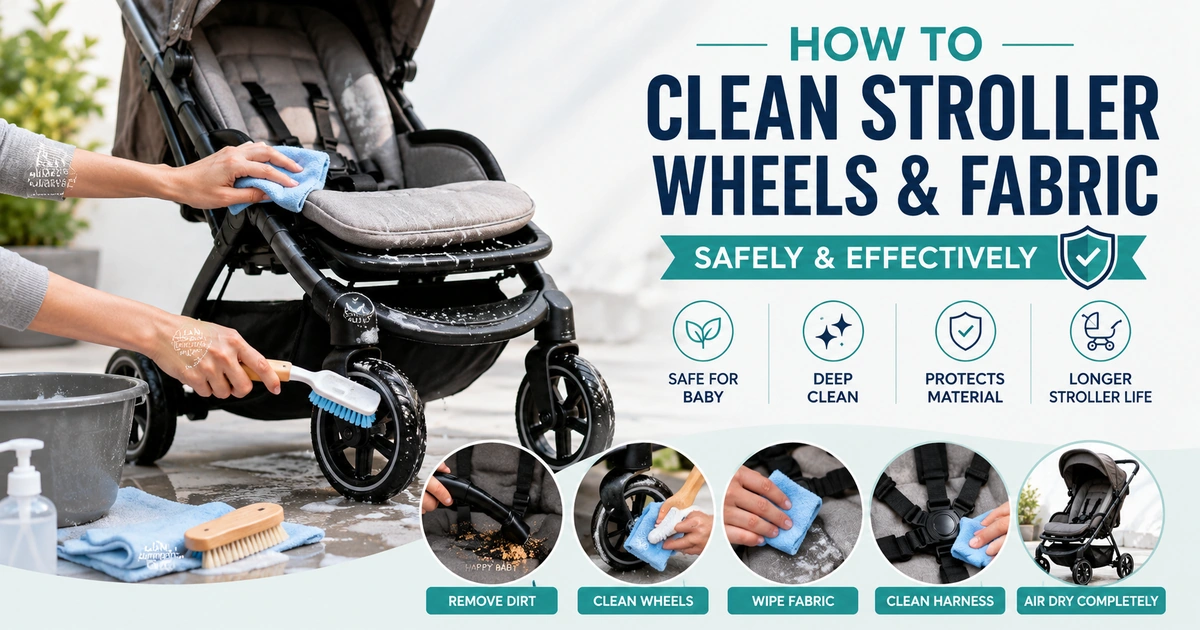
The safest way to clean a stroller is to remove loose dirt first, clean the wheels with a soft brush and damp cloth, spot-clean the fabric with mild soap and water, rinse lightly if the manual allows it, and let the stroller air-dry completely before use.
Avoid strong bleach, harsh chemicals, soaking the frame, pressure washing, or folding the stroller while it is still wet. These mistakes can damage the fabric, affect moving parts, or create trapped moisture.
Why Regular Stroller Cleaning Matters
Regular cleaning is not only about appearance. A clean stroller can be more comfortable for your baby and easier for parents to use. Dirt stuck in wheels can affect smooth movement, crumbs in the seat can attract insects, and sticky spills can make the fabric uncomfortable.
Cleaning also gives you a chance to inspect the stroller. While wiping the wheels, brakes, seat, frame, and harness, you may notice loose parts, worn tires, damaged fabric, weak stitching, or stuck folding joints.
If you use your stroller daily, a light weekly clean and a deeper monthly clean can help keep it in better condition.
What You Need Before Cleaning a Stroller
You do not need expensive tools to clean most strollers. In many cases, simple cleaning items are enough.
Basic stroller cleaning supplies
- Soft brush or old clean toothbrush
- Microfiber cloths
- Mild soap or gentle detergent
- Warm water
- Small bowl or bucket
- Vacuum with brush attachment
- Dry towel
- Cotton swabs for small corners
Amazon buying tip: For regular stroller maintenance, a soft brush, microfiber cloth set, and gentle cleaning supplies can make the job easier. Check stroller cleaning supplies on Amazon.
Before using any cleaner, test it on a small hidden fabric area first. This helps you check whether the cleaner affects color, texture, or fabric finish.
Step 1: Read the Stroller Manual First
The first step is always to check the stroller manual. Some stroller fabrics are removable and machine washable, while others should only be spot-cleaned. Some wheels can be removed for cleaning, while others should stay attached.
The manual may tell you:
- Whether the seat fabric is machine washable
- Whether the fabric should be hand washed only
- Which soap or detergent is recommended
- Whether the wheels can be removed
- How to clean the frame
- Which parts should not be soaked
- How to dry the stroller safely
Do not guess. Baby strollers are made with different fabrics, plastic parts, metal frames, foam handles, and moving joints. Cleaning the wrong way may damage the stroller or reduce its useful life.
Step 2: Remove Loose Dirt, Crumbs, and Debris
Before using water, remove loose dirt first. This makes the cleaning process easier and prevents dirt from spreading across the fabric.
Start by shaking out loose crumbs from the seat, storage basket, and footrest. Then use a vacuum with a brush attachment to clean the seat corners, seams, canopy folds, harness area, and storage basket.
Pay attention to these areas:
- Seat cracks and seams
- Snack tray corners
- Harness buckle area
- Canopy folds
- Footrest area
- Storage basket corners
- Wheel grooves
Loose crumbs and dirt are easier to remove when dry. If you wet them too early, they may turn sticky and harder to clean.
Step 3: Clean the Stroller Wheels Safely
Stroller wheels collect the most dirt because they touch the ground every day. Mud, dust, sand, small stones, hair, and grass can build up around the tires and wheel joints.
Follow these steps to clean stroller wheels:
- Take the stroller outside or place it on an old towel.
- Lock the brake before cleaning.
- Use a dry brush to remove loose dirt from the tires.
- Wipe the wheel surface with a damp cloth.
- Use a small brush to clean grooves and tight areas.
- Remove hair or thread wrapped around the axle if visible.
- Dry the wheels with a clean towel.
- Push the stroller slowly to check if the wheels roll smoothly.
Do not use a pressure washer on stroller wheels or frame. Strong water pressure can push moisture into moving parts, bearings, joints, or brake areas.
If your stroller wheels feel stuck, noisy, or uneven after cleaning, check the manual before adding any lubricant. Some stroller wheels may need specific care, while others should not be oiled without manufacturer guidance.
For more safety details about wheel condition, read our stroller wheel safety guide for parents.
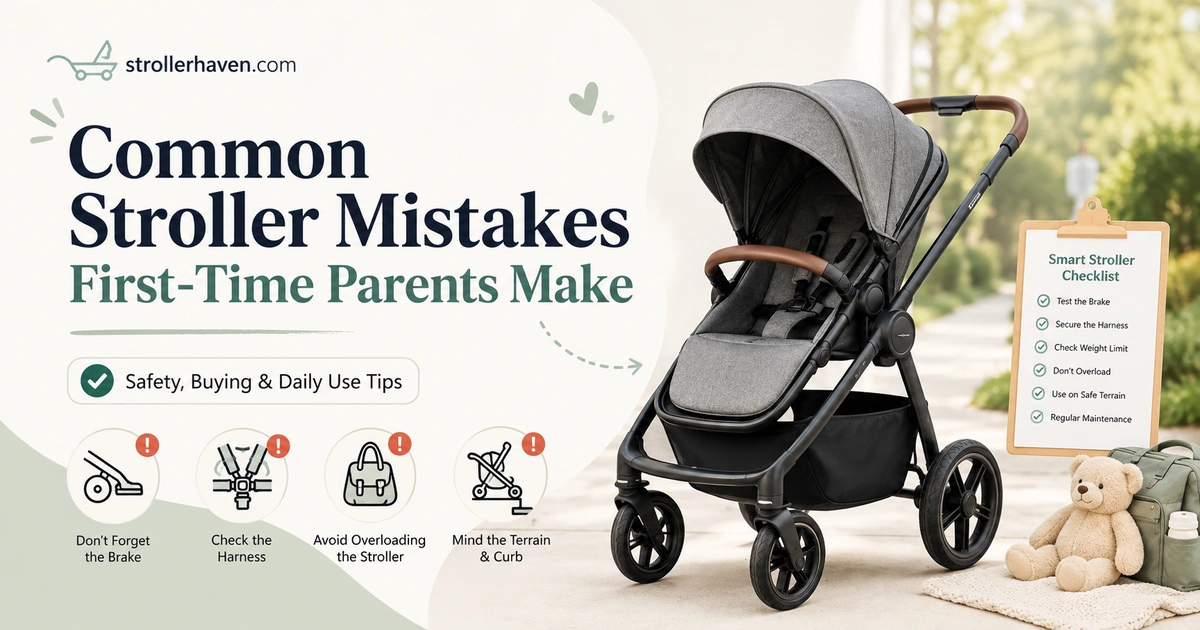
Step 4: Check the Brake After Cleaning the Wheels
After cleaning the wheels, always check the stroller brake. Dirt, mud, sand, or small debris can sometimes collect near the brake area. If the brake does not lock properly, the stroller may move when parked.
To check the brake:
- Place the stroller on a flat surface.
- Press the brake fully.
- Gently try to move the stroller.
- Make sure the wheels do not roll.
- Release the brake and check that the wheels move smoothly.
If the brake feels loose, stuck, or unreliable, stop using the stroller until you inspect it properly or contact the manufacturer.
The American Academy of Pediatrics advises parents to set the brake whenever a stroller is parked. You can read more stroller safety tips from HealthyChildren.org here: HealthyChildren.org stroller safety guide.
For a more detailed explanation, see our stroller brake safety guide for parents.
Step 5: Spot-Clean the Stroller Fabric
Most stroller fabric should be cleaned gently. Unless your stroller manual clearly says the fabric is machine washable, spot-cleaning is usually the safer first step.
To spot-clean stroller fabric:
- Mix a small amount of mild soap with warm water.
- Dip a soft cloth into the soapy water.
- Wring out the cloth so it is damp, not soaking wet.
- Gently wipe stains, spills, and dirty areas.
- Use a second damp cloth with clean water to remove soap residue.
- Pat the fabric with a dry towel.
- Let the stroller air-dry fully before use.
Avoid scrubbing too hard. Strong scrubbing can damage fabric fibers, fade colors, or weaken stitching.
For food stains, clean as soon as possible. Fresh stains are usually easier to remove than dried stains.
Step 6: Clean the Harness and Buckle Carefully
The harness touches your baby directly, so it should be cleaned carefully. Food crumbs, drool, dust, and sticky spills can collect around the straps and buckle.
Use a damp cloth with mild soap to wipe the harness straps. Do not soak the straps unless the stroller manual allows it. Too much water may affect the strap material or make drying difficult.
For the buckle area, remove crumbs with a small brush or cotton swab. Then wipe around the buckle with a damp cloth. Make sure the buckle clicks securely after cleaning.
Do not use strong chemicals on harness straps. The harness is a safety part, so it should not be weakened, stretched, or damaged.
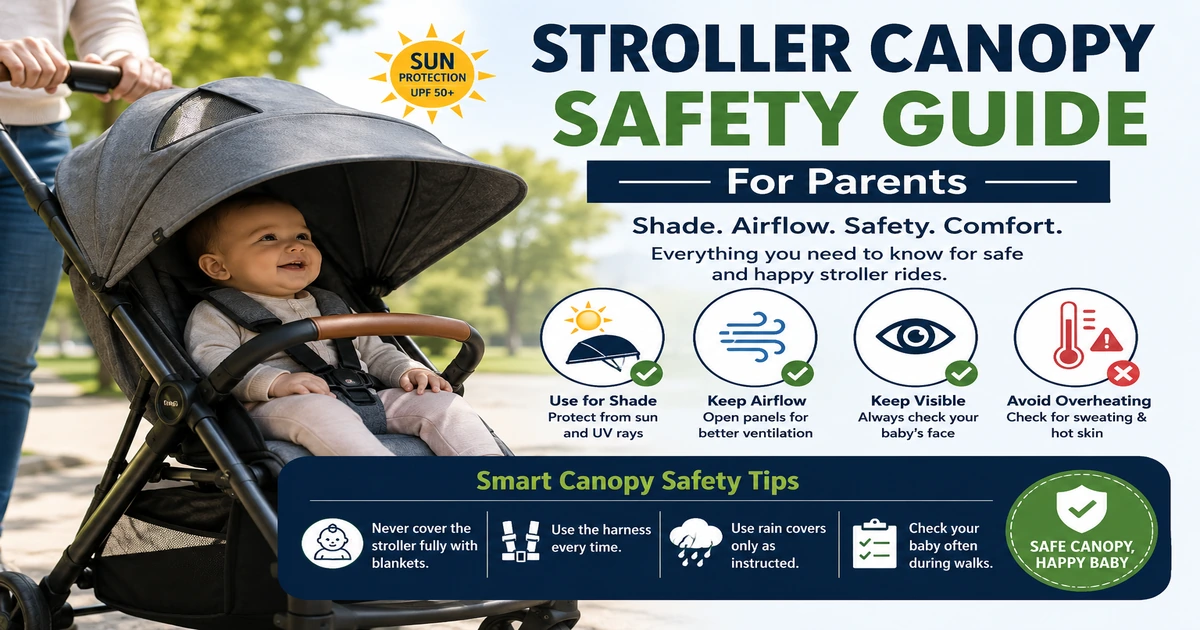
Step 7: Clean the Canopy and Sun Shade
The stroller canopy protects your baby from sun, light wind, and light outdoor exposure. It can collect dust, pollen, sunscreen marks, and moisture.
Use a soft brush or vacuum attachment to remove dry dust first. Then wipe the canopy with a damp cloth and mild soap if needed. Do not soak the canopy unless the manual allows it.
Let the canopy stay open while drying. This helps air move through the fabric and prevents trapped moisture in folds.
If your stroller has a peekaboo window, mesh panel, or plastic viewing window, wipe it gently with a damp cloth. Avoid abrasive brushes that may scratch clear plastic.
For sun protection and canopy use tips, read our stroller canopy safety guide for parents.
Step 8: Clean the Storage Basket
The storage basket often holds diaper bags, snacks, toys, blankets, shopping items, and outdoor gear. It can collect crumbs, dust, sand, and spills.
Start by removing everything from the basket. Shake out loose dirt, then vacuum corners and seams. Wipe the basket with a damp cloth and mild soap. If the basket is mesh, clean gently so you do not stretch or tear it.
Do not overload the basket after cleaning. A clean basket is helpful, but it still has a weight limit. Always follow your stroller manual for storage capacity.
For more details, read our stroller storage basket safety guide for parents.
Step 9: Wipe the Stroller Frame
The stroller frame can collect fingerprints, dust, mud splashes, sticky marks, and outdoor dirt. Use a damp cloth to wipe the frame gently.
Pay attention to:
- Handlebar area
- Folding joints
- Brake pedal area
- Wheel connection points
- Seat frame
- Snack tray or bumper bar
Do not pour water directly onto the frame. Too much water can enter joints, screws, brake parts, or folding mechanisms.
After wiping, dry the frame with a clean towel. This helps reduce water spots and trapped moisture.
Step 10: Use Cleaning Products Safely Around Baby Gear
Parents should be careful when using cleaning products on baby gear. A stroller is used close to your baby’s hands, clothes, skin, and sometimes mouth area, so harsh residue should be avoided.
For everyday cleaning, mild soap and water are often enough. If you need to disinfect a hard, non-porous surface, follow the product label carefully and make sure the surface dries properly before your baby uses the stroller again.
Important cleaning safety tips:
- Do not mix cleaning products.
- Do not mix bleach with other cleaners.
- Use products only as directed on the label.
- Keep cleaners away from children.
- Use cleaning products in a well-ventilated area.
- Rinse or wipe residue when the product label requires it.
The CDC explains that cleaning removes dirt and impurities, while disinfecting uses chemicals to kill remaining germs on surfaces. The CDC also advises not to mix cleaning products or chemicals. You can read the official CDC guidance here: CDC cleaning and disinfecting guidance.
If you prefer products designed with safer ingredients, the U.S. EPA Safer Choice program helps consumers find cleaning products that meet its safer ingredient criteria. You can check the EPA resource here: EPA Safer Choice cleaning products.
Step 11: Dry the Stroller Completely Before Use
Drying is one of the most important parts of stroller cleaning. A stroller that looks clean but stays damp in folds, seams, or cushions may develop odor or trapped moisture.
After cleaning:
- Keep the stroller open while drying.
- Open the canopy fully.
- Remove extra water with a dry towel.
- Let air move around the seat and basket.
- Do not fold the stroller while fabric is damp.
- Do not store it in a dark, wet place.
Dry the stroller in a shaded, well-ventilated area. Avoid leaving it in harsh direct sun for too long, because strong sunlight may fade some fabrics or make plastic parts hot.
Step 12: Inspect the Stroller After Cleaning
After cleaning and drying, inspect the stroller before placing your baby inside. Cleaning can reveal issues that were hidden under dirt or fabric folds.
Check these parts:
- Harness straps
- Buckle click
- Brake lock
- Wheel movement
- Frame joints
- Folding lock
- Seat fabric
- Canopy attachment
- Storage basket stitching
The U.S. Consumer Product Safety Commission provides official guidance for stroller safety standards and stroller-related product safety information. You can review the CPSC stroller guidance here: CPSC carriages and strollers guidance.
Before using a second-hand or older stroller, you can also check for recall information on the official CPSC stroller recalls page: CPSC stroller recalls.
How Often Should You Clean a Stroller?
How often you clean a stroller depends on how often you use it and where you take it. A stroller used every day on outdoor sidewalks may need more cleaning than a stroller used only for occasional shopping trips.
| Cleaning Task | Recommended Frequency | Why It Helps |
|---|---|---|
| Remove crumbs and loose dirt | After messy use or weekly | Keeps seat and basket cleaner |
| Wipe wheels | Weekly or after muddy walks | Helps wheels roll smoothly |
| Spot-clean fabric | When stains appear | Prevents stains from setting |
| Clean harness and buckle | Weekly or after spills | Keeps safety parts clean |
| Deep clean | Monthly or as needed | Maintains long-term condition |
| Safety inspection | After every deep clean | Helps spot wear or damage |
Stroller Cleaning Mistakes to Avoid
Cleaning the stroller the wrong way can cause more problems than leaving it slightly dirty. Avoid these common stroller cleaning mistakes:
- Using strong bleach on fabric without checking the manual
- Mixing cleaning chemicals
- Pressure washing the wheels or frame
- Soaking the harness straps
- Folding the stroller while wet
- Using abrasive brushes on plastic windows
- Machine washing fabric that is not machine washable
- Forgetting to test the brake after wheel cleaning
- Leaving soap residue on the seat
- Using scented products that may leave strong odor
A gentle, careful cleaning routine is usually better than aggressive scrubbing or heavy chemical use.
Best Stroller Cleaning Supplies to Consider
You do not need too many items, but a few simple supplies can make stroller cleaning easier. Look for soft tools that clean without damaging fabric, plastic, or frame parts.
- Microfiber cloths for wiping fabric and frame
- Soft brush for wheels and grooves
- Small detail brush for tight corners
- Gentle detergent for fabric spot cleaning
- Handheld vacuum for crumbs and dust
- Dry towel for quick drying
Amazon buying tip: A small cleaning kit with microfiber cloths, soft brushes, and a handheld vacuum can help parents clean stroller wheels, fabric, and storage areas faster. View stroller cleaning tools on Amazon.
Quick Stroller Cleaning Checklist
Use this quick checklist when cleaning your stroller:
- Read the stroller manual first.
- Remove crumbs and loose debris.
- Brush dirt from the wheels.
- Wipe wheels with a damp cloth.
- Check the brake after wheel cleaning.
- Spot-clean fabric with mild soap and water.
- Clean harness straps gently.
- Wipe the frame and handlebar.
- Clean the canopy and basket.
- Let everything dry fully.
- Inspect the stroller before use.
For a broader safety routine, you can also read our stroller safety checklist before every walk.
FAQ: How to Clean Stroller Wheels and Fabric
Can I wash stroller fabric in a washing machine?
Only wash stroller fabric in a machine if the stroller manual clearly says it is machine washable. Some stroller fabrics should only be spot-cleaned or hand cleaned.
Can I use bleach to clean a stroller?
Do not use bleach on stroller fabric unless the manufacturer specifically allows it. Bleach may damage fabric, fade color, or leave strong residue. Never mix bleach with other cleaning products.
How do I clean muddy stroller wheels?
Let thick mud dry slightly, brush off loose dirt, then wipe the wheels with a damp cloth. Use a soft brush for grooves and dry the wheels before storing the stroller.
How often should I clean stroller wheels?
Clean stroller wheels weekly if you use the stroller often, or after muddy, sandy, rainy, or dusty walks. Regular wheel cleaning helps the stroller roll more smoothly.
Can I pressure wash a stroller?
Pressure washing is not recommended for most strollers. Strong water pressure can push moisture into joints, brakes, bearings, or folding mechanisms.
How do I remove smell from stroller fabric?
Remove crumbs, spot-clean the fabric with mild soap and water, wipe away soap residue, and let the stroller air-dry fully in a well-ventilated area. Avoid folding the stroller while damp.
Can I clean stroller straps with soap and water?
In many cases, stroller straps can be wiped with a damp cloth and mild soap, but you should not soak them unless the manual allows it. Always make sure straps dry fully before use.
Final Thoughts
Cleaning stroller wheels and fabric safely does not need to be complicated. The key is to use gentle cleaning methods, avoid harsh chemicals, follow the stroller manual, and dry every part completely before use.
Start with loose dirt, clean the wheels, spot-clean the fabric, wipe the harness and frame, then inspect the stroller after drying. This simple routine can help keep your stroller cleaner, smoother, and more comfortable for daily parenting.
A clean stroller is not only nicer to use. It also gives parents a chance to check important safety parts like wheels, brakes, harness straps, folding locks, and storage basket condition.