Folding and storing a stroller may seem like a simple daily task, but it is one area where many parents make small mistakes. A stroller has moving joints, folding locks, wheels, brake parts, fabric, canopy panels, and sometimes car seat adapters or accessories. If it is folded too quickly or stored carelessly, parts can get damaged, fingers can get pinched, fabric can stay damp, or the stroller may become unsafe for the next walk.
Quick Answer: What Is the Safest Way to Fold and Store a Stroller?
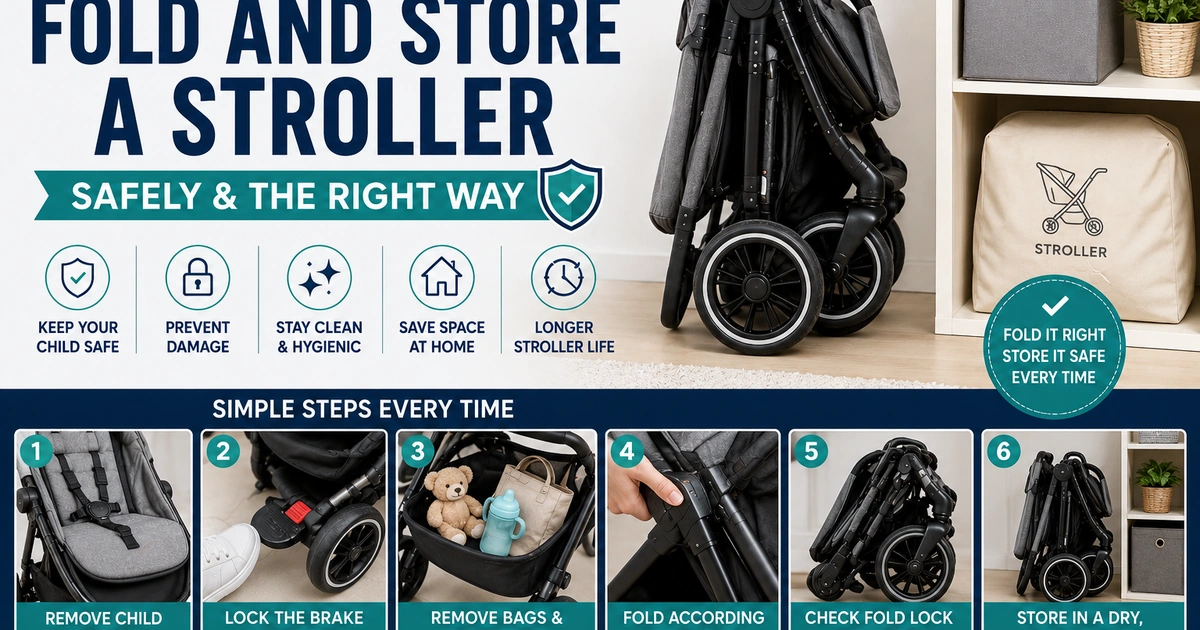
The safest way to fold and store a stroller is to remove the child first, keep little fingers away from hinges, lock the brake, remove loose items, fold the stroller according to the manual, check that the fold lock is secure, and store it in a dry, clean, stable place.
Before storing, make sure the stroller is dry and free from heavy mud, wet fabric, food spills, or loose accessories. Before the next use, open it fully and check that all locking parts are engaged.
Why Safe Stroller Folding and Storage Matters
A stroller is used around a baby, so small mechanical problems can matter. Folding the stroller too fast, forcing the frame, storing it while wet, or leaving it in an unsafe place can create problems over time.
Safe folding and storage can help prevent:
- Pinched fingers near folding joints
- Damaged folding locks
- Loose wheels or stuck brakes
- Moldy or smelly fabric from trapped moisture
- Broken canopy parts
- Bent frame sections
- Dust buildup in storage areas
- Accidental tipping when stored upright
If you fold and store your stroller every day, these small habits become even more important.
Step 1: Remove Your Baby Before Folding the Stroller
This may sound obvious, but it is the most important rule. Never fold or partially fold a stroller while your baby or toddler is sitting in it. The child should be completely out of the stroller before you touch the folding mechanism.
Also keep older children away from the stroller while you are folding or unfolding it. Hinges, frame joints, and locking points can pinch small fingers.
Before folding, make sure:
- Your child is out of the stroller.
- Other children are standing at a safe distance.
- No fingers are near the hinges or frame joints.
- The stroller is on a flat, stable surface.
- You are not rushing in a busy parking lot or doorway.
The Singapore Consumer Product Safety Office advises parents to keep children at a safe distance when folding or unfolding a stroller and to make sure all locking devices are engaged before use. You can read their stroller safety tips here: Consumer Product Safety Office stroller safety tips.
Step 2: Lock the Brake Before Folding
Before folding the stroller, press the brake and make sure the stroller does not roll. This gives you better control and helps prevent the stroller from moving while you are handling the frame.
This is especially important when folding the stroller:
- Near a car
- On a driveway
- On a sidewalk
- In a store entrance
- On a slightly uneven surface
- With one hand while holding bags
After the stroller is folded and later opened again, check the brake once more before placing your baby inside. A brake that feels stuck, loose, or unreliable should not be ignored.
For a deeper safety routine, read our stroller brake safety guide for parents.
HealthyChildren.org from the American Academy of Pediatrics also advises parents to use stroller brakes whenever the stroller is stopped. You can read their stroller safety guidance here: HealthyChildren.org stroller safety guide.
Step 3: Remove Bags, Toys, Blankets, and Accessories
Before folding, remove loose items from the stroller. Many parents forget small toys, snack cups, blankets, rain covers, stroller fans, or diaper bags. These items can get caught in the frame, press against the fabric, or block the fold.
Remove these items before folding:
- Diaper bags
- Shopping bags
- Snack cups
- Loose toys
- Blankets
- Rain covers
- Stroller fans
- Cup holders
- Phone holders
- Items from the storage basket
Some accessories are designed to stay attached when folded, but not all of them are. Check your stroller manual and accessory instructions before folding with accessories attached.
If you often use the stroller basket, remember that storage baskets also have weight limits and can affect stroller balance. Read our stroller storage basket safety guide for parents for more details.
Step 4: Check the Wheels Before Folding
Wheels can affect how smoothly a stroller folds and stores. Mud, sand, stones, hair, and thread can get stuck around the wheels or axles. If the wheels are dirty or stuck, folding and storing the stroller may become harder.
Before folding after an outdoor walk, check:
- Are the wheels covered in mud?
- Is hair wrapped around the wheel axle?
- Are small stones stuck in the tire grooves?
- Are the wheels wet?
- Do the wheels roll smoothly?
- Does the brake still engage properly?
If the stroller is very dirty, wipe the wheels before bringing it indoors or placing it in your car trunk. This keeps your home, car, and storage area cleaner.
For wheel inspection tips, read our stroller wheel safety guide for parents.
Step 5: Fold the Stroller According to the Manual
Every stroller has its own folding system. Some strollers fold with one hand, some need two hands, some fold inward, some fold outward, and some require the seat to face a certain direction before folding.
Do not force the stroller if it does not fold easily. Forcing the frame can damage the fold lock, seat attachment, handlebar, wheels, or canopy.
Common folding steps may include:
- Lock the brake.
- Remove the child and loose items.
- Adjust the seat or handlebar if required.
- Close or adjust the canopy.
- Press the folding button, lever, or release lock.
- Guide the frame into the folded position.
- Make sure the fold lock clicks securely.
- Lift the stroller using the recommended handle or frame area.
If your stroller has a bassinet, toddler seat, car seat adapter, or reversible seat, the folding process may be different. Always check the manual before folding with attachments installed.
Step 6: Keep Fingers Away from Hinges and Folding Joints
Stroller folding joints can pinch fingers if you are not careful. This can happen when folding quickly, unfolding in a hurry, or letting a child stand too close.
When folding or unfolding, keep your hands on the recommended handle points. Do not hold the stroller near moving hinges, sliding rails, folding locks, or frame joints unless the manual tells you to.
Parents should also avoid letting toddlers play with a folded stroller. A child may pull a lever, move a frame part, or tip the stroller over.
Step 7: Make Sure the Fold Lock Is Secure
Many strollers have a fold lock that keeps the stroller closed after folding. This is important when lifting it into a car, carrying it upstairs, or storing it upright.
After folding, check:
- Did the fold lock click into place?
- Is the stroller staying closed?
- Are the wheels positioned correctly?
- Is the handlebar secure?
- Is the canopy caught in the frame?
- Are any straps hanging loose?
If the stroller opens unexpectedly while carrying, it can hit your legs, damage the frame, or cause you to lose balance. Do not carry a folded stroller unless the fold lock is properly engaged.
The U.S. Consumer Product Safety Commission explains that stroller safety standards include issues such as stability, brakes, restraint systems, latches, folding mechanisms, structure, wheels, and openings. You can review the official guidance here: CPSC carriages and strollers guidance.
Step 8: Do Not Store the Stroller While Wet
One of the biggest stroller storage mistakes is folding and storing it while the fabric, wheels, basket, or canopy are still wet. Moisture can stay trapped in fabric folds and storage corners.
A wet stroller may develop:
- Musty smell
- Fabric stains
- Mold or mildew risk
- Rust on metal parts
- Sticky folding joints
- Dirty wheel marks on floors or car trunks
After rain, cleaning, or muddy walks, wipe the stroller and let it air-dry fully before storing it for a long time. Keep the canopy open while drying so air can move through the fabric folds.
If your stroller needs cleaning before storage, read our guide on how to clean stroller wheels and fabric safely.
Step 9: Choose a Safe Storage Location at Home
The best stroller storage location is clean, dry, stable, and easy to access. Avoid storing the stroller where it may fall, collect moisture, block walkways, or become a climbing object for children.
Good storage places may include:
- A dry hallway corner
- A stroller storage area near the door
- A clean closet with enough space
- A garage area away from moisture
- A car trunk if the stroller is dry and secure
- A covered storage rack designed for baby gear
Avoid storing the stroller:
- Near stairs where it can fall
- In a damp basement
- Under heavy items
- Near sharp tools
- In direct harsh sunlight for long periods
- Where children can climb on it
- Where pests or insects may reach fabric areas
If you live in a small apartment, choose a stroller with a compact fold, self-standing fold, or easy storage shape.
Amazon buying tip: If you have limited space, compare compact-fold strollers that stand when folded and fit easily in closets, small cars, or apartment corners. Check compact fold stroller options on Amazon.
Step 10: Store the Stroller Upright Only If It Is Stable
Some strollers can stand upright when folded. This is useful for apartments, closets, and small storage spaces. However, not every stroller is designed to stand safely.
Before storing a stroller upright, check:
- Does the stroller stand without support?
- Is the floor flat?
- Can it fall if touched?
- Is it away from children?
- Is it blocking a doorway?
- Is the fold lock secure?
If the stroller tips easily, store it flat or place it in a safer corner. A folded stroller can still be heavy and may hurt a child or damage furniture if it falls.
Step 11: Protect the Stroller from Dust During Long Storage
If you will not use the stroller for several weeks or months, protect it from dust. Long storage can make fabric dusty, wheels stiff, and the basket dirty.
For long-term stroller storage:
- Clean and dry the stroller first.
- Remove crumbs from the seat and basket.
- Make sure the fabric is fully dry.
- Fold it according to the manual.
- Cover it with a breathable stroller cover or clean cloth.
- Store it in a dry indoor area.
- Keep the manual and small accessories together.
Avoid wrapping the stroller tightly in plastic if there is any chance of trapped moisture. Breathable protection is usually better for long storage.
Amazon buying tip: For long-term storage or travel, a stroller storage bag or breathable dust cover can help protect the frame, wheels, and fabric from dirt. View stroller storage bags on Amazon.
Step 12: Be Careful When Storing a Stroller in the Car Trunk
Many parents store the stroller in the car trunk because it is convenient. This can be fine, but the stroller should be folded properly and placed securely.
Before placing the stroller in the trunk:
- Make sure the fold lock is secure.
- Check that the wheels are not extremely muddy.
- Remove loose toys and cups.
- Keep heavy items from pressing on the stroller frame.
- Do not crush the canopy or handlebar.
- Make sure the trunk closes without forcing the stroller.
If your stroller barely fits in the trunk, measure the folded dimensions and compare them before buying your next stroller. A stroller that fits comfortably is easier and safer to use daily.
Step 13: Check the Handlebar Before and After Storage
The handlebar helps parents control the stroller. If it is adjustable, it may have buttons, joints, or locking points that need to stay secure.
Before storing, make sure the handlebar is not forced into a bent position. After storage, check that it locks properly and feels stable when pushing.
Do not hang heavy bags from the handlebar while the stroller is stored. Heavy weight can affect balance and may make the stroller tip, especially if it is standing upright.
For more details, read our stroller handlebar safety guide for parents.
Step 14: Store Stroller Accessories Separately When Needed
Many parents use stroller accessories such as rain covers, snack trays, stroller fans, organizers, travel bags, cup holders, and car seat adapters. Some accessories can stay attached, while others should be removed before folding or storage.
Store accessories in a small labeled bag or basket so they do not get lost. Keep small parts away from babies and toddlers.
Common accessories to store separately include:
- Rain cover
- Mosquito net
- Stroller fan
- Snack tray
- Cup holder
- Car seat adapters
- Travel bag
- Extra seat liners
Before the next use, reattach accessories only according to the manufacturer’s instructions.
Step 15: Open the Stroller Fully Before Putting Baby Inside
After storage, do not place your baby in the stroller until it is fully open and locked. A stroller that is only partly opened may collapse, shift, or feel unstable.
Before placing your baby inside, check:
- The frame is fully open.
- The locking mechanism has clicked into place.
- The seat is attached properly.
- The harness is not twisted.
- The brake works.
- The wheels roll smoothly.
- The canopy is attached correctly.
- The basket is not overloaded.
A few seconds of checking can prevent many common stroller problems.
For a full before-walk routine, read our stroller safety checklist before every walk.
Special Tips for Different Types of Strollers
Full-size strollers
Full-size strollers often have larger seats, bigger baskets, and stronger frames. They may take more space when folded, so check folded dimensions and storage location before buying.
Travel strollers
Travel strollers usually fold smaller and are easier to store. However, parents should still check the fold lock, wheels, handlebar, and storage bag before travel.
Jogging strollers
Jogging strollers may have larger wheels and longer frames. Clean the wheels before storage and avoid forcing them into a small trunk if they do not fit properly.
Stroller wagons
Stroller wagons can be bulkier than regular strollers. Store them in a dry area and make sure the frame is locked properly before use.
Travel systems
If your stroller uses an infant car seat, remove the car seat before folding unless the manual clearly allows folding with the car seat attached. Store adapters safely so they do not get lost.
Common Folding and Storage Mistakes to Avoid
Many stroller problems come from simple daily habits. Try to avoid these common mistakes:
- Folding the stroller while the baby is still inside
- Letting children stand near folding hinges
- Forcing the stroller when it does not fold
- Leaving items in the basket before folding
- Folding the stroller while fabric is wet
- Storing the stroller in a damp place
- Standing the stroller upright when it tips easily
- Keeping heavy items on top of the folded stroller
- Storing accessories loosely where small parts can be lost
- Putting the baby in before the frame is fully locked
If you avoid these mistakes, your stroller will be easier to use and safer for daily parenting.
Quick Folding and Storage Checklist
Use this checklist before folding and storing your stroller:
- Remove your baby from the stroller.
- Keep children away from folding joints.
- Lock the brake.
- Remove loose items and accessories.
- Check the wheels for mud or debris.
- Fold according to the manual.
- Make sure the fold lock clicks securely.
- Do not store the stroller while wet.
- Choose a dry and stable storage place.
- Keep accessories organized.
- Open and lock the stroller fully before next use.
When Should You Stop Using a Stored Stroller?
If a stroller has been stored for a long time, inspect it carefully before using it again. Time, moisture, dust, pests, and pressure from other stored items can affect stroller condition.
Stop using the stroller until it is checked or repaired if you notice:
- Broken frame parts
- Loose wheels
- Brake failure
- Weak or torn harness straps
- Damaged buckle
- Unstable folding lock
- Moldy fabric that cannot be cleaned safely
- Missing screws or parts
- Cracked plastic components
- Recall notice for your model
If you are using an older or second-hand stroller, check official recall information before using it. The U.S. Consumer Product Safety Commission lists stroller recalls here: CPSC stroller recalls.
FAQ: How to Fold and Store a Stroller Safely
Should I lock the brake before folding a stroller?
Yes. Locking the brake before folding helps keep the stroller stable and prevents it from rolling while you handle the frame.
Can I fold a stroller with accessories attached?
Only fold a stroller with accessories attached if the stroller manual and accessory instructions allow it. Some accessories can block the fold or damage the frame.
Can I store a stroller in the car trunk?
Yes, if the stroller is folded properly, dry, and placed securely. Avoid crushing the frame, canopy, or handlebar with heavy items.
Is it okay to store a stroller while wet?
No. It is better to dry the stroller fully before storage. Storing it wet can cause odor, stains, trapped moisture, or possible mold and mildew problems.
Can I store a stroller upright?
You can store a stroller upright only if it is designed to stand safely and does not tip easily. Keep it away from children and busy walkways.
How should I store a stroller for long-term use?
Clean and dry the stroller first, fold it according to the manual, cover it with a breathable cover, and store it in a dry indoor area away from moisture and pests.
What should I check after unfolding a stroller?
Check that the frame is fully locked, the brake works, the wheels roll smoothly, the harness is not twisted, and the seat is attached properly before placing your baby inside.
Final Thoughts
Learning how to fold and store a stroller safely can make daily parenting easier. It also helps protect the stroller from damage, dirt, moisture, and mechanical problems.
The safest routine is simple: remove your baby, lock the brake, keep fingers away from hinges, remove loose items, fold according to the manual, secure the fold lock, and store the stroller in a clean, dry, stable place.
Before the next use, open the stroller fully and check that all locks, wheels, brakes, harness straps, and seat parts are working correctly. These small steps can help keep your stroller safer, cleaner, and ready for everyday use.