Taking your baby outside in a stroller can be peaceful, healthy, and helpful for both parents and children. A short walk can give your baby fresh air, help with routine, and make daily parenting feel easier. But sunny weather also brings important safety concerns, especially for babies with sensitive skin.
Quick Answer: How Can You Protect a Baby from Sun in a Stroller?
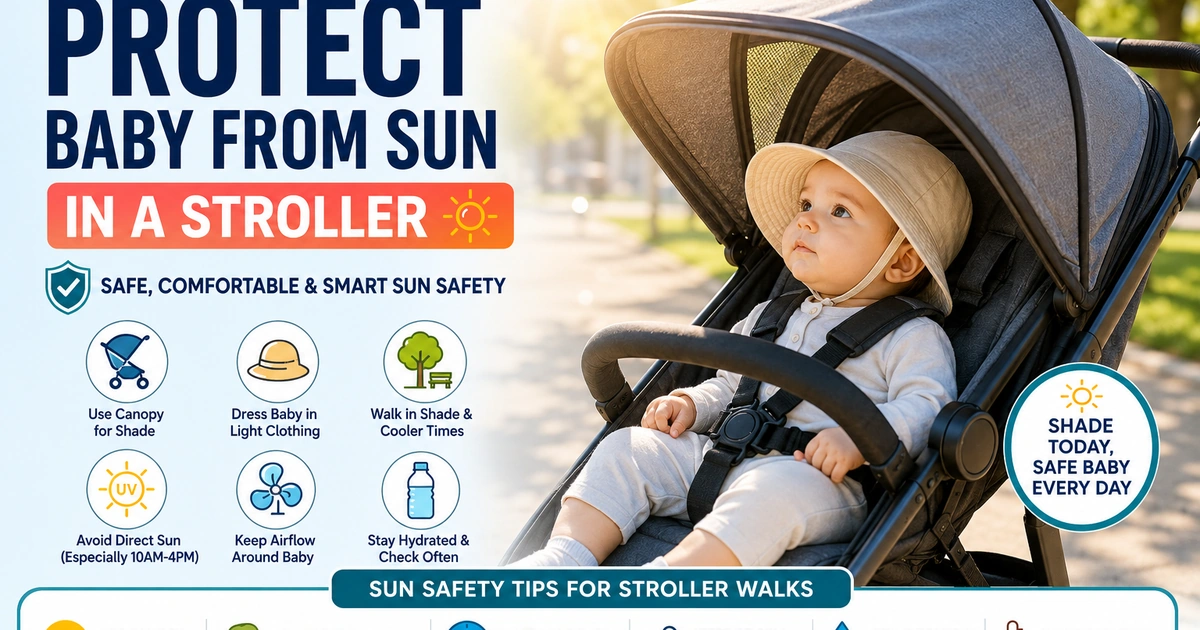
The best way to protect a baby from sun in a stroller is to keep the baby in shade, use the stroller canopy correctly, dress the baby in lightweight protective clothing, choose cooler walking times, avoid direct midday sun, and check your baby often for signs of overheating.
For babies under 6 months, shade and protective clothing are especially important. Do not rely only on sunscreen or a small canopy. A safe stroller sun protection plan should combine shade, airflow, clothing, and timing.
Why Stroller Sun Protection Matters
Babies have delicate skin, and they can become uncomfortable in heat faster than adults. Sun exposure can cause sunburn, overheating, dehydration concerns, and general discomfort during stroller walks.
Good stroller sun protection can help:
- Reduce direct sun exposure
- Keep your baby more comfortable
- Protect sensitive skin
- Make outdoor walks safer
- Prevent the stroller seat from becoming too hot
- Support better airflow around the baby
Sun protection is not only for summer. Babies can also get sun exposure during spring, fall, winter walks, beach trips, park visits, and travel days.
1. Keep Babies Under 6 Months Out of Direct Sunlight
For young babies, direct sunlight should be avoided as much as possible. Babies under 6 months usually need shade as the first line of protection. A stroller canopy, tree shade, umbrella, or shaded walking route can help reduce sun exposure.
When walking with a young baby, try to:
- Stay in shaded areas
- Use the stroller canopy properly
- Avoid direct midday sun
- Dress baby in lightweight clothing that covers more skin
- Use a brimmed hat that shades the face and neck
- Check your baby often for heat discomfort
HealthyChildren.org from the American Academy of Pediatrics recommends keeping babies under 6 months out of direct sunlight and moving them to shade under a tree, umbrella, or stroller canopy. You can read the official guidance here: HealthyChildren.org sun safety tips.
If you are still choosing a stroller for a young baby, read our guide on what type of stroller is safe for newborns.
2. Use the Stroller Canopy the Right Way
A stroller canopy is one of the most useful sun protection features. However, many parents do not adjust it often enough. As the sun moves, shade direction changes. A canopy that works well in the morning may not block side sunlight later in the day.
To use the stroller canopy better:
- Extend the canopy fully when needed.
- Adjust it as the sun direction changes.
- Check whether sunlight is hitting your baby’s face or legs.
- Use mesh panels if your stroller has them for airflow.
- Make sure the canopy does not block your view of the baby.
- Do not force a canopy beyond its design.
A large adjustable canopy is especially helpful for sunny walks, park visits, beach trips, and travel days. If your stroller canopy is too small, a compatible stroller sun shade may help.
For more canopy safety details, read our stroller canopy safety guide for parents.
Amazon buying tip: If your stroller canopy does not give enough shade, compare compatible stroller sun shades, canopy extenders, or clip-on stroller umbrellas that allow airflow. Check stroller sun shade options on Amazon.
3. Do Not Fully Cover the Stroller with a Thick Blanket
Some parents place a blanket over the stroller to block sunlight. This may look like quick shade, but it can reduce airflow and make the stroller interior feel warmer. A baby may be shaded from direct light but still become too hot inside the stroller.
Instead of using a thick blanket, choose safer shade options such as:
- Built-in stroller canopy
- Breathable stroller sun shade
- Clip-on stroller umbrella
- Shaded walking route
- Tree shade or covered walkway
- Lightweight sun-protective clothing
If you use any stroller cover, make sure there is enough airflow and that you can still see your baby easily. Never create a closed, hot space around your baby.
4. Choose Cooler Times for Stroller Walks
Timing can make a big difference. Early morning and late afternoon are often more comfortable than midday, depending on the weather and your location. The sun is usually stronger around midday, and stroller surfaces can become hot.
When possible, avoid long stroller walks during:
- Strong midday sun
- Extreme heat warnings
- Very humid afternoons
- Hot pavement conditions
- Direct beach sun without shade
- Long outdoor events without cooling breaks
Before going out, check the temperature, heat index, UV index, and shade availability. A short shaded walk may be safer than a long sunny walk.
The CDC advises dressing infants and children in loose, lightweight, light-colored clothing and taking steps to prevent heat-related illness during hot weather. You can read the official CDC resource here: CDC heat safety for infants and children.
5. Dress Baby in Lightweight Protective Clothing
Clothing is an important part of stroller sun protection. The goal is to cover sensitive skin without overheating your baby. Choose lightweight, breathable clothing that covers the arms and legs when needed.
Helpful clothing choices may include:
- Lightweight long-sleeve tops
- Lightweight long pants
- Breathable cotton or sun-protective fabric
- Wide-brimmed baby hat
- Light-colored clothing in hot weather
- Comfortable socks or foot coverage if needed
A brimmed hat can help shade your baby’s face, ears, and neck. Baseball caps may not protect the ears and neck as well as a wide-brimmed hat.
Amazon buying tip: For sunny stroller walks, compare lightweight baby sun hats with wide brims and breathable fabrics. View baby sun hats on Amazon.
6. Be Careful with Sunscreen for Young Babies
Sunscreen can be useful for older babies and children, but parents should be careful with infants. For babies under 6 months, shade and protective clothing are usually the first choice. If you are unsure about sunscreen for your baby, ask your pediatrician.
For babies older than 6 months, parents often choose broad-spectrum sunscreen made for babies or sensitive skin. Apply it according to the product label and avoid the eyes, mouth, and hands if your baby puts hands in the mouth often.
Common sunscreen tips for stroller walks:
- Ask your pediatrician if your baby is under 6 months.
- Use shade and clothing first whenever possible.
- Choose baby-friendly broad-spectrum sunscreen for older babies.
- Follow the sunscreen label for use and reapplication.
- Do not rely on sunscreen alone in strong sun.
- Wash sunscreen off gently after outdoor time if needed.
The U.S. Food and Drug Administration says sunscreen is not recommended for infants younger than 6 months and recommends keeping infants in shade as the best protection. You can read the official FDA guidance here: FDA guidance on sunscreen for infants.
7. Keep Airflow Around the Stroller
Shade is important, but airflow is also important. A stroller can feel warmer if air cannot move around the baby. This is why parents should avoid heavy covers, thick blankets, or anything that fully closes the stroller opening.
To improve stroller airflow:
- Use stroller canopies with mesh panels if available.
- Keep the front opening ventilated.
- Avoid thick covers in warm weather.
- Use shaded routes instead of sealing the stroller.
- Stop often and check your baby’s temperature.
- Make sure your baby’s clothing is not too heavy.
If you use a stroller fan, attach it securely and keep it out of your baby’s reach. Choose a fan with a protective cover and flexible positioning, and do not let cords, clips, or small parts become a hazard.
Amazon buying tip: For hot stroller walks, a clip-on stroller fan with covered blades can help improve comfort when used safely and securely. Compare stroller fans on Amazon.
8. Check the Stroller Seat Temperature
Before placing your baby in the stroller, touch the seat, straps, buckle, and handle areas. Dark fabric, plastic buckles, and metal parts can become warm when the stroller sits in the sun.
Check these areas before use:
- Seat fabric
- Harness straps
- Buckle clips
- Snack tray
- Footrest
- Canopy fabric
- Car seat handle if using a travel system
If any part feels hot, move the stroller to shade and let it cool before placing your baby inside. A few minutes of checking can make the ride more comfortable.
9. Use a Sun Shade Without Blocking Your View
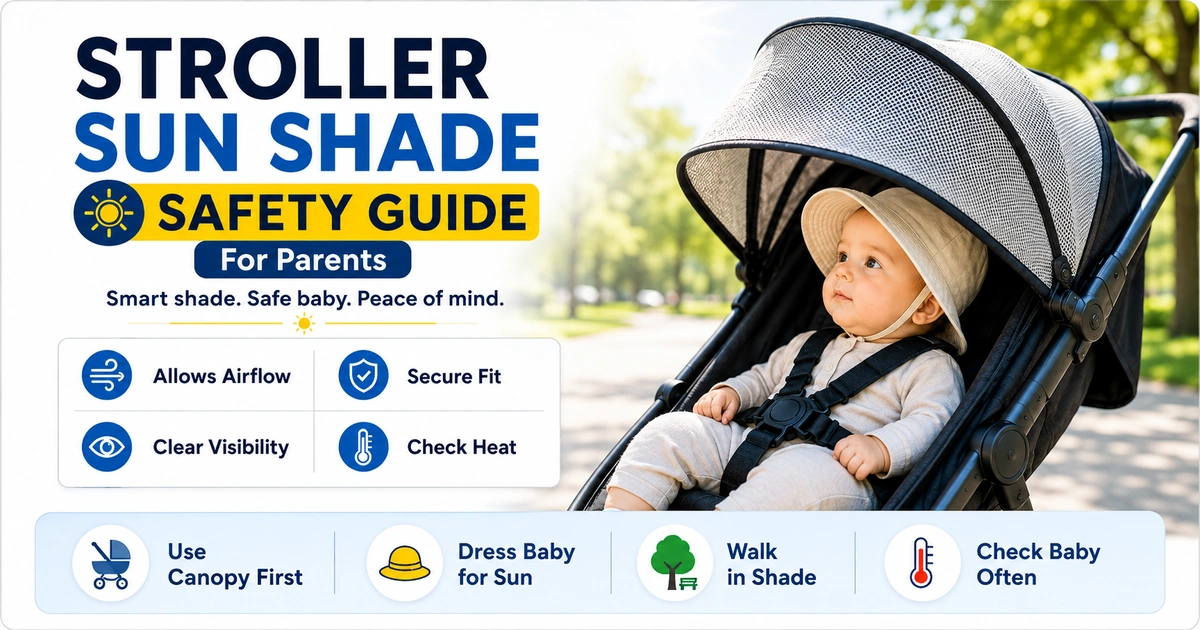
A stroller sun shade can help when the built-in canopy is not enough. However, parents should still be able to see the baby. If a shade blocks your view completely, you may miss signs of discomfort, overheating, or poor positioning.
A good stroller sun shade should:
- Fit the stroller securely
- Allow airflow
- Stay away from baby’s face
- Not interfere with the harness
- Not drag into the wheels
- Be easy to adjust as the sun changes
For a detailed buying and safety guide, read our stroller sun shade safety guide for parents.
10. Keep Baby Hydrated Based on Age and Pediatric Advice
Hydration needs depend on your baby’s age, feeding routine, health, and weather conditions. Young infants usually get fluids from breast milk or formula, while older babies may have different needs based on pediatric advice.
During warm weather stroller walks:
- Feed your baby as recommended for their age.
- Take breaks in shade.
- Watch for signs of discomfort.
- Do not stay outside too long in heat.
- Ask your pediatrician about fluids for your baby’s age.
Do not give extra water to a young infant unless your pediatrician recommends it. When in doubt, ask your healthcare provider for age-specific guidance.
11. Watch for Signs Baby Is Too Hot
Parents should check babies often during stroller walks, especially in warm or sunny weather. Babies cannot always show discomfort clearly, so regular checks are important.
Possible signs your baby may be too hot or uncomfortable include:
- Flushed skin
- Sweating
- Unusual fussiness
- Very warm neck or back
- Sleepiness that seems unusual
- Fast breathing
- Refusing feeds
- Dry lips or fewer wet diapers
If your baby seems too hot, move to a cooler shaded place, remove extra layers, offer feeding as appropriate for age, and seek medical advice if symptoms worry you.
12. Avoid Long Stroller Time in Strong Sun
Even with shade and sun protection, babies should not stay in a stroller for too long in strong sun or hot weather. A stroller is helpful for transport and supervised outings, but long outdoor exposure can make babies tired and uncomfortable.
Try to plan shorter outings during hot weather. Use indoor breaks, shaded rest areas, and cooler times of the day. If your baby falls asleep in the stroller, keep checking shade, airflow, and temperature.
For more details about safe stroller duration, read our guide on how long a baby can stay in a stroller.
13. Be Extra Careful with Travel Systems in the Sun
Travel systems are convenient because they let parents move an infant car seat onto a stroller frame. However, car seats can have deep sides and padded areas, so airflow and temperature should be checked carefully during warm weather.
If you use an infant car seat with a stroller:
- Keep the baby shaded.
- Check airflow around the seat.
- Do not cover the car seat with thick blankets.
- Watch your baby’s position and breathing.
- Keep outdoor time shorter in strong heat.
- Follow the car seat and stroller manual.
For safety details, read our stroller and infant car seat safety guide for new parents.
14. Plan Shaded Routes Before Going Out
Good planning can reduce sun exposure before the walk even begins. Instead of walking in open sun, choose shaded streets, parks with trees, covered sidewalks, indoor malls, or stroller-friendly shaded paths.
Before leaving home, think about:
- Where shade is available
- How long the walk will take
- Whether there are indoor rest stops
- Whether the stroller canopy is enough
- Whether your baby needs a hat or extra shade
- Whether the weather is too hot for a long walk
A shaded route is often safer and more comfortable than trying to fix strong sun exposure after you are already outside.
15. Check Sun Protection Before Every Walk
Before each sunny stroller walk, take a moment to check your baby’s shade and comfort. This can prevent common sun protection mistakes.
Use this quick checklist:
- Is the baby out of direct sun?
- Is the canopy adjusted properly?
- Is the baby wearing a brimmed hat if needed?
- Is clothing lightweight and protective?
- Is there enough airflow?
- Is the stroller seat cool?
- Is the walk planned during a cooler time?
- Are you avoiding thick blankets over the stroller?
- Can you see and check your baby easily?
- Do you have a shaded place to stop?
For a complete daily safety routine, read our stroller safety checklist before every walk.
Best Stroller Features for Sun Protection
If you are shopping for a stroller and sun protection matters, look for features that help keep your baby shaded and comfortable.
| Feature | Why It Helps | What to Check |
|---|---|---|
| Large canopy | Blocks more sunlight | Check how far it extends |
| UPF-rated fabric | Adds sun protection to canopy material | Check product specifications |
| Mesh ventilation | Improves airflow | Make sure it does not expose baby to direct sun |
| Peekaboo window | Lets parents check baby easily | Check if it has cover or mesh |
| Adjustable canopy angle | Helps block side sunlight | Test adjustment range |
| Compatible sun shade | Useful when built-in canopy is small | Choose breathable and secure fit |
Common Stroller Sun Protection Mistakes to Avoid
Many stroller sun protection mistakes happen because parents are trying to help quickly. Try to avoid these common mistakes:
- Keeping a baby in direct sun for too long
- Using only a small canopy in strong sun
- Covering the stroller fully with a thick blanket
- Walking during the hottest part of the day
- Forgetting to check side sunlight
- Using sunscreen on young infants without medical guidance
- Choosing dark, heavy clothing in hot weather
- Blocking airflow with covers
- Not checking stroller seat temperature
- Ignoring signs of overheating
Good sun protection is not one item. It is a combination of shade, clothing, airflow, timing, and regular checks.
FAQ: How to Protect Baby from Sun in a Stroller
Can I cover a stroller with a blanket to block the sun?
It is better not to fully cover a stroller with a thick blanket, especially in warm weather. A heavy cover can reduce airflow and make the stroller hotter inside. Use a breathable stroller sun shade, canopy, umbrella, or shaded route instead.
What is the best sun protection for babies under 6 months?
For babies under 6 months, shade and protective clothing are usually the first choices. Keep young babies out of direct sunlight as much as possible and ask your pediatrician before using sunscreen.
Is a stroller canopy enough for sun protection?
A stroller canopy helps, but it may not always be enough. Sunlight can come from the side or reflect from surfaces. Parents should also use shade, clothing, timing, and regular baby checks.
Can I use sunscreen on my baby in a stroller?
For babies under 6 months, ask your pediatrician first. For older babies, use baby-friendly broad-spectrum sunscreen according to the product label, but do not rely on sunscreen alone.
How can I keep my baby cool in a stroller during summer?
Walk during cooler times, stay in shade, use lightweight clothing, keep airflow open, avoid heavy covers, check baby often, and take breaks in cool places.
Are stroller fans safe?
A stroller fan may help with comfort if it is attached securely, has covered blades, and stays out of the baby’s reach. Make sure clips, cords, and small parts do not create hazards.
What stroller feature is best for sunny weather?
A large adjustable canopy with UPF-rated fabric, mesh ventilation, and a peekaboo window is helpful for sunny weather. A breathable compatible sun shade may also help if the built-in canopy is small.
Final Thoughts
Learning how to protect baby from sun in a stroller is important for safe and comfortable outdoor time. The best approach is to use shade first, adjust the stroller canopy, dress your baby in lightweight protective clothing, choose cooler walking times, and avoid blocking airflow.
For young babies, especially those under 6 months, direct sunlight should be avoided as much as possible. If you are unsure about sunscreen, heat safety, or your baby’s comfort, ask your pediatrician for age-specific advice.
A safe stroller walk is not just about going outside. It is about checking shade, airflow, temperature, clothing, and your baby’s comfort from start to finish.