

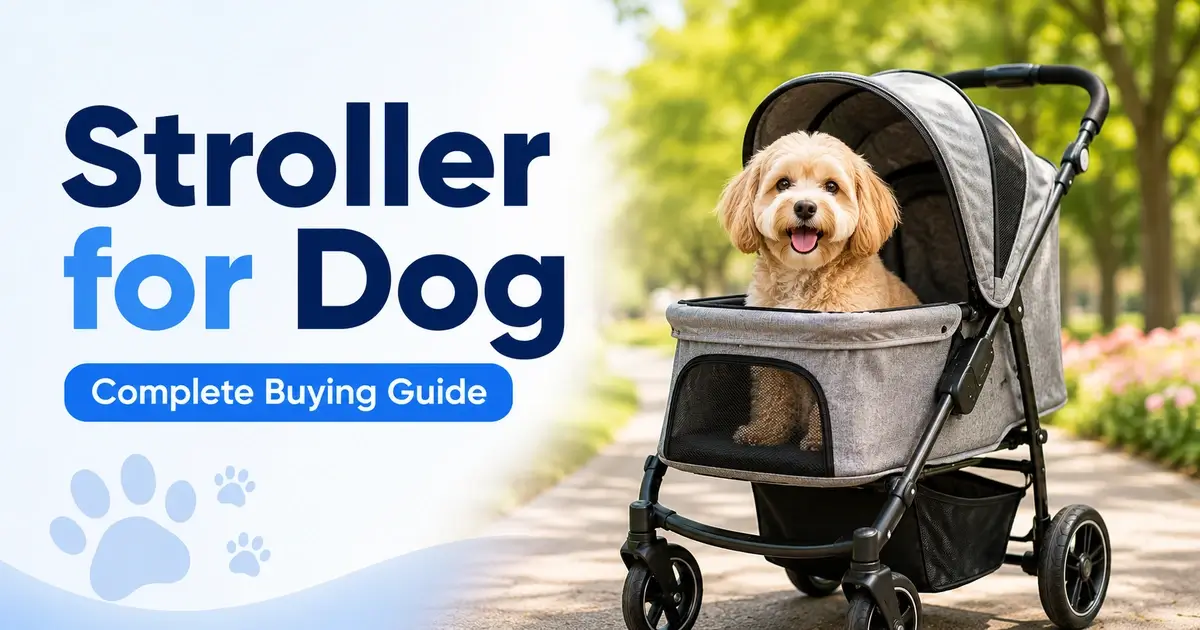
A dog stroller can make outdoor trips easier for both pets and owners. It can help senior dogs, injured pets, small breeds, puppies, and dogs that become tired quickly. However, not every pet stroller will suit every dog. The correct model must fit your dog’s size, weight, health, and movement needs. It must also match the places where you plan to walk. For example, a compact stroller may work well inside a shopping center. Yet the same stroller may struggle on grass, gravel, or cracked sidewalks. Therefore, you should compare more than price and appearance. Cabin size, weight capacity, wheels, brakes, ventilation, entry height, and storage size all matter. This guide explains how to choose a safe and practical dog stroller. It also covers measuring, training, cleaning, terrain, and common mistakes.
Important: A stroller does not replace veterinary care or suitable exercise. Ask your veterinarian for advice if your dog has an injury, breathing problem, joint condition, recent surgery, or another medical concern.
Table of Contents
- How to choose a dog stroller
- Who may need a dog stroller?
- How to measure your dog
- Types of dog strollers
- Important features to check
- Wheels and terrain
- Small vs large dog strollers
- Strollers for senior dogs
- Strollers for multiple dogs
- Can puppies use dog strollers?
- Weather and ventilation safety
- How to train your dog
- Safety checklist
- Common mistakes
- Cleaning and maintenance
- Price and value
- Final buying checklist
- Frequently asked questions
How Do You Choose the Right Stroller for a Dog?
First, check your dog’s weight and body measurements. Then compare those numbers with the stroller’s weight limit and interior dimensions.
Your dog should have enough room to sit, lie down, and change position. The cabin should not feel tight or crowded.
Next, consider where you will use the stroller. Small wheels may suit smooth sidewalks. Larger wheels usually work better on grass and uneven paths.
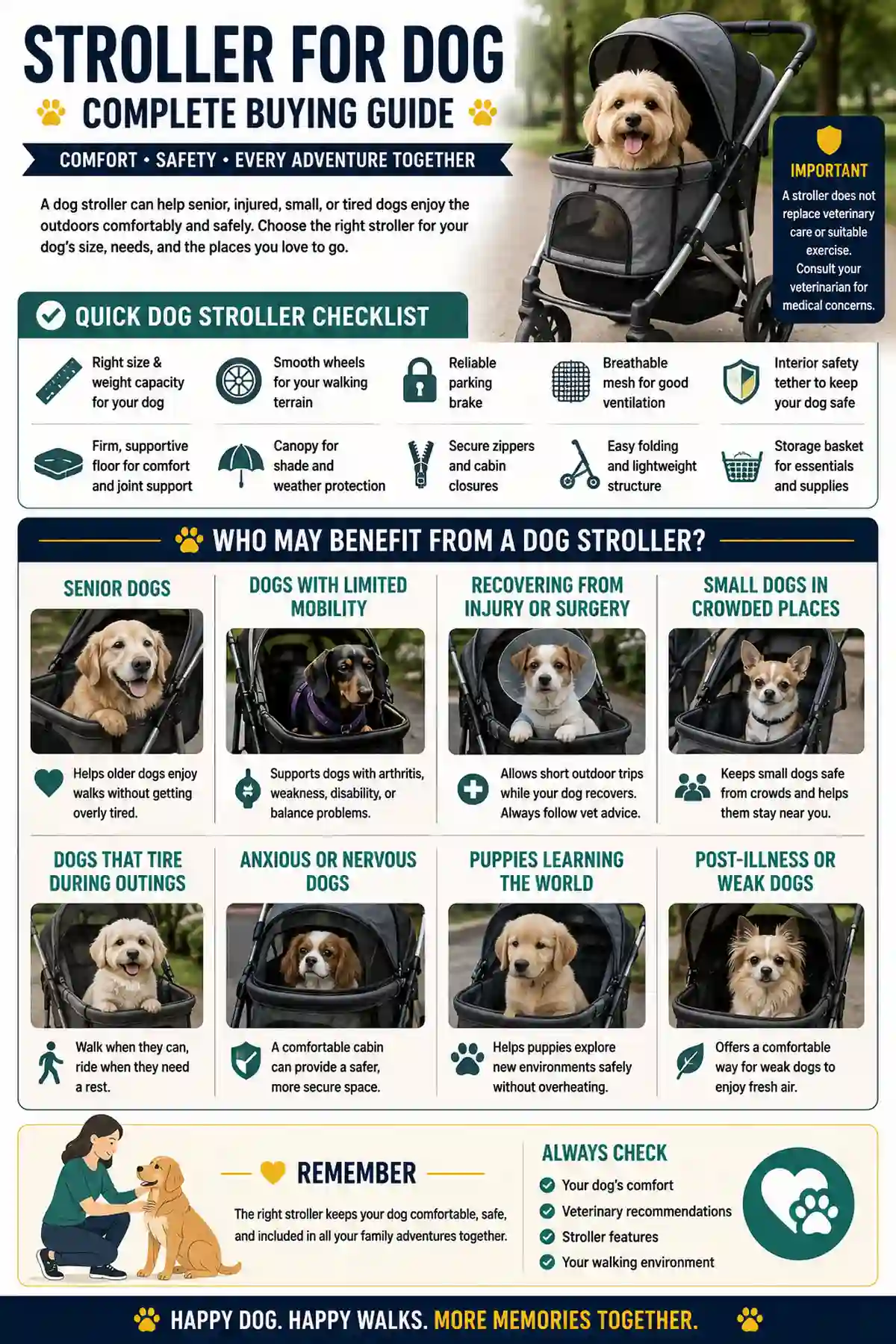
A good dog stroller should also include:
- A stable frame
- A reliable parking brake
- Secure zippers or cabin closures
- Breathable mesh panels
- An interior safety tether
- A firm and supportive floor
- A canopy for shade
- A practical folding system
The American Kennel Club also explains how pet strollers can support older, injured, and small dogs. You can read its official dog stroller guidance for more general information.
Most importantly, do not choose based solely on product photos. A stroller may look large, but still have a small cabin.
For a wider look at sizes, uses, and selection factors, read our best dog stroller guide.
View dog stroller options on Amazon
Who May Benefit From a Dog Stroller?
A stroller can be useful in many situations. Still, the dog’s comfort and health should guide the decision.
Senior dogs
Older dogs often become tired sooner than young dogs. They may also walk more slowly.
A stroller lets a senior dog enjoy part of a walk without covering the full distance. The dog can walk when comfortable and ride when tired.
This can help older pets stay included in family activities. However, the dog should still receive suitable movement when possible.
Dogs with limited mobility
Some dogs have arthritis, weakness, disability, or balance problems. These issues can make long walks difficult.
A stroller may help the dog reach a park, veterinary clinic, or outdoor area. It can also provide a safe place to rest.
For these dogs, choose a low entry and stable floor. Large wheels and suspension may also improve comfort.
Dogs recovering from injury
A dog may need reduced activity after an injury or medical procedure. In that case, a stroller may allow short outdoor trips without long walks.
However, always follow the veterinarian’s instructions. Some dogs may need complete rest during part of their recovery.
Small dogs in crowded places
Small dogs can be hard to see in busy areas. People may step close to them without noticing.
A secure pet stroller can keep a small dog near its owner. It may also reduce contact with heavy foot traffic.
Dogs that tire during long outings
Some dogs can walk for a short time but cannot manage a full family outing. A stroller gives them a place to rest.
For example, a dog may walk in the park and ride during the return trip. This can make the outing more manageable.
Anxious dogs
Some nervous dogs feel safer inside a partly enclosed cabin. The canopy and mesh may create a more protected space.
However, other dogs may dislike the movement or limited space. Introduce the stroller slowly and watch the dog’s behavior.
Dogs visiting busy events
A stroller may be helpful at suitable outdoor events, markets, or family gatherings. It can keep the dog contained and close to the owner.
Still, avoid places that are too loud, hot, or crowded. A stroller does not remove stress from the environment.
When a stroller may not be suitable
A dog stroller may not suit a dog that panics in small spaces. It may also be unsafe for a dog that repeatedly tries to escape.
In addition, a highly reactive dog may become stressed when people or animals approach the stroller.
In these cases, speak with a veterinarian or qualified dog behavior professional.
How to Measure Your Dog for a Stroller
Correct sizing is one of the most important parts of buying a dog stroller. Weight alone is not enough.
A dog may fit the weight limit but still be too tall or long for the cabin. Therefore, take several measurements.
1. Check your dog’s weight
Weigh your dog as accurately as possible. Then compare the weight with the stroller’s official capacity.
The maximum capacity should exceed the expected full load. The load may include:
- Your dog
- A second pet
- A cushion or liner
- A small water bowl
- Other items were placed inside the cabin
Do not choose a stroller with a limit equal to your dog’s exact weight. A little extra capacity gives you more flexibility.
However, a higher capacity does not always mean a stronger or better stroller. You should still examine the frame, wheels, and floor.
Our stroller weight limit guide explains why users should always follow the manufacturer’s stated load limit.
2. Measure body length
Ask your dog to stand naturally. Measure from the front of the chest to the rear of the body.
Do not include the full tail length. Compare this number with the usable cabin floor length.
Use the interior measurement, not the stroller’s full exterior length.
3. Measure body width
Measure the widest part of your dog’s body. Then add some extra room for movement.
The dog should not feel pressed against both sides. It should be able to turn and adjust its position.
4. Measure sitting height
Ask your dog to sit normally. Measure from the floor to the top of the head or ears.
Then compare that number with the stroller’s canopy height. Your dog should not need to crouch.
5. Check the lying space
Measure the space your dog uses while lying down. Long-bodied dogs may need more cabin length.
This is important for breeds with long backs. It is also useful for senior dogs that need more space to rest.
6. Test the listed size at home
You can mark the stroller’s interior dimensions on your floor. Use removable tape.
Then ask your dog to sit and lie inside the marked area. This simple test can prevent a poor purchase.
7. Measure your doorway and trunk
Do not measure only the dog. Also measure the places where the stroller must pass or fit.
Check your:
- Front door
- Hallway
- Elevator
- Vehicle trunk
- Storage closet
A large stroller may fit the dog, but not fit your home or vehicle.
Types of Dog Strollers
Dog strollers come in several designs. Each type has a different purpose.
| Type | Best for | Main benefit |
|---|---|---|
| Lightweight stroller | Smooth sidewalks and short trips | Easy to fold and carry |
| Four-wheel stroller | Daily walking and shopping | Simple and practical design |
| Three-wheel stroller | Parks and uneven paths | Good maneuverability |
| All-terrain stroller | Grass, gravel, and rough sidewalks | Larger wheels and stronger frame |
| Jogging pet stroller | Manufacturer-approved running | Better straight-line control |
| Large-dog stroller | Heavy or long-bodied dogs | Large cabin and higher capacity |
| Double pet stroller | Two compatible pets | More room or separate cabins |
| Convertible carrier stroller | Short trips and travel | Detachable carrier section |
| Bike trailer stroller | Walking and bicycle use | Multiple transport options |
Lightweight dog stroller
A lightweight stroller usually works best on smooth surfaces. It may be easy to fold and place in a car.
However, small wheels may struggle on grass or broken pavement. A light frame may also feel less stable with a heavy dog.
Four-wheel dog stroller
A four-wheel model can be a good choice for everyday walking. Many models offer easy steering on smooth paths.
Check the wheel size and brake system. Low-cost models may use small hard wheels.
Three-wheel dog stroller
A three-wheel stroller often turns easily. Some models also use larger rear wheels.
Still, three wheels do not automatically make a stroller suitable for jogging. Always check the manufacturer’s instructions.
All-terrain dog stroller
An all-terrain stroller usually has larger wheels and stronger suspension. It may work better on grass and uneven sidewalks.
However, all-terrain models are often heavier. They may also take up more storage space.
Jogging dog stroller
A jogging stroller should be designed for faster movement. It may include a lockable front wheel, a hand brake, or a wrist strap.
Do not run with a normal pet stroller. Only jog if the manufacturer clearly approves it.
Large-dog stroller
A large-dog stroller needs a strong frame and a wide base. It also needs a firm floor.
A low entry can help older or disabled dogs enter. Some models include a ramp or a wide rear door.
Convertible pet stroller
A convertible design may include a removable cabin. The cabin may work as a carrier for short trips.
Before buying, check how securely the cabin connects to the frame. Loose attachment can affect stability.
Compare different dog stroller styles.
Important Features to Check Before Buying
1. Correct weight capacity
The stroller must support your dog and all items placed inside. Always use the manufacturer’s official capacity.
Do not trust only a marketplace title. Product titles can be incomplete or unclear.
2. Adequate cabin size
The cabin should provide room for sitting and lying down. It should also allow the dog to turn.
Look for interior length, width, and height. Exterior dimensions are less useful.
3. Stable frame
A stable frame should not shake heavily when the dog moves. The stroller should remain balanced when the pet changes position.
A wide wheelbase may improve stability. However, it can also make the stroller wider.
4. Firm cabin floor
The floor should support the dog without deep sagging. A weak floor can make standing difficult.
This feature matters more for senior and large dogs. They may need a flat surface for balance.
5. Interior safety tether
An interior tether can help prevent jumping or falling. Attach it to a properly fitted harness.
Do not leave the tether too long. The dog should not be able to climb over the edge of the cabin.
At the same time, the tether should not be too short. The dog still needs to sit and lie comfortably.
6. Secure cabin closure
Check the zippers, clips, and latches. They should close fully and stay closed.
A nervous dog may push against the mesh. Therefore, weak zippers can create an escape risk.
7. Reliable parking brake
A parking brake keeps the stroller still during loading and unloading. It also helps when you stop on a mild slope.
Test the brake before every outing. Make sure it locks firmly.
Read our stroller brake safety guide for more information about routine brake checks.
8. Lockable front wheel
A swivel wheel helps with tight turns. A locked front wheel may improve straight movement on rough paths.
Some jogging models also require the front wheel to stay locked. Follow the product manual.
9. Breathable mesh
Mesh panels allow air to move through the cabin. They also help the dog see outside.
Look for mesh on more than one side. One small window may not provide enough airflow.
10. Adjustable canopy
A canopy can provide shade and reduce direct sunlight. It can also make the cabin feel more secure.
However, shade does not make a stroller safe in extreme heat. You must still check the temperature and airflow.
Our stroller canopy safety guide covers canopy use, inspection, and ventilation.
11. Low entry
A low entry helps dogs with weak joints or poor mobility. It also reduces the need for lifting.
For a large dog, look for a wide rear door or ramp. Apply the brake before the dog enters.
12. Removable liner
A removable liner makes cleaning easier. It can collect fur, dirt, and small accidents.
Check whether the liner is machine washable. Some liners need hand washing.
13. Suspension
Suspension may reduce shaking on uneven ground. This can improve comfort for older dogs.
Still, suspension does not make every stroller suitable for rough trails.
14. Comfortable handlebar
The handlebars should suit your height. You should not need to bend forward while pushing.
An adjustable handle can help when several people use the stroller.
Read our stroller handlebar safety guide for safe grip and handling tips.
15. Easy folding system
A simple folding system can save time. It also makes vehicle transport easier.
However, keep your dog away from joints that are folding. These parts can pinch paws or fur.
Our guide to safely folding and storing a stroller explains basic precautions.
16. Practical folded size
Check the folded dimensions before buying. A stroller may remain large after folding.
Also, check whether the wheels must be removed. This can add extra work.
17. Stroller weight
The stroller’s own weight affects lifting and transport. A heavy stroller may be hard to place in a trunk.
Therefore, check both capacity and product weight.
18. Storage basket
A lower basket can hold water, waste bags, and a leash. It can be useful during long trips.
Do not overload the basket. Also, avoid placing items near the wheels.
For safer loading, read our stroller storage basket safety guide.
19. Reflective details
Reflective material may improve visibility in low light. It can help near driveways and parking areas.
Still, use suitable lighting and choose safer routes whenever possible.
20. Replacement parts
Check whether replacement wheels, tubes, liners, and tethers are available. These parts may wear over time.
A stroller with available parts may offer better long-term value.
21. Warranty and return policy
A return policy is important when buying online. The cabin may not fit as expected.
Review the warranty before placing your order. Check what it covers and for how long.
How to Match Dog Stroller Wheels With Your Terrain
The wheels affect comfort, steering, and control. Therefore, consider your normal walking surface before buying.
Smooth sidewalks
Small swivel wheels may work well on smooth pavement. They can also turn easily in narrow spaces.
However, they may stop suddenly at large cracks or raised edges.
Indoor areas
A compact four-wheel stroller can work well inside stores or buildings. Small wheels may be enough on smooth floors.
Check the total width if you plan to use elevators or narrow doors.
Grass and park paths
Larger wheels usually move over grass more easily. Suspension may also reduce vibration.
Look for good ground clearance. Low frames can catch on roots or stones.
Gravel and uneven sidewalks
An all-terrain stroller may offer better control. It should have a stable frame and larger tires.
A lockable front wheel may also help with straight tracking.
Rough trails
Not every dog stroller belongs on a rough trail. Loose stones, roots, steep slopes, and deep mud can be unsafe.
Use only terrain approved by the manufacturer. Turn back if control becomes difficult.
Air-filled tires
Air-filled tires may provide a smoother ride. They can work well on uneven surfaces.
However, they need regular pressure checks. They can also develop punctures.
Solid tires
Solid tires require less maintenance. They do not need air pressure checks.
Yet some solid tires may feel harder on rough ground.
Small plastic wheels
Small hard wheels are common on low-cost strollers. They may work on smooth indoor floors.
However, they are not ideal for rough sidewalks or grass.
Before choosing, read our complete stroller wheel safety guide.
Check all-terrain dog stroller options.
Small-Dog Stroller vs Large-Dog Stroller
A stroller for a small dog has different needs from one for a large dog. Size changes the frame, wheels, floor, and entry design.
Stroller for a small dog
Small-dog strollers are often compact and light. They may be easy to fold and carry.
They can work well for:
- Toy breeds
- Small senior dogs
- Puppies
- Short city walks
- Indoor shopping areas
Still, do not choose the smallest possible cabin. Even a tiny dog needs room to lie down.
Also, check the mesh openings. They should be strong enough to support the pet and small enough to contain it.
Stroller for a medium dog
A medium dog needs more floor space and a stronger frame. Weight capacity becomes more important.
Check whether the floor stays flat under the dog. Also, examine the brake and wheel size.
Stroller for a large dog
A large dog needs a strong and stable stroller. The cabin must be wide and long.
Useful features may include:
- A reinforced frame
- A firm floor
- A wide wheelbase
- A low rear entry
- A loading ramp
- Large wheels
- Strong parking brakes
Large-dog strollers can be heavy. Therefore, check whether you can lift the empty stroller.
Also, measure your trunk. Some models remain very large after folding.
How to Choose a Stroller for a Senior Dog
Senior dogs often need more comfort and easier access. They may have weak legs, stiff joints, or reduced balance.
Therefore, focus on practical features instead of appearance.
Choose a low entrance.
A low entrance reduces the step height. It can make entry easier for a dog with joint pain.
A wide opening may also help. Some dogs need help turning inside the cabin.
Look for a stable floor.
A soft but firm liner can improve comfort. However, the floor should not sag deeply.
A flat surface helps the dog maintain balance.
Consider suspension
Suspension may reduce bumps on uneven sidewalks. This can help a dog with painful joints.
Still, avoid rough routes when the dog appears uncomfortable.
Make loading easy
Apply the brake before loading. Keep the stroller steady.
For a heavy senior dog, a ramp may be safer than lifting.
Watch the dog during every ride.
Senior dogs may become hot or tired quickly. They may also need more frequent water breaks.
Stop if the dog appears restless, weak, or uncomfortable.
Can Two Dogs Ride in One Stroller?
Two dogs may share a stroller if the model supports their combined load. The cabin must also provide enough space.
Before placing two dogs together, check the following:
- The combined weight stays below the limit.
- Both dogs can sit comfortably.
- Both dogs can lie down.
- Each dog has a safe tether point.
- The dogs are calm together.
- The stroller stays balanced when they move.
Some strollers have separate cabins. Others use one large cabin.
A divided design may work better when the dogs have different sizes or personalities.
Do not force two dogs to share a small cabin. One dog may block or step on the other.
Also, stop using the shared stroller if either dog shows fear or guarding behavior.
Can a Puppy Use a Dog Stroller?
A puppy can ride in a secure and well-ventilated stroller. However, close supervision is important.
A stroller may provide controlled outdoor exposure. The puppy can see people, vehicles, and new places.
However, vaccination and disease risk also matter. Ask your veterinarian when your puppy can safely enter public areas.
When using a stroller for a puppy:
- Use a correctly fitted harness.
- Attach the interior tether.
- Keep the cabin closed when needed.
- Avoid extreme heat.
- Keep the first trips short.
- Watch for fear or motion sickness.
A stroller should not replace training and socialization. The puppy still needs safe and positive experiences.
Weather and Ventilation Safety
The weather can affect a dog inside a stroller. The canopy may block the sun, but the cabin can still become hot.
Warm-weather use
Choose a stroller with mesh on several sides. Keep the airflow openings clear.
The American Veterinary Medical Association advises pet owners to provide shade and fresh water in warm weather. You can review its warm-weather pet safety guidance.
Avoid long walks during the hottest part of the day. Morning or evening may be more comfortable.
Do not cover the stroller fully.
Do not place a thick blanket over the full stroller. It can reduce airflow and trap heat.
Use the built-in canopy instead. Keep mesh panels open when safe.
Using a rain cover
A rain cover can help during light rain. However, it must allow airflow.
Do not use a cover that seals every opening. Watch for fog, heat, and poor ventilation.
Carry water
Bring fresh water during longer walks. A small portable bowl can fit inside the storage basket.
The ASPCA also lists water, food, bowls, medication, and waste bags among useful travel supplies. See its official pet travel safety tips.
Watch for heat distress.
Stop the outing if your dog shows unusual heavy panting, weakness, confusion, vomiting, or collapse.
Move the dog to a cooler area and contact a veterinarian when needed.
Cold-weather use
A stroller does not fully protect a dog from cold weather. Wind can still enter through the mesh.
Consider the dog’s age, coat, health, and cold tolerance. Keep winter outings shorter when necessary.
How to Introduce Your Dog to a Stroller
Do not place your dog inside and immediately start a long walk. A slow introduction works better.
Step 1: Place the stroller indoors
Put the stroller in a quiet room. Apply the parking brake.
Allow the dog to sniff and inspect it. Do not force the dog closer.
Step 2: Reward calm behavior
Give praise or a suitable treat when the dog stays calm near the stroller.
Keep the first session short. End before the dog becomes stressed.
Step 3: Practice entering
Open the cabin fully. Encourage the dog to step inside.
For a senior dog, use the lowest opening. Use a ramp if the stroller includes one.
Step 4: Practice sitting inside
Let the dog sit inside while the stroller remains still. Keep the brake locked.
Do not move until the dog appears relaxed.
Step 5: Add the harness and tether
Attach the tether to the harness. Adjust it so the dog can sit and lie down.
The dog should not be able to jump over the edge.
Step 6: Move a short distance
Push the stroller slowly across a smooth indoor floor. Then stop.
Reward calm behavior. Repeat the process in short sessions.
Step 7: Try a quiet outdoor route
Choose a familiar and quiet place. Avoid crowds during the first outdoor trip.
Keep the first walk short. Increase the distance gradually.
Signs of discomfort
Stop the session if your dog shows:
- Repeated escape attempts
- Trembling
- Whining
- Constant barking
- Rigid posture
- Heavy panting
- Refusal to enter
- Repeated turning or pacing
Some dogs need more time. Others may never enjoy stroller use.
Dog Stroller Safety Checklist Before Every Walk
A short inspection can prevent many problems. Complete these checks before loading your dog.
- Open the stroller fully.
- Confirm that the frame locks into place.
- Check the frame for cracks or loose parts.
- Make sure every wheel is secure.
- Inspect the tires for damage.
- Test the parking brake.
- Check the safety tether.
- Inspect the dog’s harness.
- Test the zippers and latches.
- Look for torn mesh.
- Make sure the floor liner is flat.
- Remove loose objects from the cabin.
- Check that airflow openings are clear.
- Secure the dog before moving.
- Keep heavy bags away from the handlebars.
- Carry water when needed.
- Avoid unsafe stairs and escalators.
- Never leave the dog unattended.
Pet-walk safety guide: For everyday riding, tether use, ventilation, loading, terrain, and supervision, read our Doggie Stroller: Safe Pet Walks Guide.
You can also review our full stroller safety checklist before every walk. Many of the frame, wheel, brake, and storage checks also apply to pet strollers.
Use the brake during loading.
Always apply the brake before opening the cabin. Keep one hand on the stroller when possible.
This is especially important on a slope.
Use the safety tether.
Attach the tether before the stroller starts moving. Use a well-fitted harness.
Do not attach the tether to a weak or damaged harness.
Do not overload the stroller.
Overloading can affect steering and braking. It can also damage the frame.
Remember that accessories add weight.
Avoid escalators
Do not take a dog stroller onto an escalator. Wheels can become trapped.
Use an elevator whenever possible.
Take care around curbs.
Approach curbs slowly. Keep both hands on the handle when possible.
Do not push the stroller down a high curb quickly.
Do not use it as a car seat.
A stroller cabin is not automatically a safe vehicle restraint.
Only use it inside a vehicle if the manufacturer clearly approves that use.
Common Dog Stroller Buying Mistakes
Choosing by weight only
A dog may fit the weight limit but not the cabin. Always check length, width, and height.
Ignoring the interior size
Product photos can make a cabin look larger. Use the listed interior dimensions.
Buying small wheels for rough paths
Small wheels may get stuck in cracks or on stones. Match the wheel size with your terrain.
Assuming every three-wheel stroller is a jogger
Three wheels do not guarantee jogging safety. Look for clear manufacturer approval.
Ignoring the stroller weight
A heavy stroller can be hard to lift. Check whether you can place it in your vehicle.
Choosing a high entry
A high entry may be difficult for a senior dog. Look for a low door or ramp.
Using the collar for restraint
A sudden jump can place pressure on the dog’s neck. Use a suitable harness instead.
Hanging heavy bags on the handle
Heavy handlebar bags can affect balance. Store items in the lower basket.
Skipping training
A nervous dog may panic inside a moving stroller. Introduce the stroller slowly.
Replacing all exercise
A healthy dog still needs suitable walking and enrichment. Use the stroller as support, not a full replacement.
Ignoring storage space
A large stroller may not fit your trunk or home. Measure before ordering.
Buying only by price
The cheapest stroller may lack useful features. Compare construction, brakes, wheels, and warranty.
How to Clean and Maintain a Dog Stroller
Regular cleaning keeps the stroller more comfortable. It also helps you find damage early.
Remove loose fur
Brush or vacuum the cabin after use. Pay attention to corners and seams.
Clean dirt and spills
Wipe dirt before it dries. Follow the manufacturer’s fabric instructions.
Avoid strong chemicals that may irritate the dog.
Wash the liner
Remove the liner when possible. Wash it using the recommended method.
Allow it to dry fully before returning it to the cabin.
Inspect the mesh
Check for holes and weak seams. A small tear may become larger.
Repair or replace damaged mesh before use.
Check the zippers
Remove fur and dirt from zipper tracks. Make sure each zipper closes fully.
Clean the wheels
Remove hair, grass, mud, and string from the wheel area. Debris can affect movement.
Check the air pressure if the stroller has air-filled tires.
Test the brakes
Apply and release the brake regularly. Stop using the stroller if the brake fails to hold.
Inspect the frame
Look for loose screws, bent sections, and damaged joints. Follow the manual before tightening parts.
Store it in a dry place.
Let the stroller dry before folding it. Moisture can create odor or damage.
Keep it away from extreme heat and direct exposure to the weather.
How Much Should You Spend on a Dog Stroller?
Dog stroller prices vary widely. The cost often depends on size, wheels, frame strength, and special features.
A basic stroller may suit a small dog on smooth sidewalks. However, it may not work well on rough paths.
A more expensive all-terrain model may include:
- Larger wheels
- Better suspension
- A stronger frame
- A larger cabin
- Higher capacity
- Improved brakes
- More storage
Still, a high price does not always guarantee the best fit. The stroller must suit your dog and your routine.
Before buying, compare:
- Interior dimensions
- Weight capacity
- Wheel material
- Brake design
- Product weight
- Folded size
- Replacement parts
- Warranty
- Return policy
Value comes from practical use. A simple stroller can be a good choice if it meets your needs safely.
Compare current dog stroller prices.
Final Dog Stroller Buying Checklist
Use this checklist before placing your order.
- The capacity exceeds the total load.
- The cabin is long enough for your dog.
- The cabin is wide enough for movement.
- The canopy height is suitable for the seated dog.
- The dog can lie down naturally.
- The frame has a stable base.
- The cabin floor stays firm.
- The zippers close securely.
- The stroller has an interior tether.
- The parking brake works easily.
- The front wheel locks when needed.
- The wheels match your terrain.
- The cabin has several mesh panels.
- The canopy provides shade.
- The entry height suits your dog.
- The handlebars feel comfortable.
- You can lift the empty stroller.
- The folded stroller fits your vehicle.
- The liner is easy to clean.
- Replacement parts are available.
- The warranty is clear.
- The return policy is suitable.
You can also use our complete stroller-buying checklist to review the general features: frame, wheels, brakes, folding, and storage.
Frequently Asked Questions
Are strollers good for dogs?
A stroller can help senior, injured, small, or easily tired dogs. It can also provide a rest area during longer outings.
However, it should match the dog’s health, size, and temperament.
What size stroller does my dog need?
Choose a stroller with enough room for sitting, lying down, and turning. The capacity must also exceed the total expected load.
Can a large dog use a stroller?
Yes. Choose a model designed for the dog’s weight and body size.
Look for a strong frame, firm floor, low entry, and large wheels.
Can two dogs ride in one stroller?
Yes, if their combined load stays below the limit. Both dogs must also have enough space.
Each dog should have a suitable tether point.
Can a puppy ride in a dog stroller?
Yes, under close supervision. Use a secure harness, tether, and well-ventilated cabin.
Ask your veterinarian about vaccination and public exposure.
Can I jog with a normal pet stroller?
No. Only jog with a stroller approved by the manufacturer for running.
Is a three-wheel stroller better?
A three-wheel stroller may turn easily and handle some uneven paths. However, the full design matters more than wheel count.
How do I stop my dog from jumping out?
Attach the interior tether to a properly fitted harness. Close the canopy when needed.
Also, train the dog slowly before taking long trips.
Can I use a baby stroller for my dog?
A pet-specific stroller is usually a better choice. It includes features such as mesh, pet entry, and tether points.
Do not use a baby stroller unless the manufacturer permits pet use.
Does a dog stroller replace daily walks?
No. A healthy dog still needs suitable activity and enrichment.
A stroller can provide transport or rest during longer outings.
Should I use a collar or a harness?
A properly fitted harness is generally the better tether point. It reduces direct pressure on the neck.
Can I leave my dog alone in the stroller?
No. Never leave a dog unattended inside a stroller.
The stroller could move, tip over, overheat, or cause the dog to become tangled.
Can a dog stroller work as a car seat?
Not unless the manufacturer clearly approves that use. A stroller cabin is not automatically a vehicle restraint.
How often should I clean the stroller?
Remove fur and dirt after regular use. Clean spills and accidents quickly.
Also, inspect the mesh, wheels, brakes, and frame often.
Are dog strollers safe in hot weather?
They can become hot in warm weather. Use good ventilation, shade, water, and short outings.
Never cover the full stroller with a thick blanket.
Final Thoughts
Choosing the right stroller for a dog starts with accurate measurements. Weight capacity alone does not confirm a good fit.
Your dog needs enough room to sit, lie down, and turn. The cabin should also have good airflow and a firm floor.
Next, match the wheels with your normal terrain. Small wheels may suit smooth sidewalks. Larger wheels work better on grass and rough pavement.
Also check the brakes, frame, tether, canopy, entry height, folded size, and product weight.
After buying, introduce the stroller slowly. Begin indoors and keep the first outdoor trip short.
Before every walk, inspect the wheels, brakes, frame, mesh, harness, and tether. Never leave your dog unattended.
A well-matched stroller can help an older, injured, small, or tired dog enjoy more family time. It can provide comfort, transport, and a safe place to rest.

Sanat Barua is the founder of Stroller Haven. He researches stroller models, manufacturer specifications, and safety standards to help parents compare options and make confident, informed decisions.
His research draws on official manufacturer documentation and product manuals, publicly available owner feedback, and safety guidance from sources such as the U.S. Consumer Product Safety Commission (CPSC) and the American Academy of Pediatrics (AAP). Stroller Haven is a research-based website: products are not described as physically tested unless an article states that testing took place. Stroller Haven is updated regularly as new models and safety information become available.